PART 3:
Ever since I was informed of my autism diagnosis when I was seven, I have developed an understanding about myself throughout my life around the knowledge that I am neurodivergent, discovering what that means for me in terms of how I interact with others, accomplish tasks in my daily life and process the world around me. As a child attending school, I was a lot less equipped for social situations than I am now, finding it difficult to express myself to other students in a way that didn’t involve me being unnecessarily overbearing and prone to meltdowns when things didn’t go the way I expected them to. In order to help me manage my emotions, my entire academic experience from elementary to high school was accompanied by a shadow or an assistant who I could talk to whenever I was feeling overwhelmed or agitated with anything that was on my mind in the current moment be it my schoolwork, my grades or the material we were taught in classes. While my shadows helped me a lot with providing a safe space for me to recuperate from my extreme emotions, I kind of felt like having someone always monitoring me in the classroom motivated me to become excessively self-conscious about the way I expressed myself in front of other students. Whenever I felt like sharing my interests with other students in my classes, I would always pressure myself to make sure that I was doing so in ways that would prevent me from being made uncomfortable and embarrassed by any potential disagreement or misunderstanding that a classmate might have toward my interests and hobbies. Ironically, the limits that I placed on my interactions in school ended up making me feel uncomfortable anyway a lot of the time, leaving myself internalizing my own emotions and allowing my fear of potentially misbehaving out of frustration to consume me from the inside. While I did manage to make friends who shared my interests in cartoons and games that I was otherwise very nervous to express with others, I still found it difficult to express those interests with more of my peers in the way I wanted to without feeling a tinge of self-conscious fear and embarrassment that left me unsatisfied no matter what I did.
Once I started getting deeper into online fandom culture through routinely following communities and subreddits for the media I enjoyed, I had begun feeling motivated to treat it as a substitute for genuinely discussing my interests with my peers only to later realize that I was interested in those communities purely for the escapism and indulgence they provided rather than feeling like I was connecting with anyone on a meaningful level. While I don’t mean to imply that fandom is not a worthwhile way to connect with people, I personally found through my own experiences with those spaces that the more time I spent forming my identity around them, the more I felt like I was expected to see my pure enjoyment of media as more necessary than valuing the aspects of myself that led to that enjoyment in the first place. When I play Deltarune and become invested in its story, I see these experiences in my youth and the emotions that came with them exhibited to some extent through Kris’ characterization as an introverted teen with a deep internal fear of being misunderstood, an affinity for escapism and nostalgia and a deeper frustration towards being kept at a distance from the world around them.
Judging by the story’s emphasis on how much Kris misses Asriel and how they have always relied on him for companionship growing up, they may feel more uncomfortable with having to live their life without him to the point where they are distrustful of themself in finding their own way through life in the wake of their parents’ divorce.
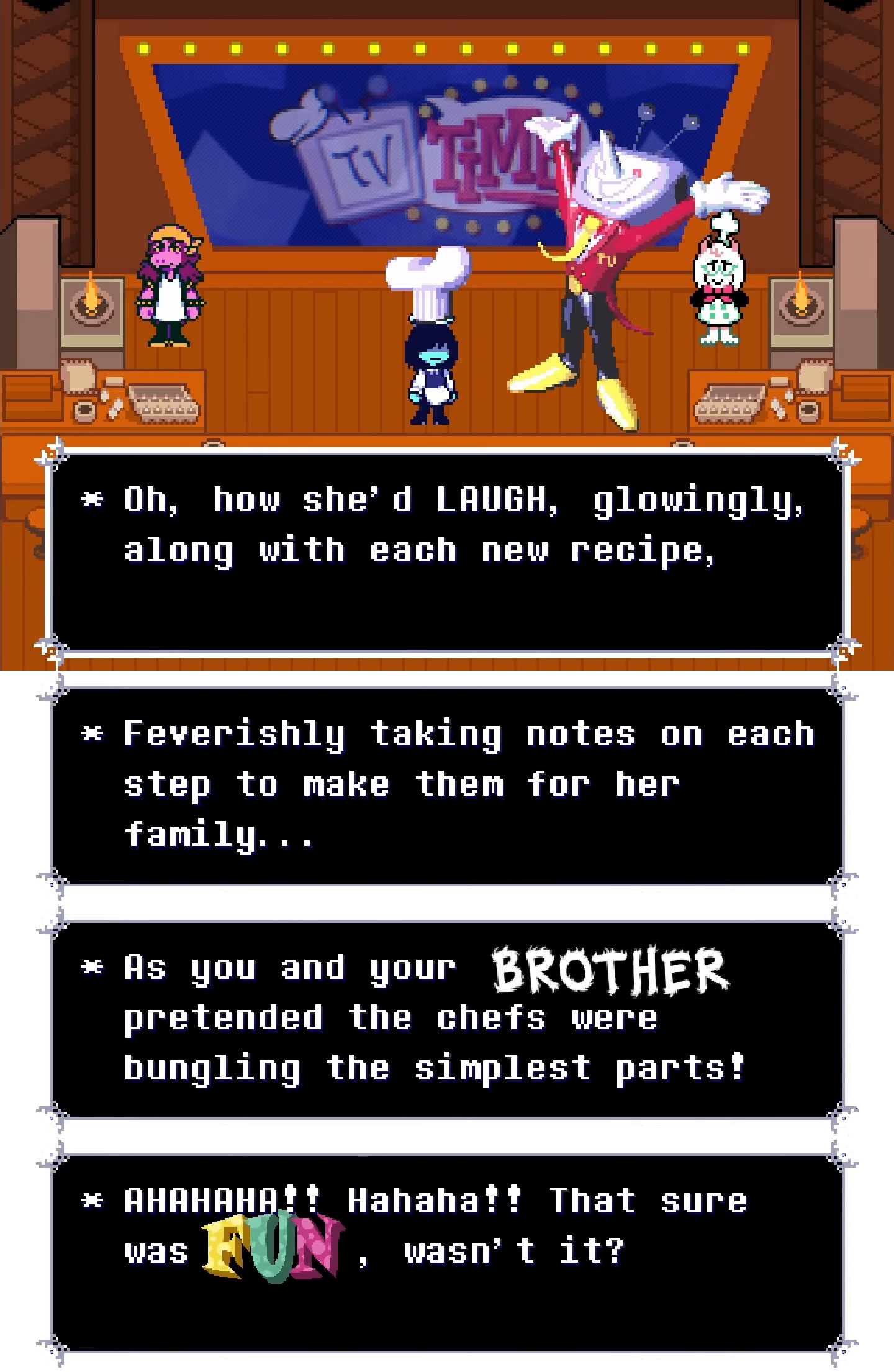
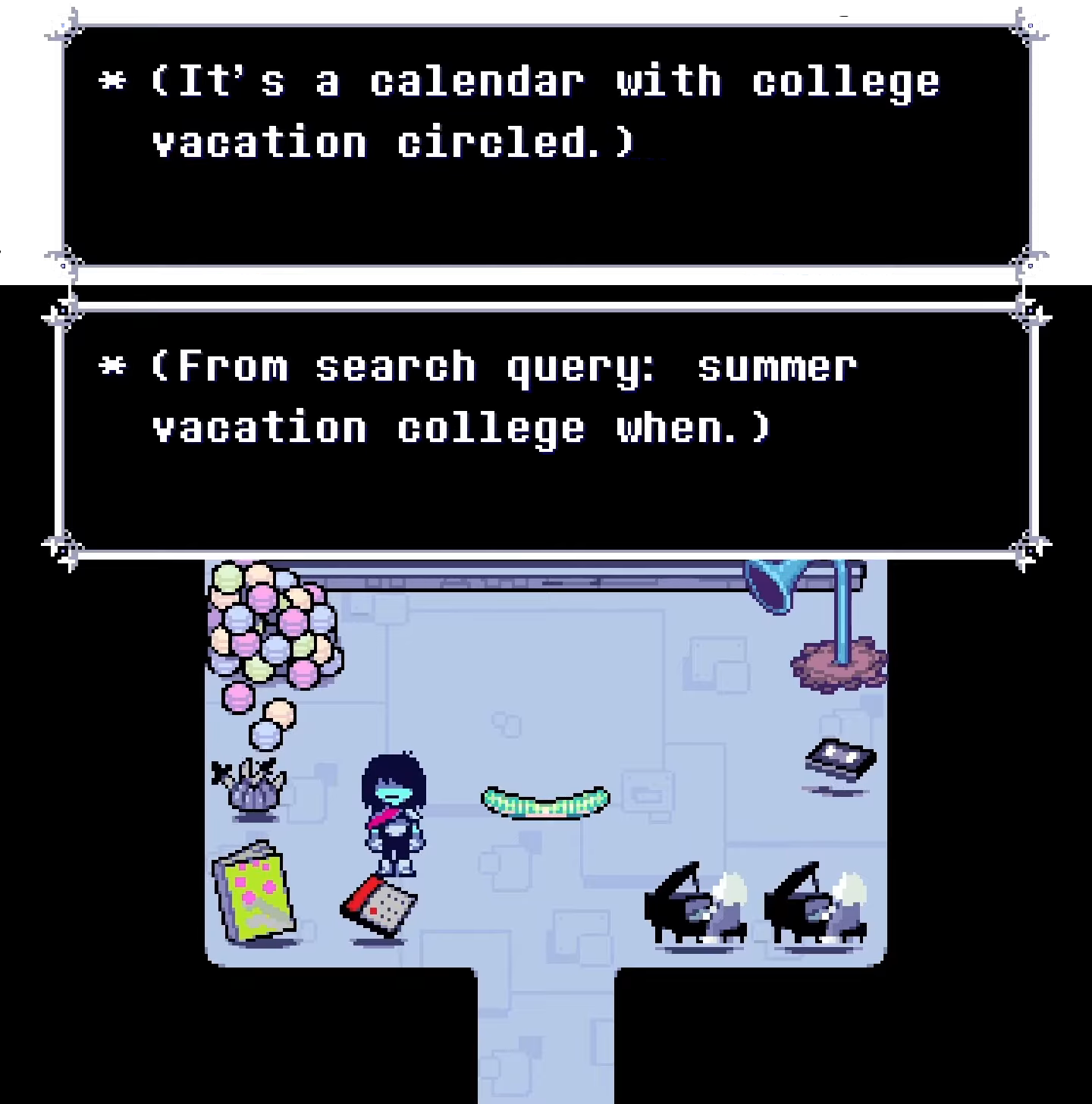
Left: Tenna reminds Kris of how much they used to have watching TV with Toriel and Asriel, making up inside jokes as an encapsulation of their bond. Right: Kris' personalized room in Queen's mansion contains an assortment of items fashioned after their web search history. A calendar appears to symbolize their anticipation for Asriel to come back to Hometown for the summer.
Despite knowing that they are growing up, Kris doesn’t know if they are capable of maturing on their own or even what a more mature version of them would look like, so they opt to let the red soul make decisions for them in order to prevent their complicated emotions from slipping out and making their parents and peers more worried about them. While Kris may often feel the urge to express themself the way that they actually want to, they are locked into a position where they have gotten used to using the soul to ‘overcorrect’ their day-to-day behavior, only bothering to take it out of their body if they plan on doing something in secret. It is this deeper insecurity toward suppressing their emotions and intense lack of hope in their future that leaves Kris vulnerable to being manipulated by forces like the Roaring Knight who is representative of an unhealthy embrace of escapism and nostalgia not just through their attempts to start the Roaring, but also through their association with Dess and by extension, Kris’ past.
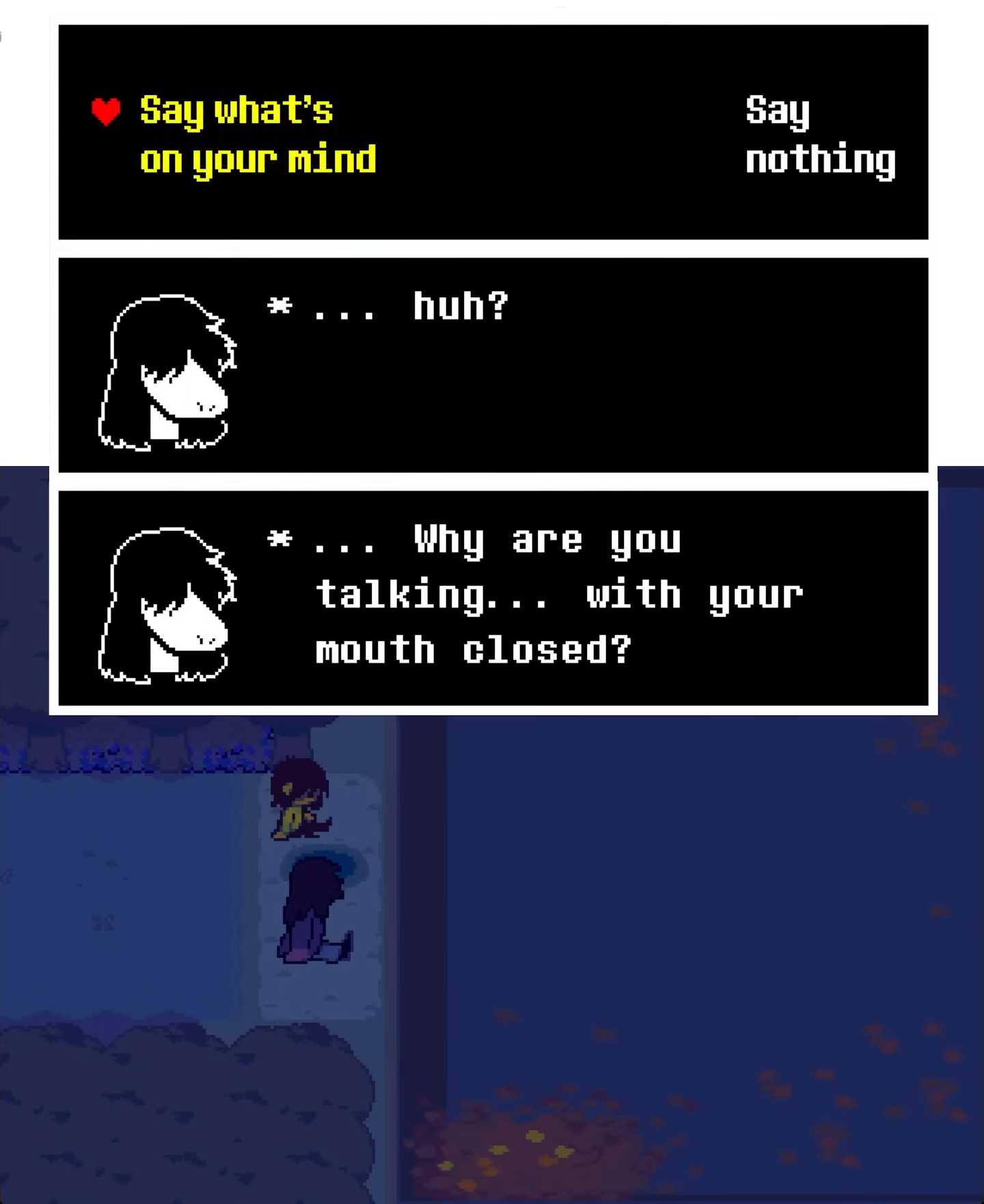
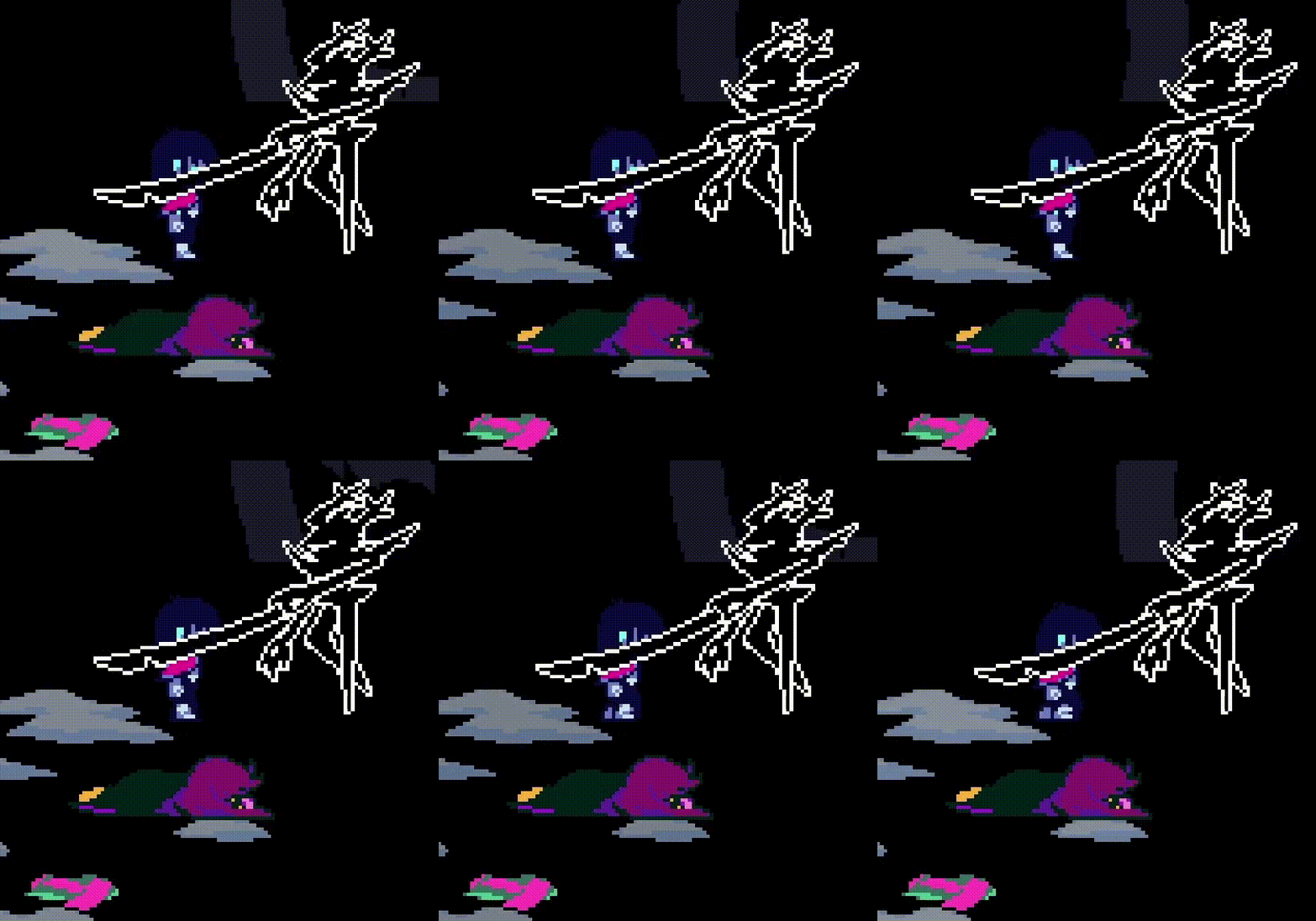
Left: when sitting at the lake with Susie after sealing the Third Sanctuary fountain, the player is sometimes given an option to let Kris say what is on their mind. Selecting this option causes them to do so, but with their mouth closed, indicating that Kris still struggles to open up even when you try to make them. Right: the Roaring Knight would SWOON, or knock out, Susie and Ralsei anyway even after the Knight is defeated in battle though interestingly, they appear to 'knight' Kris as if to indicate a closer relationship between the two as Kris bows when the Knight's sword is placed on their shoulder.
A metaphorical reading of Chapter 3’s Sword Route, in which Kris plays the ‘original’ version of Tenna’s video game boards, implies the Knight’s ultimate plans for Kris, manipulating them to disavow their current life in order to trap them in a state of frustrated nostalgic longing powerful enough to exploit to potentially cause the Roaring and cover the world in darkness and delusion. While many have commented on how the enemies that Kris is expected to kill within the original game resemble the boss monsters from Undertale as a callback to that game’s Genocide Route, it is also worth considering that at the same time, they bear a resemblance to important adult figures in and symbols relevant to Kris’ own life as the game positions Kris against them in order to appeal to the perceived sense of powerlessness they have over their daily life. This isn’t to say that the Knight literally wants Kris to murder their family, neighbors, teachers and police officers in real life, but rather that the Knight is anticipating a more mental and emotional death of Kris’ world from within their mind, convincing them that pure escapism and fully disconnecting themself from the real world is the only solution to their self-conscious anxieties.
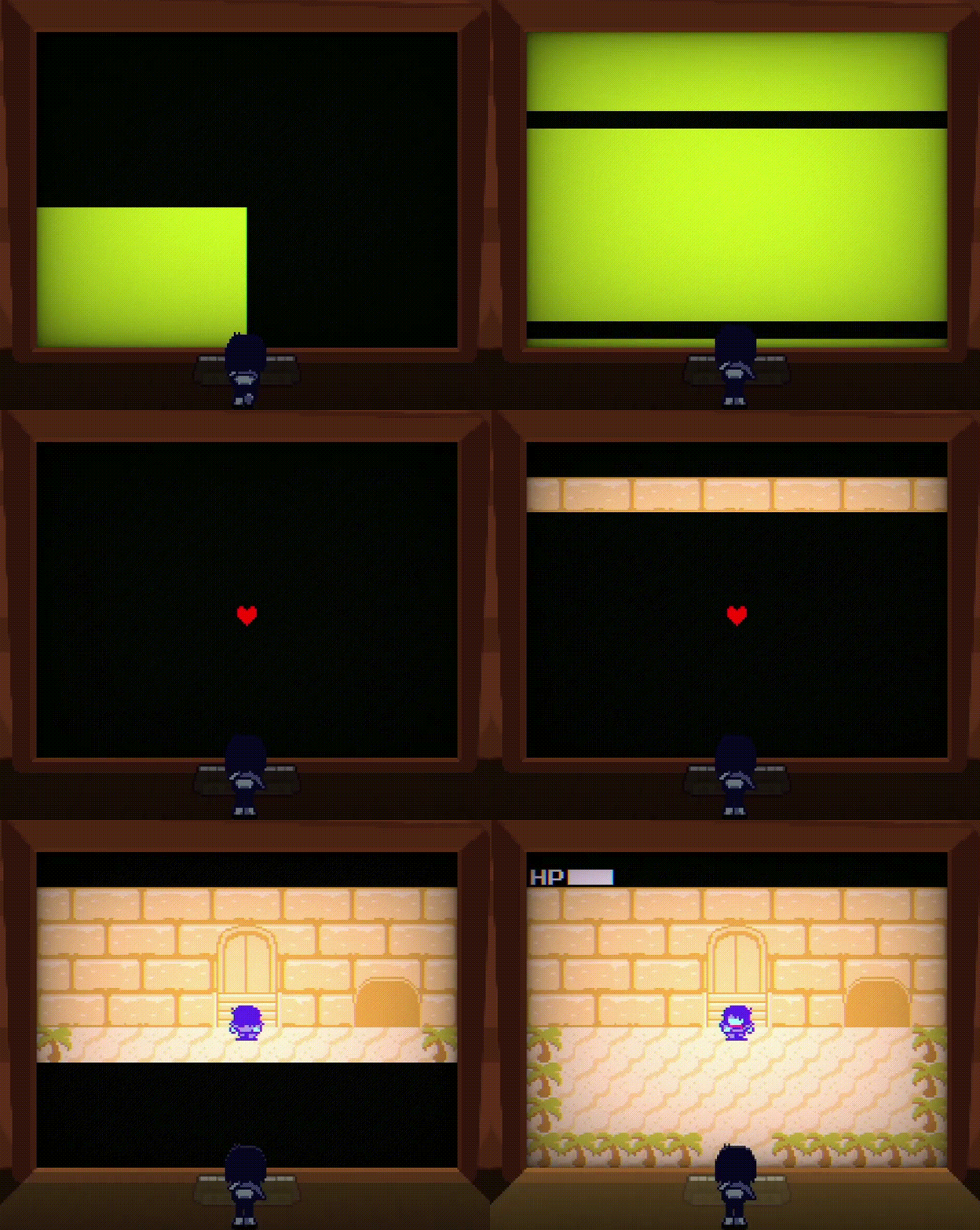
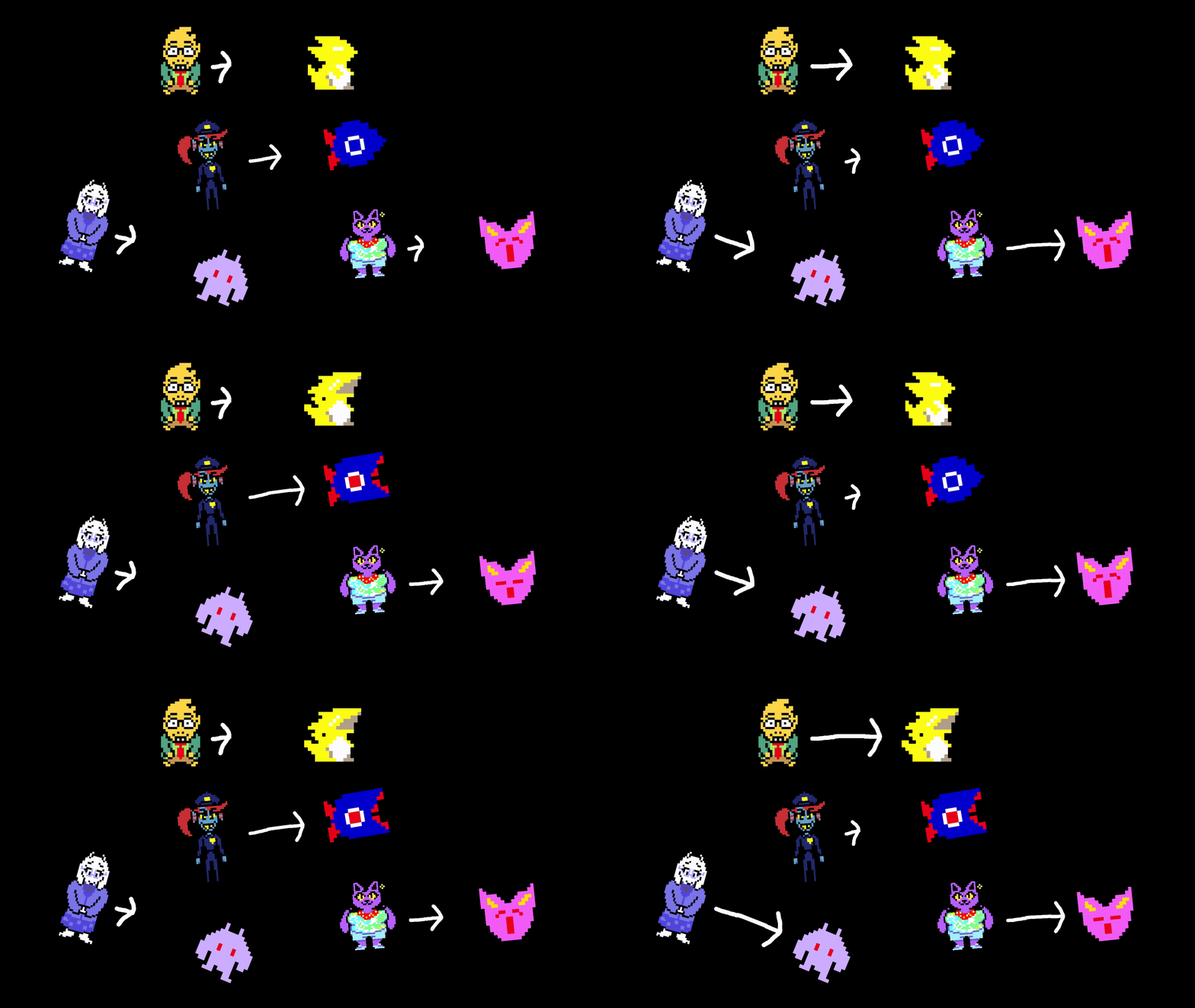
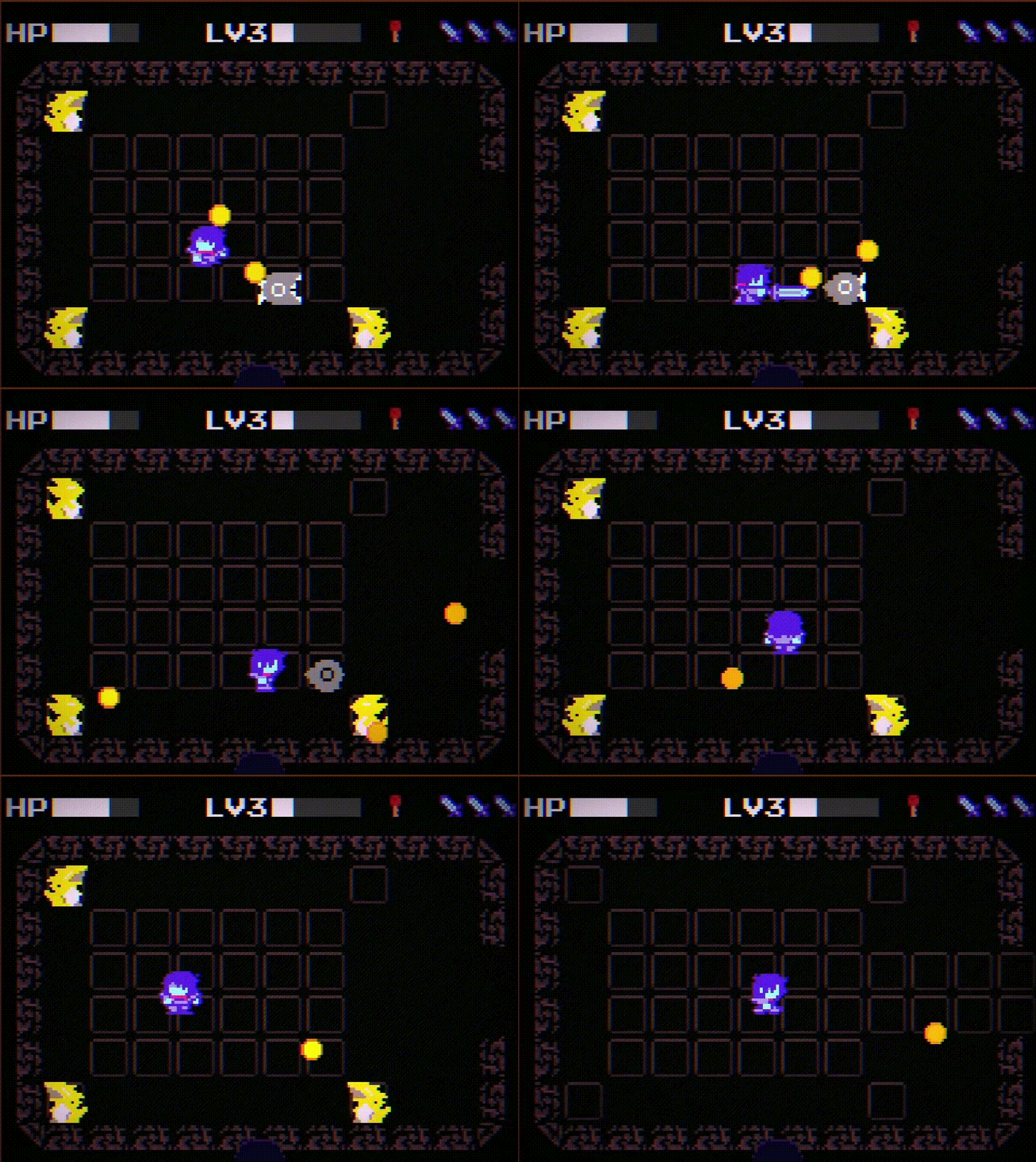
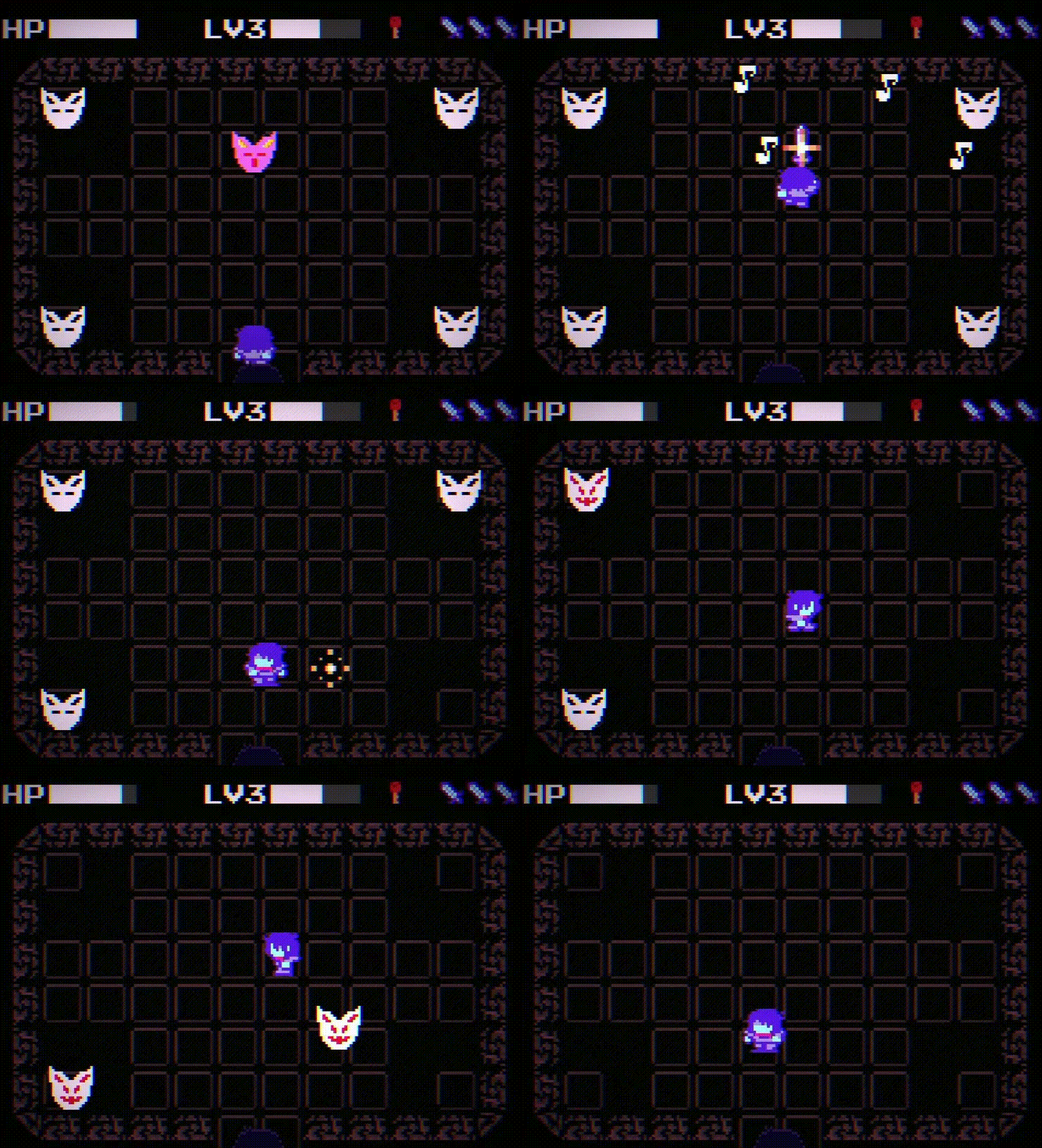
Top Left: after Kris inserts the 'ODDCONTROLLER,' the 'original game' boots up on Tenna's onstage TV, causing the soul to become attached to Kris' ingame avatar, HERO_SWORD. Top Right: many of the enemy sprites in the 'original game' can be interpreted to have parallels to some denizens of the Light World, including Toriel, Alphys, Catty and Undyne. Bottom Left: in the 'original game's' third board, HERO_SWORD attacks a fish enemy, causing three lizard-like enemies to freak out and self-destruct, presumably in reference to Alphys having a crush on Undyne. Bottom Right: A singing pink cat enemy is attacked by HERO_SWORD, causing four white cat enemies to come after them, likely resembling Catty and her younger sister Catti.
The fact that the events of the Weird Route are also evoked within the Sword Route’s second board, culminating in the recruitment of a white cloaked figure (resembling Noelle) to freeze a blue bird enemy (resembling Berdly), further suggests that the Knight is anticipating the red soul to work against Kris’ best wishes for their friends, giving Kris no other choice but to use them as emotionally despondent weapons aimed directly at the reality they once cherished yet wish to escape.
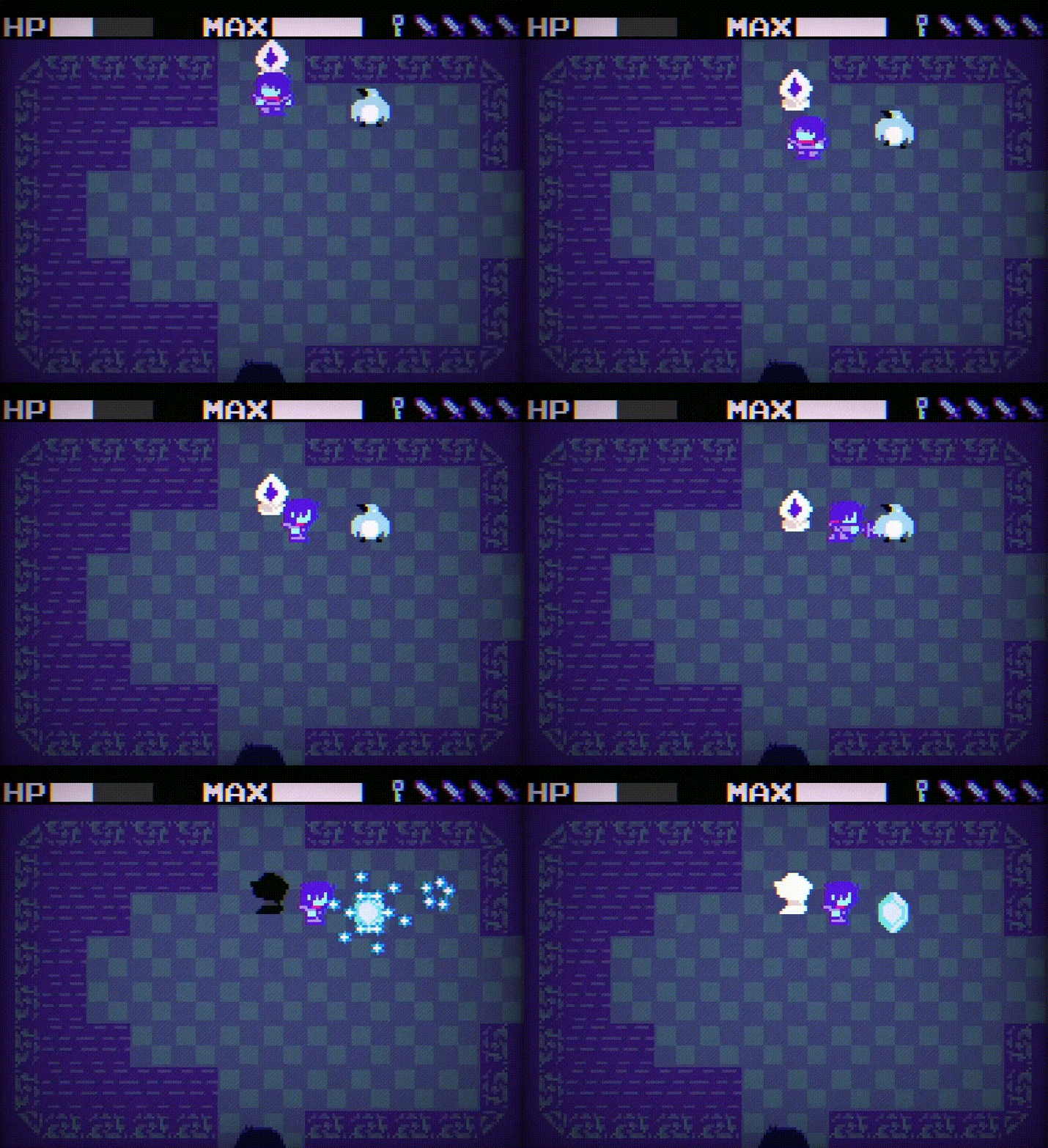
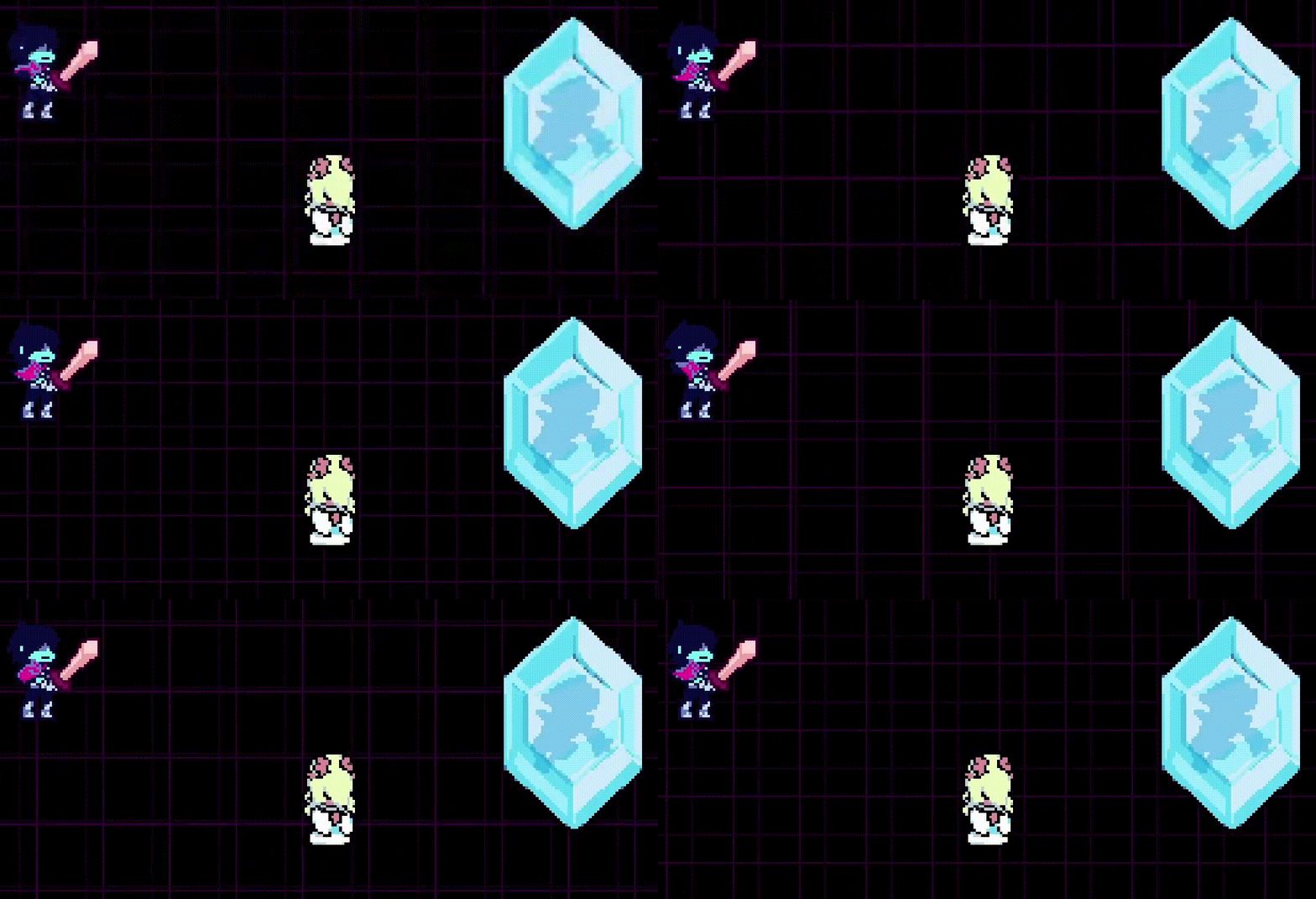
Left: HERO_SWORD uses the White Cloak to freeze a blue bird enemy. Right: the aftermath of Noelle being forced to use the fatal SnowGrave spell on Berdly by Kris, who in turn, was forced to command her to use it in the first place by the player.
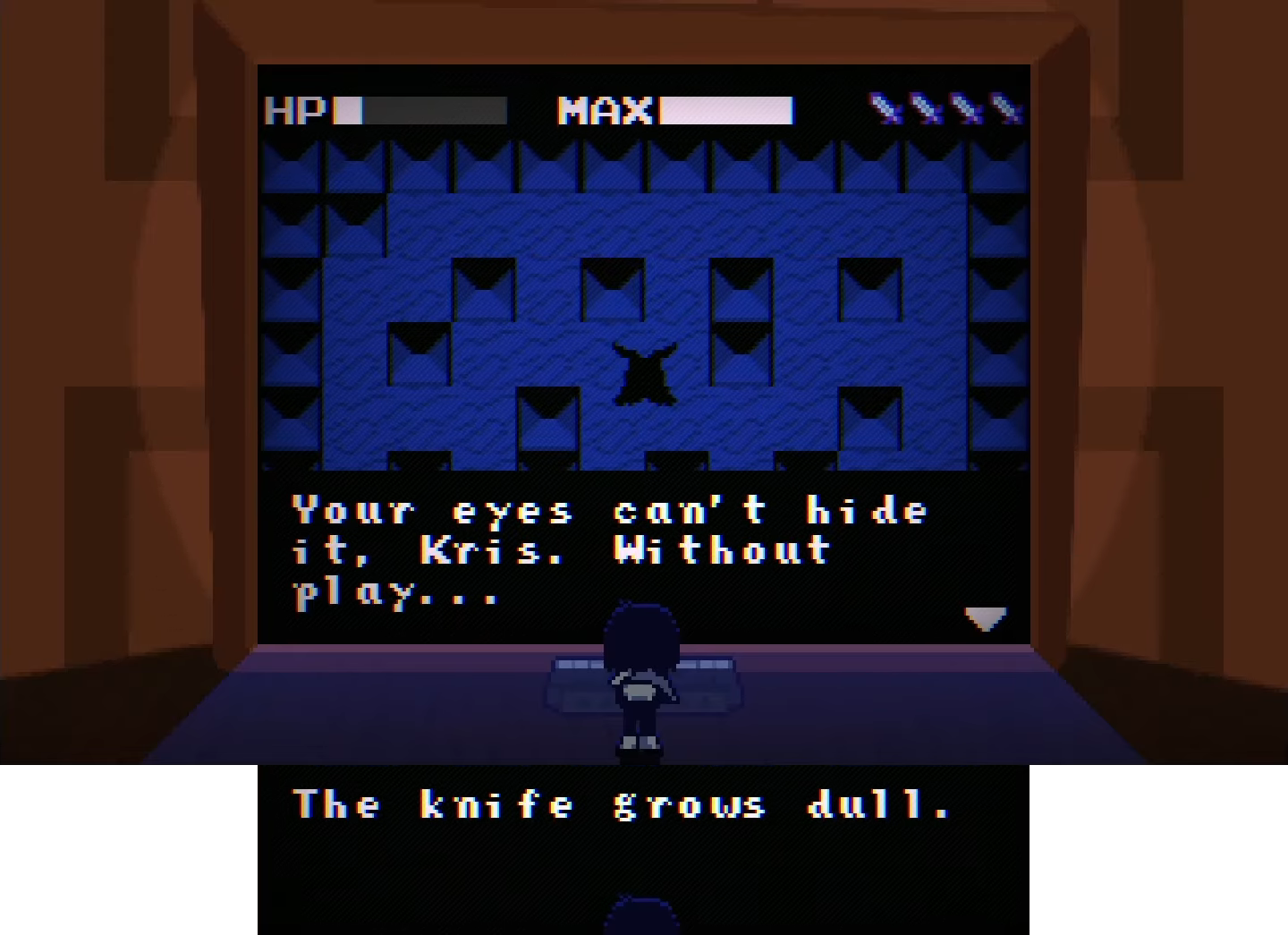
By weaponizing the allure that escapism has in guiding one away from their present reality, the Roaring Knight seeks to convince Kris to break their connection with the Light World, leaving them to ultimately benefit off of Kris continuing to internalize their feelings of inadequacy and their desperate search for any kind of relief from them, no matter how temporary it may be. From the Knight’s point of view, Kris can only exhibit strength and prove their worth through how much they engage in an unhealthy indulgence of fantasy regardless of whether or not they are truly in control of their behavior, encouraging the Knight to continue leading them on by reminding them of their own disappointment and insecurities within their Light World life. As far as the Knight’s motives are concerned, Kris can’t become strong enough to rise up past despair without being driven to a path of nostalgic delusion at the expense of their current reality, or in the Knight’s own words*, “Without play, the knife grows dull.”
In contrast to this more grim view of their fate, it is clear that Kris is starting to feel more fulfilled from simply spending time with Susie and bonding with her through their shared feelings of otherness within their community. At a time in Kris’ life when they would prefer to live on autopilot out of fear of disappointing their loved ones, Susie comes along to show them that they aren’t alone in their self-consciousness as they both start to become more comfortable confidently expressing themselves in front of each other with each passing chapter.
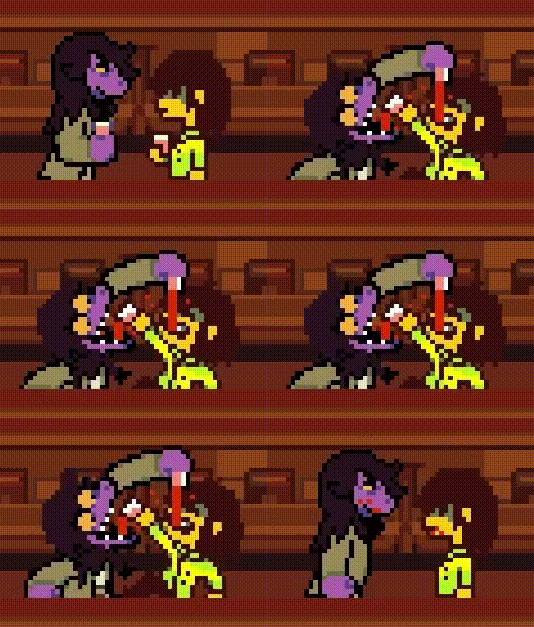
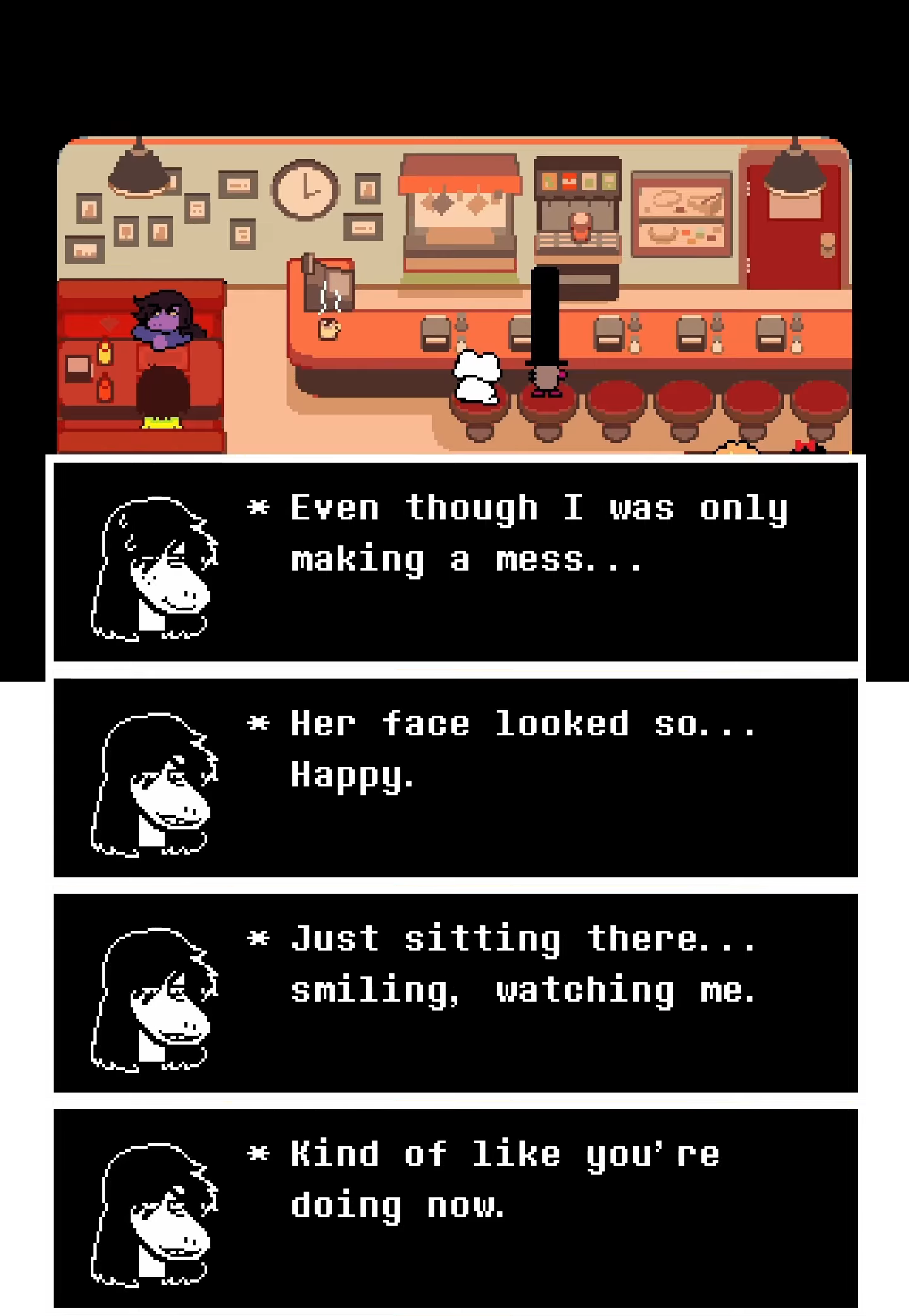
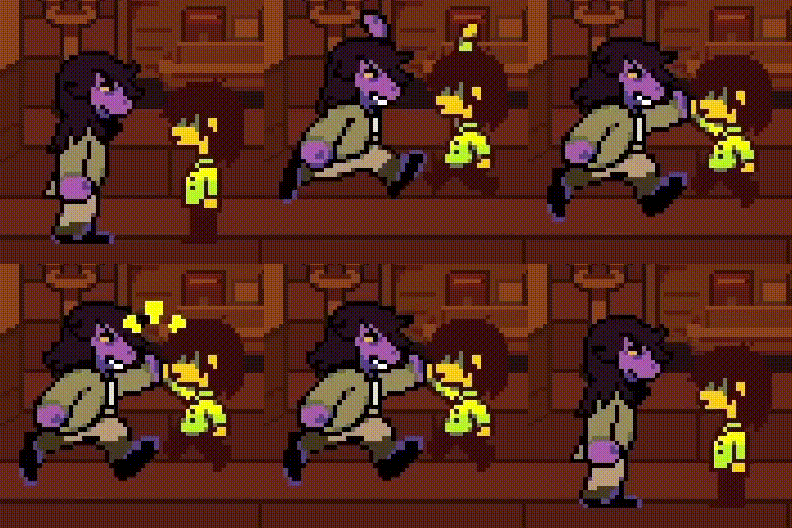
Left: Kris and Susie pour the 'sick' fruit juice from Hometown's church into each other's mouth, bonding over the taste of church-flavored juice. Middle: at QC's Diner, Susie recalls Toriel keeping her company the last time she was there, describing how Kris' smile, unseen by the player, reminds her of her. Right: Kris and Susie high-five after getting Noelle to have them come over to her house to look for clues regarding how to open the shelter study.
While Susie was introduced at the start of the game as an antisocial bully with a bad habit of pushing people away, her past interactions with Kris and Toriel, as detailed in this post from Noelle’s blog and in Susie’s monologue to Tenna at the end of Chapter 3 respectively, show that even before the events of Chapter 1, she was steadily becoming less afraid to be vulnerable and honest with others in her life as long as she is with people who understand or are open to understanding her.
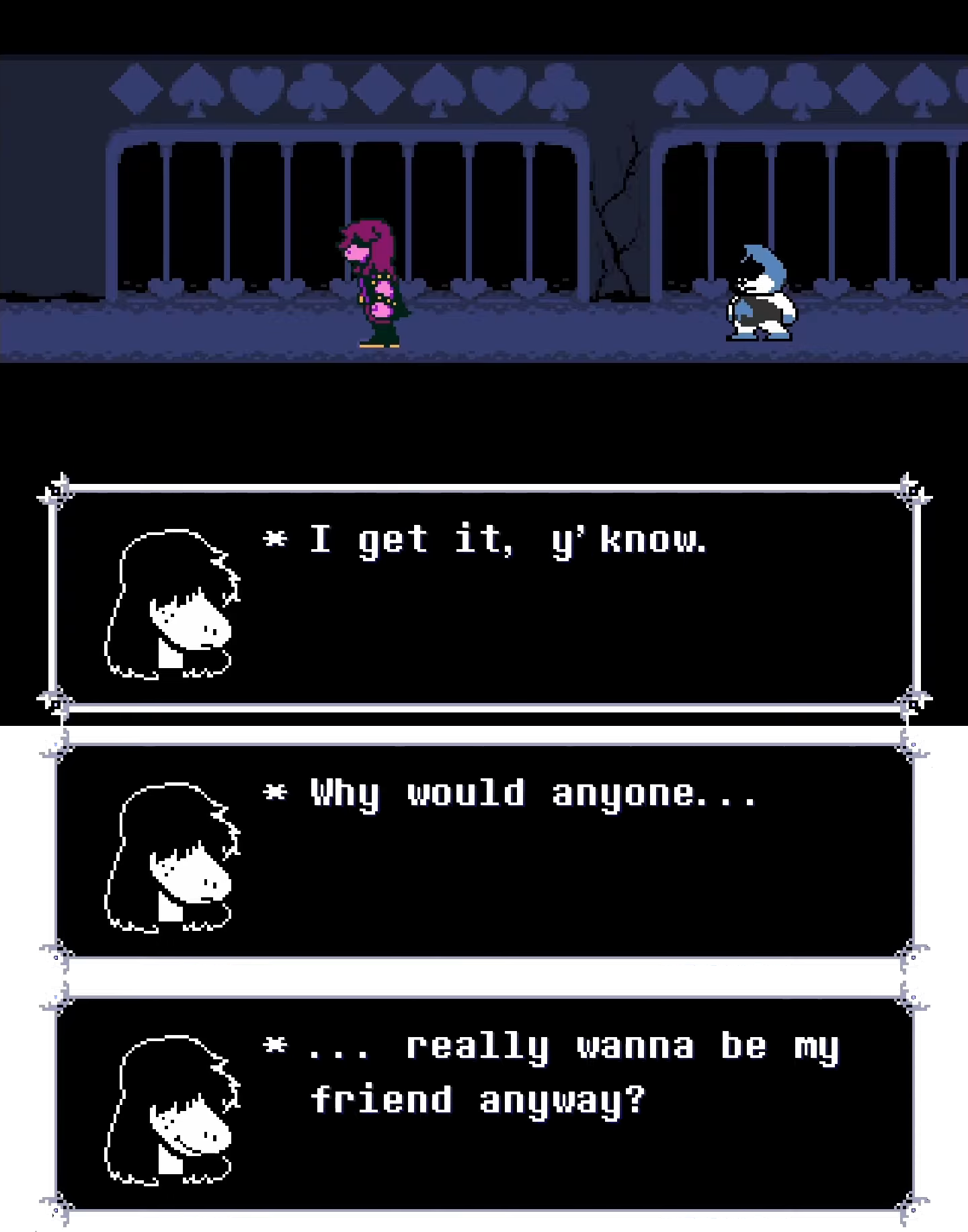
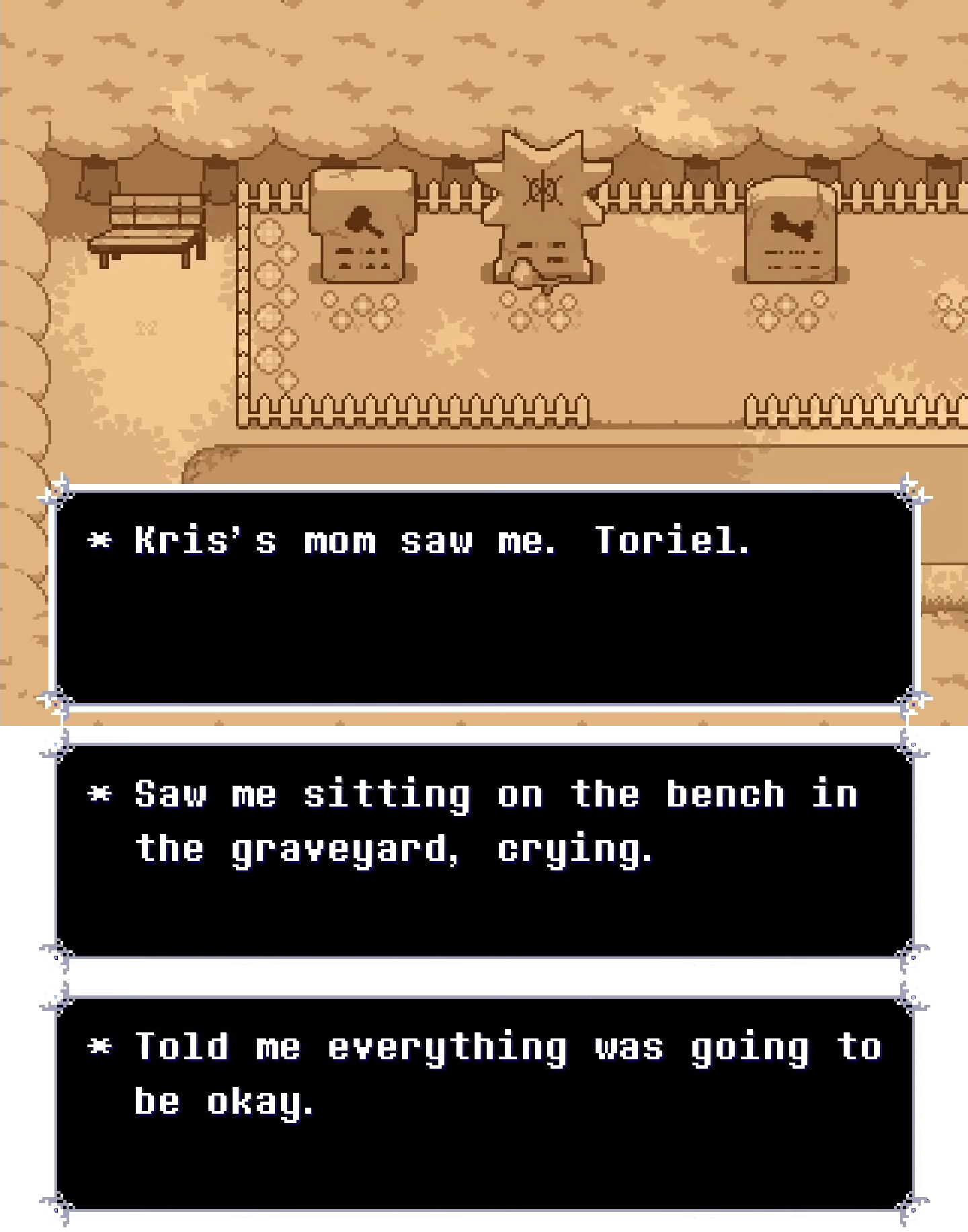
Left: Susie slips back into her hardened, violent demeanor after finding out that Lancer betrayed her in order to appease his father. Right: Susie remembers being comforted by Toriel after she saw her crying in the cemetery.
However, it wasn’t until her and Kris’ discovery of Dark Worlds that she was able to truly find a safe space that allows her to be her unapologetic self, culminating in the realization of her unhealthy hostility to others as stemming from a place of insecure loneliness and resulting in her foraging a more meaningful connection with Kris as a close friend and ally to confide in.
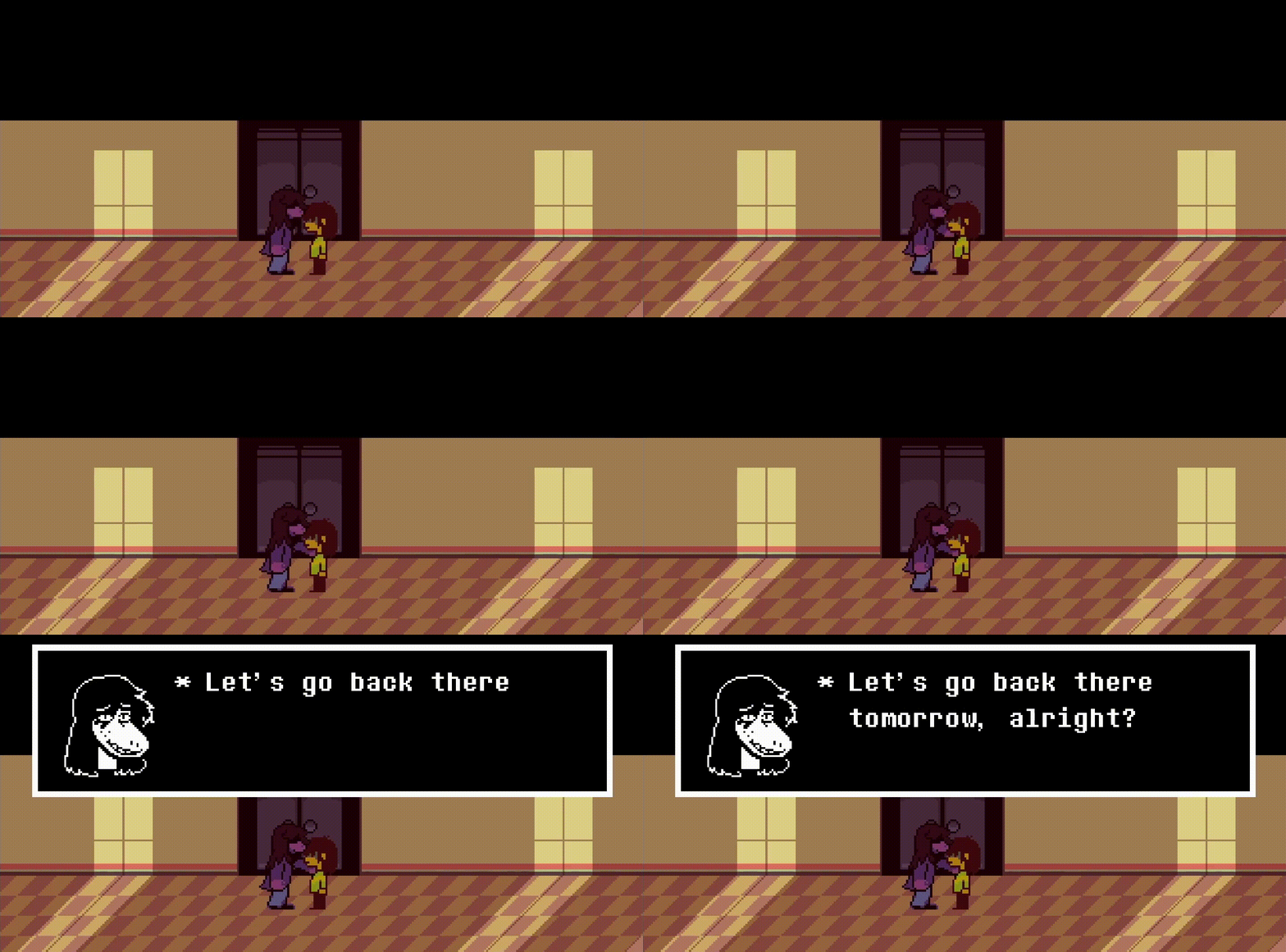
At the end of Chapter 1, Susie invites Kris to come back to the Dark World in the storage closet tomorrow with a genuine smile on her face, emphasizing her newly formed bond with Kris.
Furthermore, Susie’s frustration toward rigid expectations and her refusal to see life as an inevitable predetermined path is what inspires Kris to pursue their friendship with her, finding it to serve as a fulfilling alternative to the prolonged and fatalistic quest for empty escape that the Knight has set them on. When they engage in fantasy through exploring and sealing Dark Worlds with Susie, her confidence towards thinking outside the box and questioning things when necessary reminds Kris of the value they have as an individual separate from any preconceived idea of who to be, proving that escapism can act as a worthwhile environment for positive change as long as it serves to supplement reality rather than replace it.
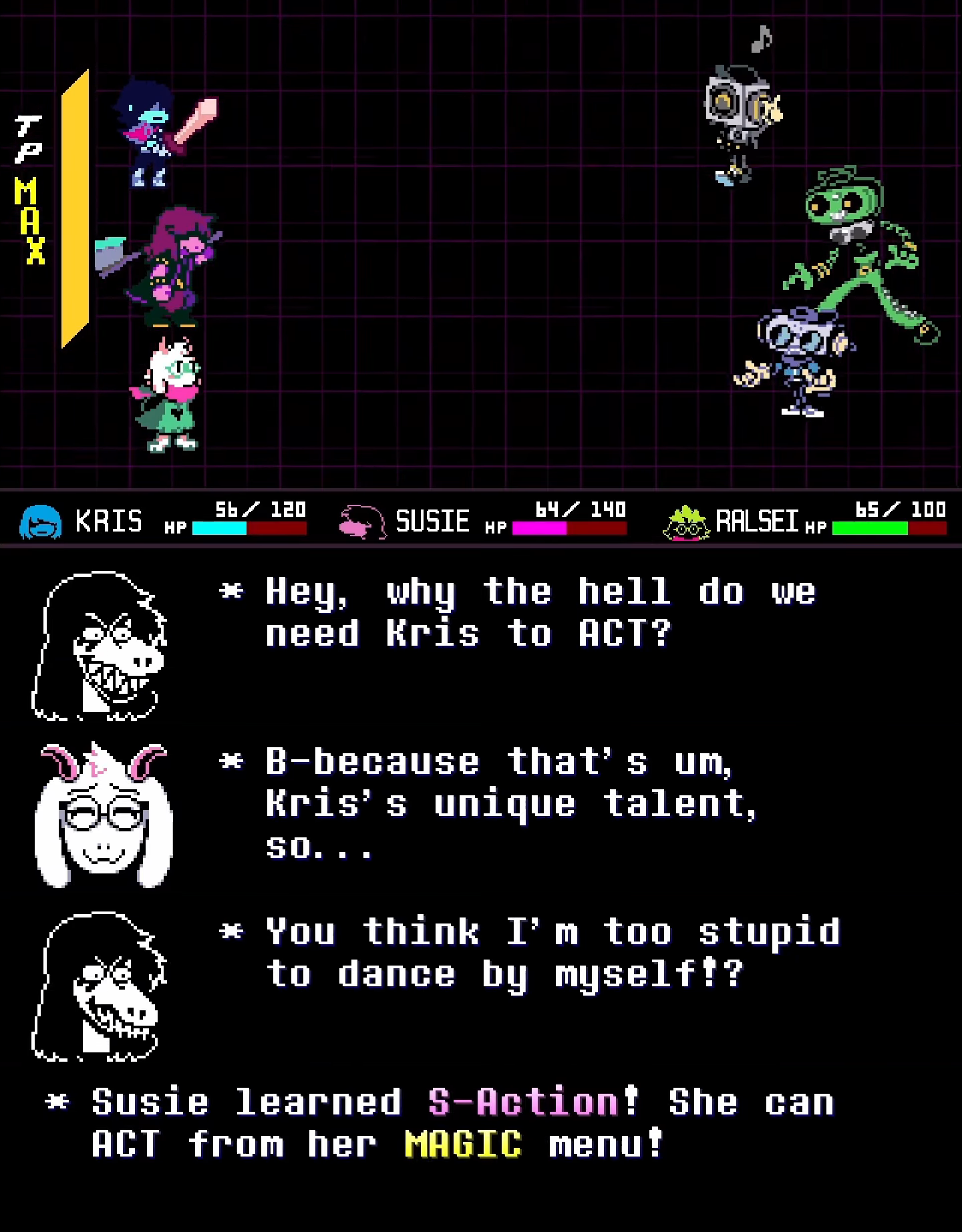
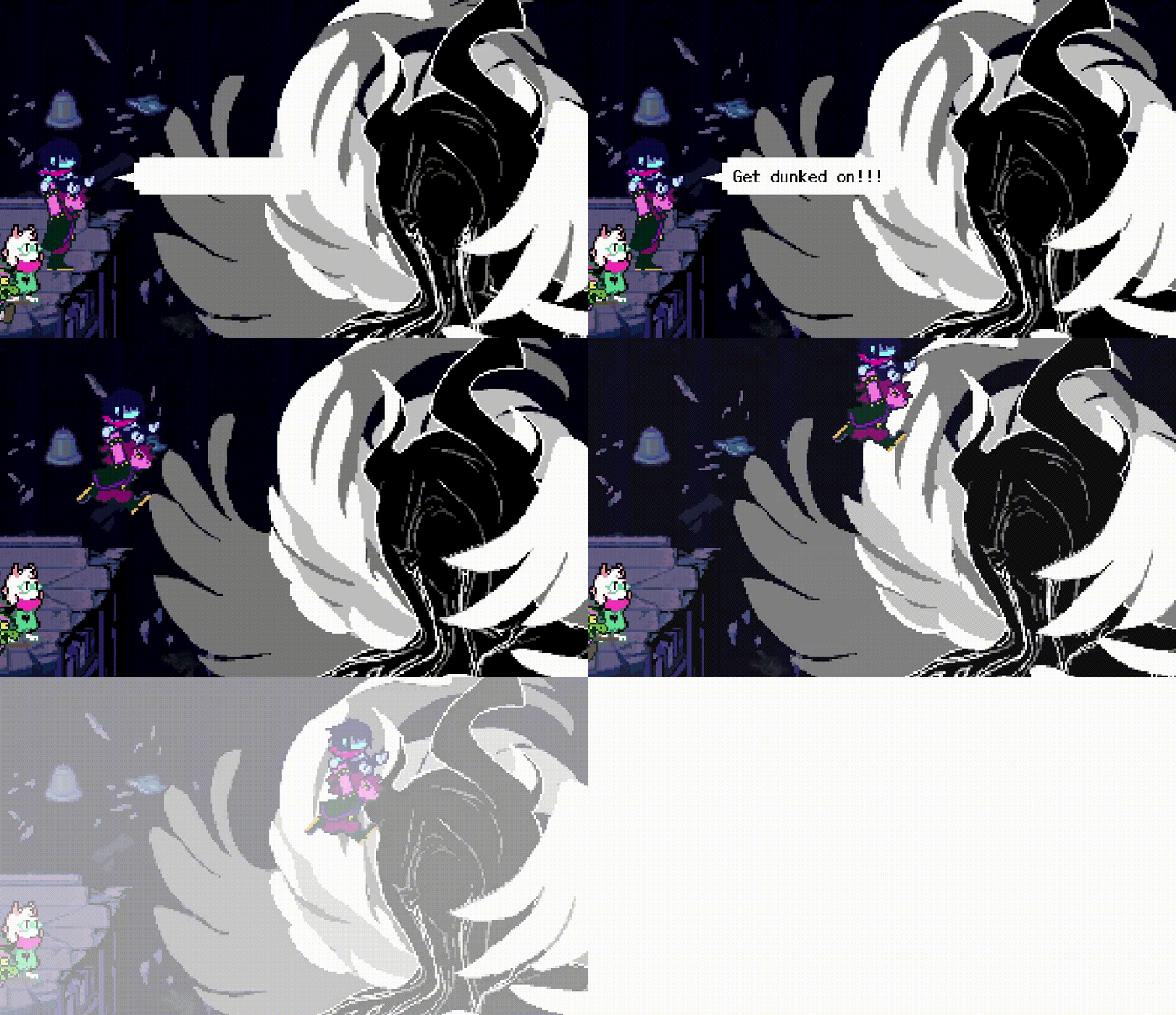
Left: Susie questions the arbitrary need for Kris to be the only one capable of performing ACTs in battle, motivating her to dance on her own accord and encourage Ralsei to do the same, an expression of free will so powerful that it unlocks the S-Action and R-Action mechanics. Right: in Chapter 4's final battle against the Titan, Susie's quick decision-making culminates into her and Kris jumping into the Titan themselves so that Kris can use the soul to defeat it from the inside.
The Knight may be locking Kris into a path of complacency to their desperation and fear, but Susie’s consistent willingness to push forward beyond the bounds of what’s expected of her to reach a brighter future is ultimately what keeps Kris from completely slipping away from the Light World. Despite Kris being happy to engage in a closer bond with Susie, the main factor that prevents them from fostering a more mutual connection with each other lies in Susie’s lack of knowledge regarding not just Kris’ correspondence with the Knight, but also the extent to which Kris’ dissatisfaction with their life is being tempted by those who wish to manipulate them. In fact, the secret boss encounter with Spamton NEO in Chapter 2 acts as a perfect microcosm of Kris’ relationship with the Knight, where Kris’ desperation and perceived inferiority are used to manipulate them to do Spamton’s bidding with them all the while expecting that they would somehow be liberated of their troubles as a result of their partnership.
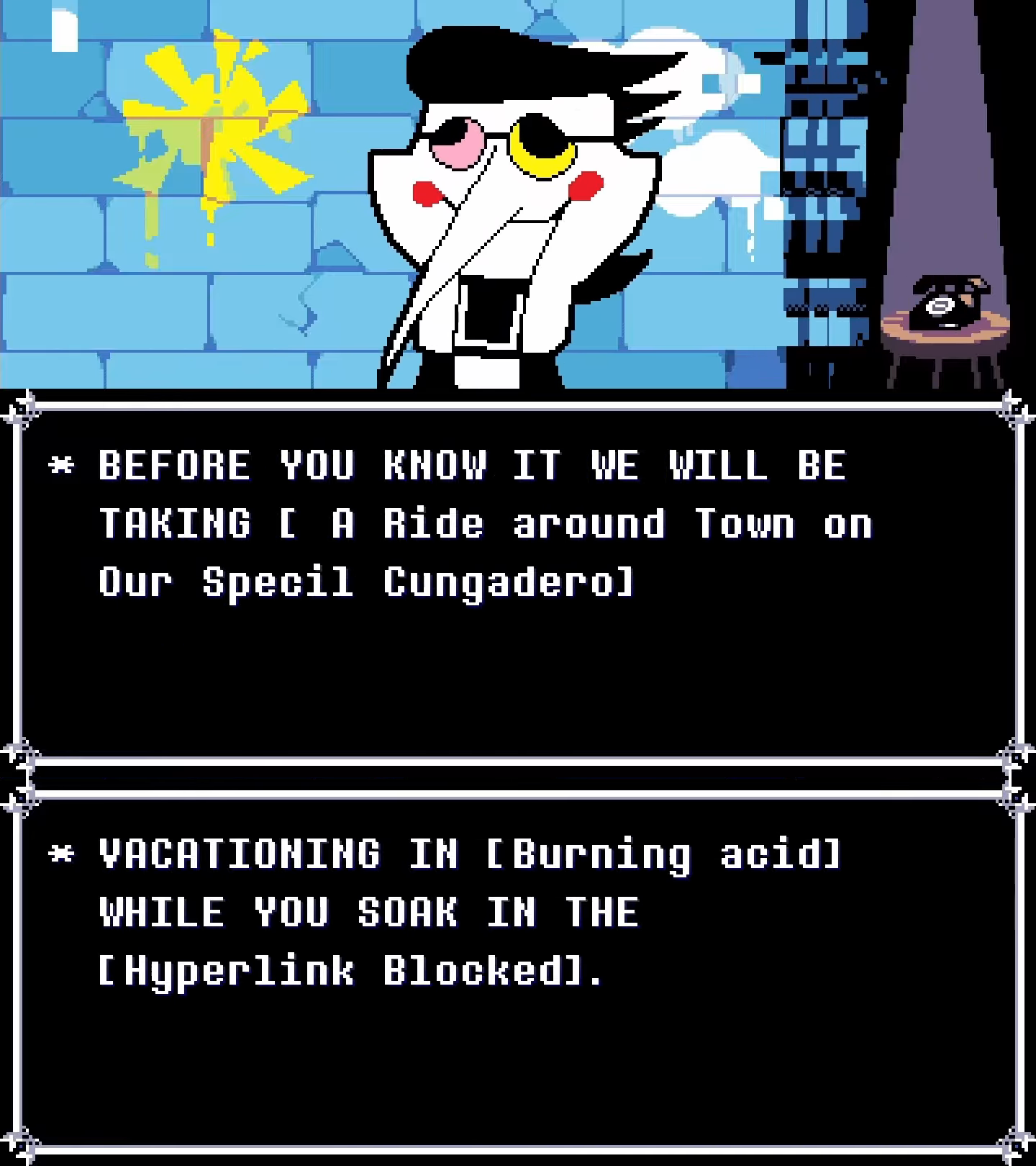
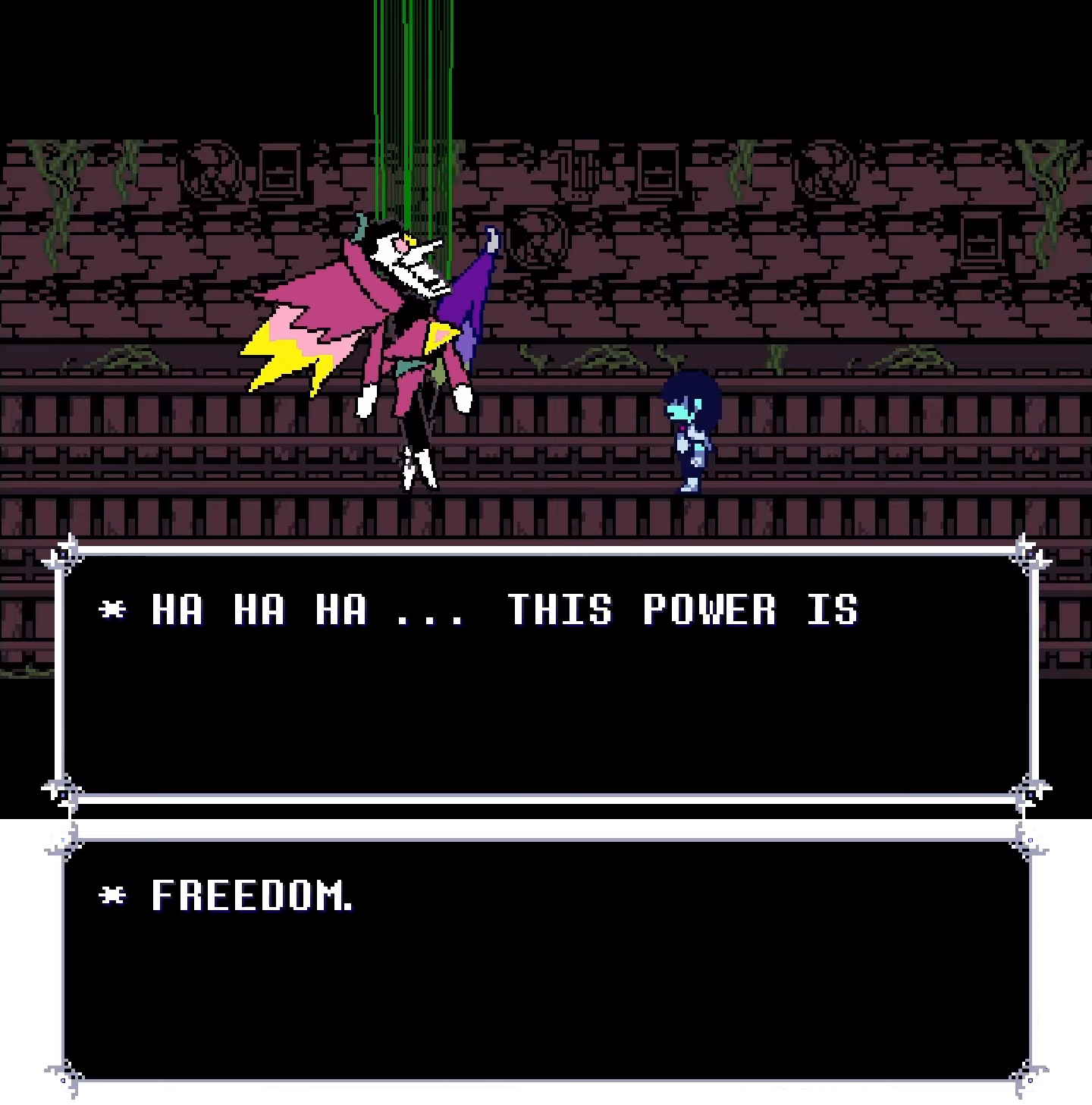
Left: Spamton offers Kris a deal at his shop, promising them freedom even as he is trapped within the bounds of his own iconic broken speech patterns. Right: once Spamton gains the NEO suit, he is able to finally relish his idea of freedom within the power that it brings him.
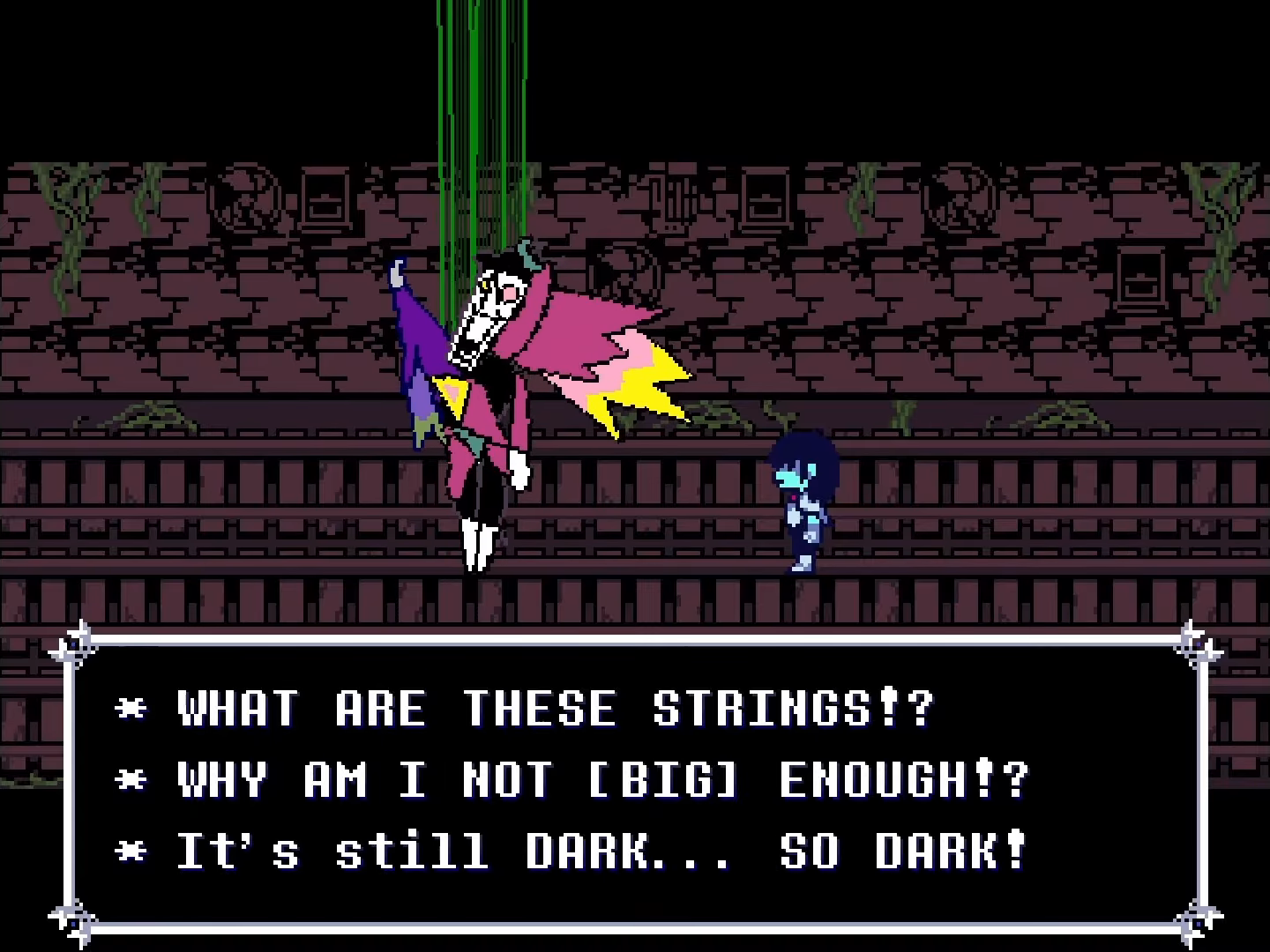
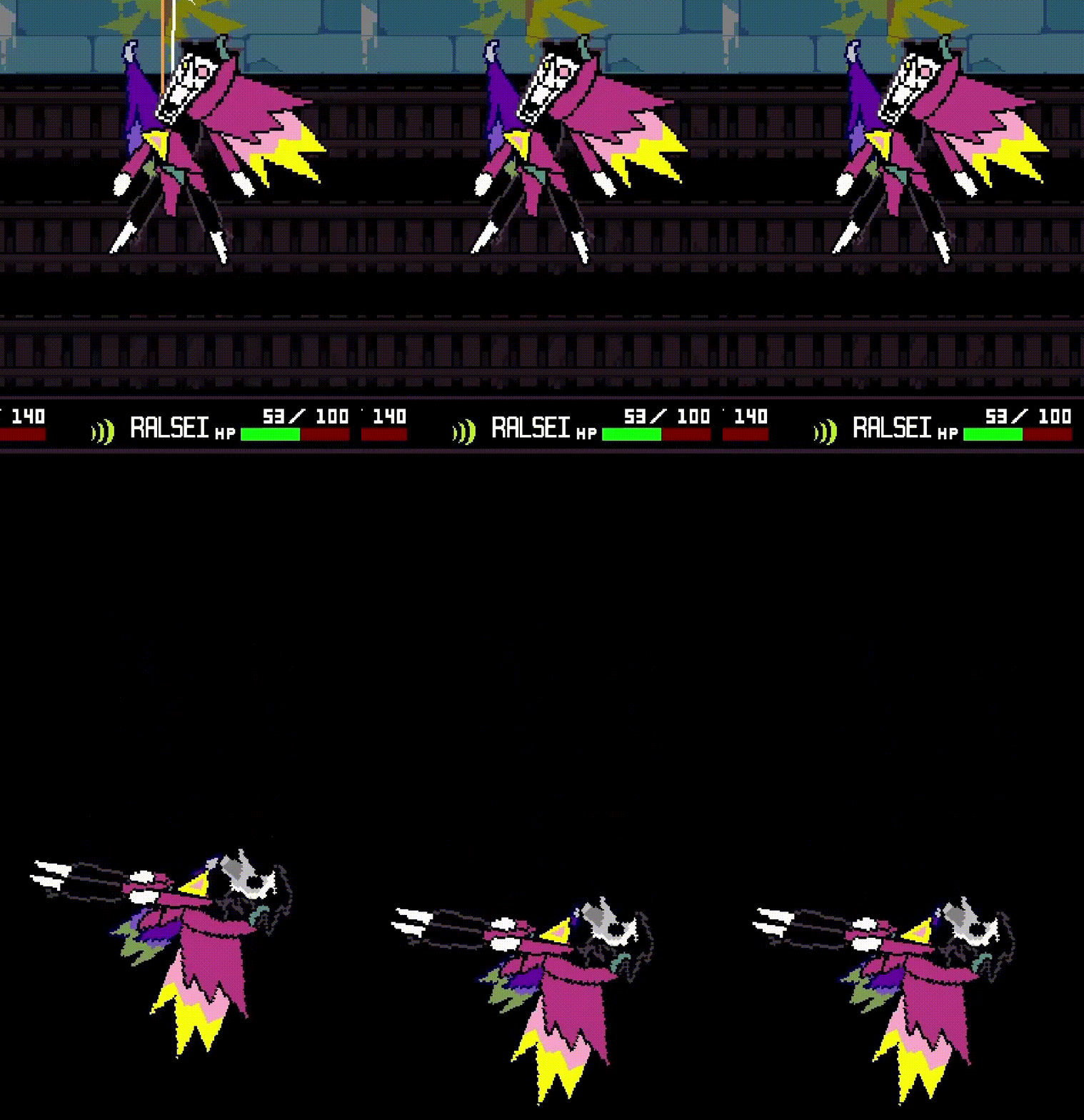
Once Kris gives Spamton access to the NEO suit, it becomes clear that Spamton was only ever in it for his own benefit, but even then, he realizes that his new form doesn’t give him as much power as he expected, making his own weakness to manipulation literally more visible to him than ever before through the presence of strings holding him up like a marionette (pictured left). If the player chooses to engage with his boss battle by cutting his strings instead of attacking him directly, Spamton would realise that Kris, Susie and Ralsei’s companionship is what gives them a level of strength greater than any self-indulgent motivation to gain power that he could act on, resulting in him allowing the Fun Gang to cut his final string and revert him back to his vulnerable self (pictured right).
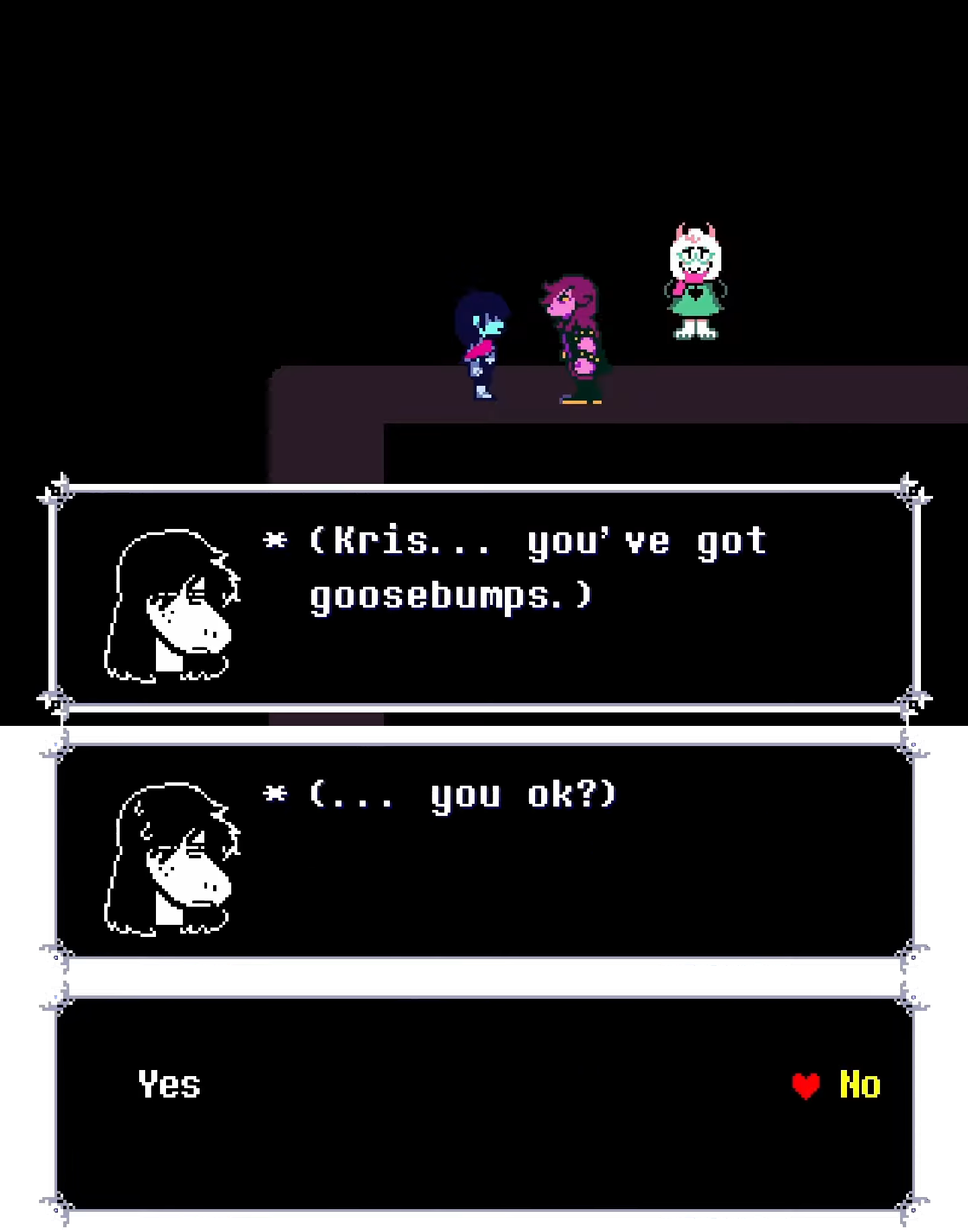
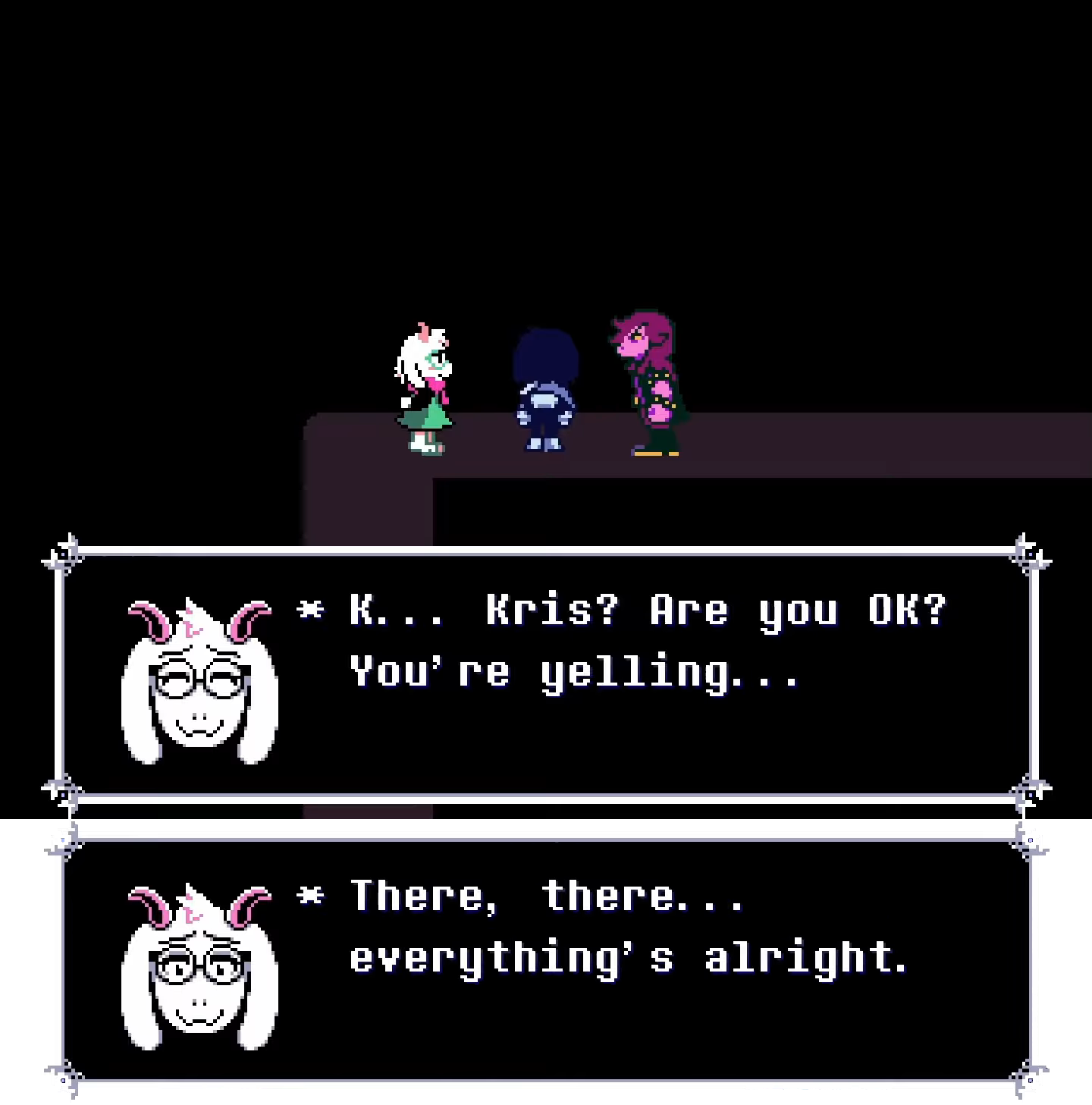
While walking back to the upper floors of Queen’s mansion after finishing the Spamton NEO fight and retrieving the Dealmaker item, Susie notices that Kris is feeling tense from the encounter, giving the player the choice to let Kris tell her if they are doing okay or not. If you let Kris answer ‘No,’ Ralsei would comment on how they are yelling and proceed to calm them down (pictured below), indicating that seeing Spamton turn manic and corrupt while seeking freedom from his less-than-ideal circumstances left Kris feeling like it’s a lost cause for them to try to regain what they have lost from their own life without it costing them their sanity.
Kris may know that they feel truly happy spending time with Susie and sharing in her otherness, but at the same time, they have internalized the need to repress their honest self and become subservient to their past self so much that they are scared of letting go of their dependency on the red soul and the Knight’s expectation of them to reject their current life entirely. After all, Spamton wasn’t immune to this bitter rejection of his own present self either, manipulating people in a vain attempt to regain the power and influence he once had as a Big Shot car salesman instead of confidently rebuilding a new life for himself to save him the trouble that obsession would bring him. In that regard, witnessing Spamton’s deterioration also made Kris aware of how retreating further into fantasy at the expense of their reality could potentially trap them in a pit of disappointment that they can’t escape from, or worse, turn them into a selfish, antagonistic wreck corrupted by the need to fill the deep pit of emptiness inside of them with fleeting short-term satisfaction to the detriment of the people and things they actually value deep down.
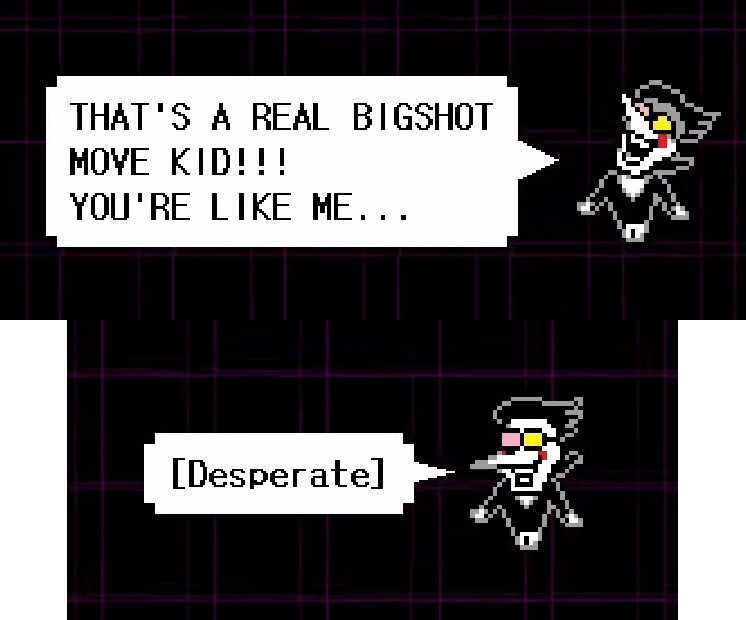
In Kris' first encounter with Spamton, the short-tempered salesman tells it like it is.
Kris’ self-consciousness about their capacity for maturity and their otherness as a human in a monster town allow them to see opening up and embracing their honest self as a weakness, but conversely, they find it scary to consider how purely clinging to the past out of a dislike for their perceived inferiority in the present ultimately wouldn’t help them in the long run. With that in mind, the ending of Chapter 4 leaves Kris at a fork in the road between bravely embracing a confident new future or losing themself in the allure of nostalgic delusion masquerading as freedom that the Knight is luring them towards, a choice that is complicated even further by their parents’ increasingly messy relationship eliminating the possibility of their life ever going back to the way it was when they were younger.
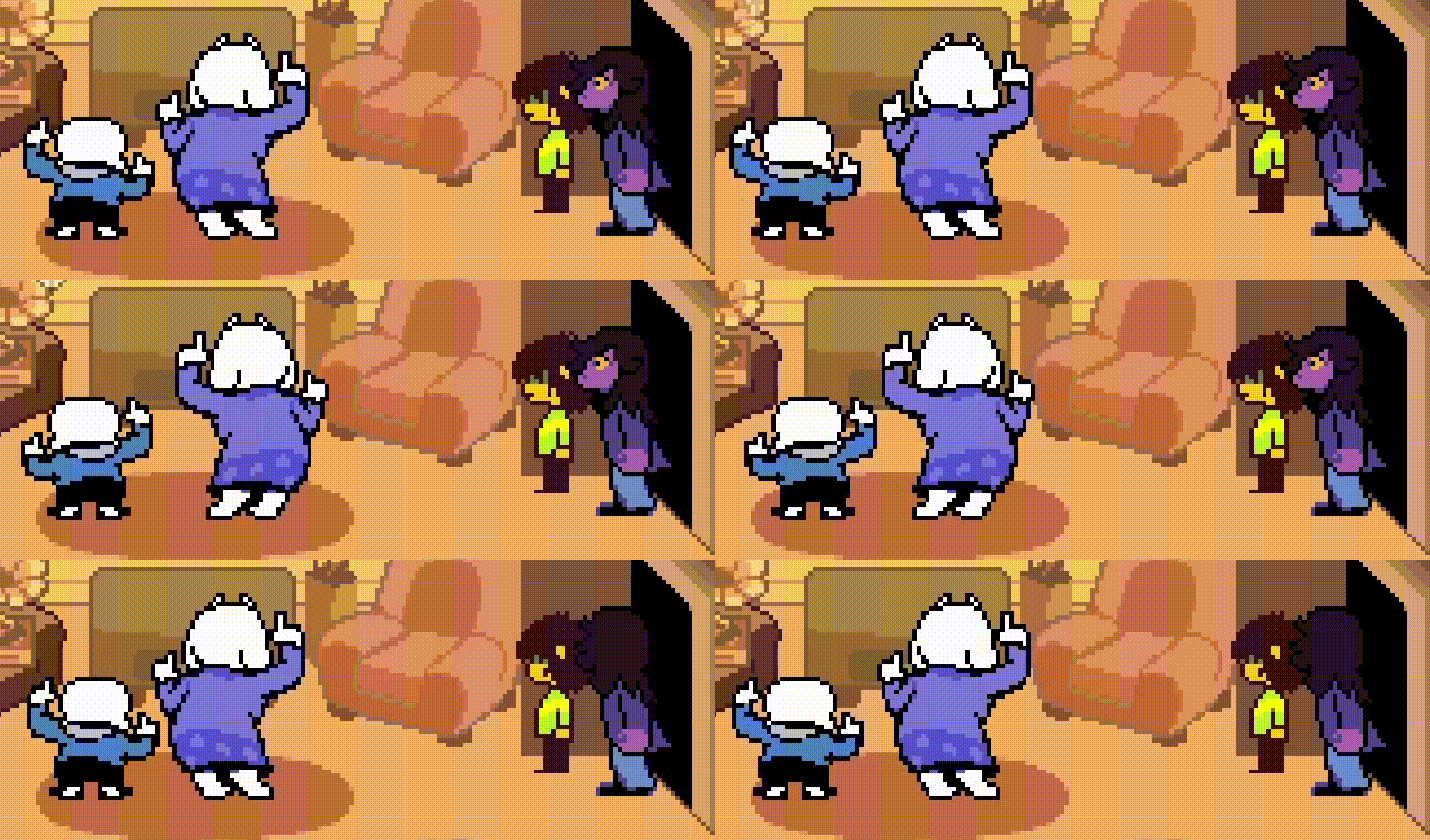
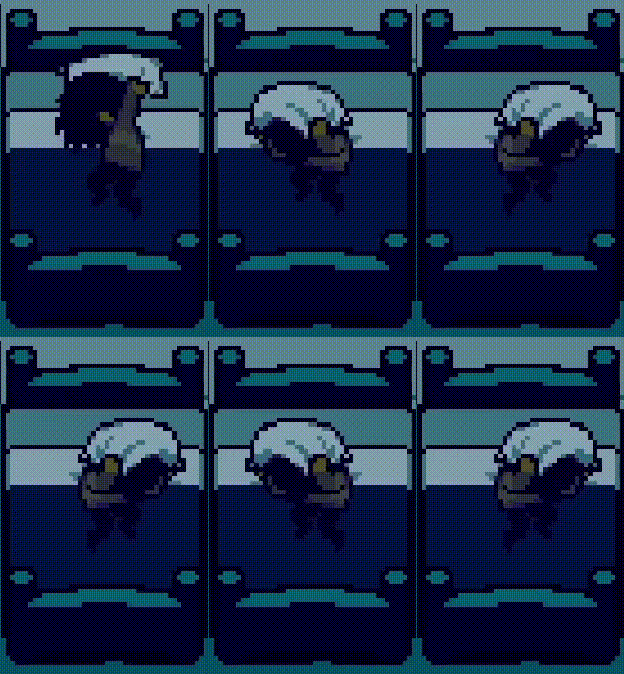
Left: Kris and Susie walk in on Toriel and Sans dancing to some old-fashioned tunes. Susie looks shocked while Kris looks away from Susie embarrassed as if to show that they don't want to talk about it. Right: Kris tosses and turns in their bed, unable to sleep from the noise that Toriel and Sans are making in the other room.
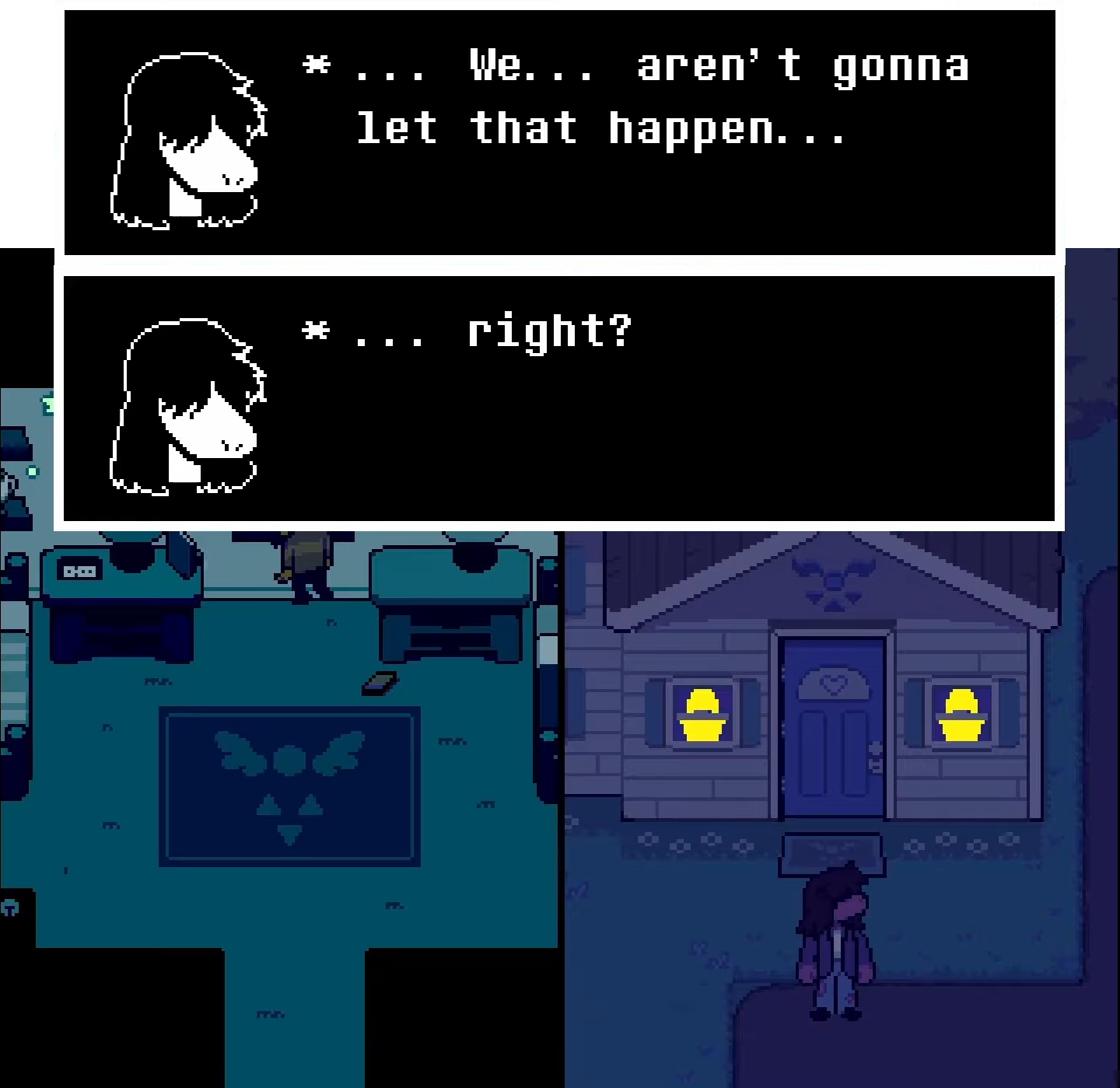
Despite what most of the fandom would be quick to tell you, Kris’ fearful anxiety at the thought of their mother dating the funny skeleton man from the convenience store across the street isn’t necessarily targeted at Sans himself, but rather the notion that the world around them is changing too fast for them to keep up and that the sources of joy and comfort that they used to rely on their whole life are fading away or becoming unrecognizable in their current state. While their friendship with Susie reminds Kris that they can still live a fulfilling life through embracing positive change, the deep emotional attachment that they have to the contented life that they used to lead is brought to their attention by yet another drastic change in their familial dynamic, causing them to relapse into hopeless longing for things to turn ‘back to normal’ again someday. It is only when they hear Susie’s voice from outside their window that they snap out of their restless tossing and turning to listen to her asking for reassurance that whatever tragedy is being foretold by the prophecy wouldn’t occur as long as they can both prevent it together (pictured below), prompting Kris to begin sneaking out the window as if they are about to catch up to Susie to answer her question.
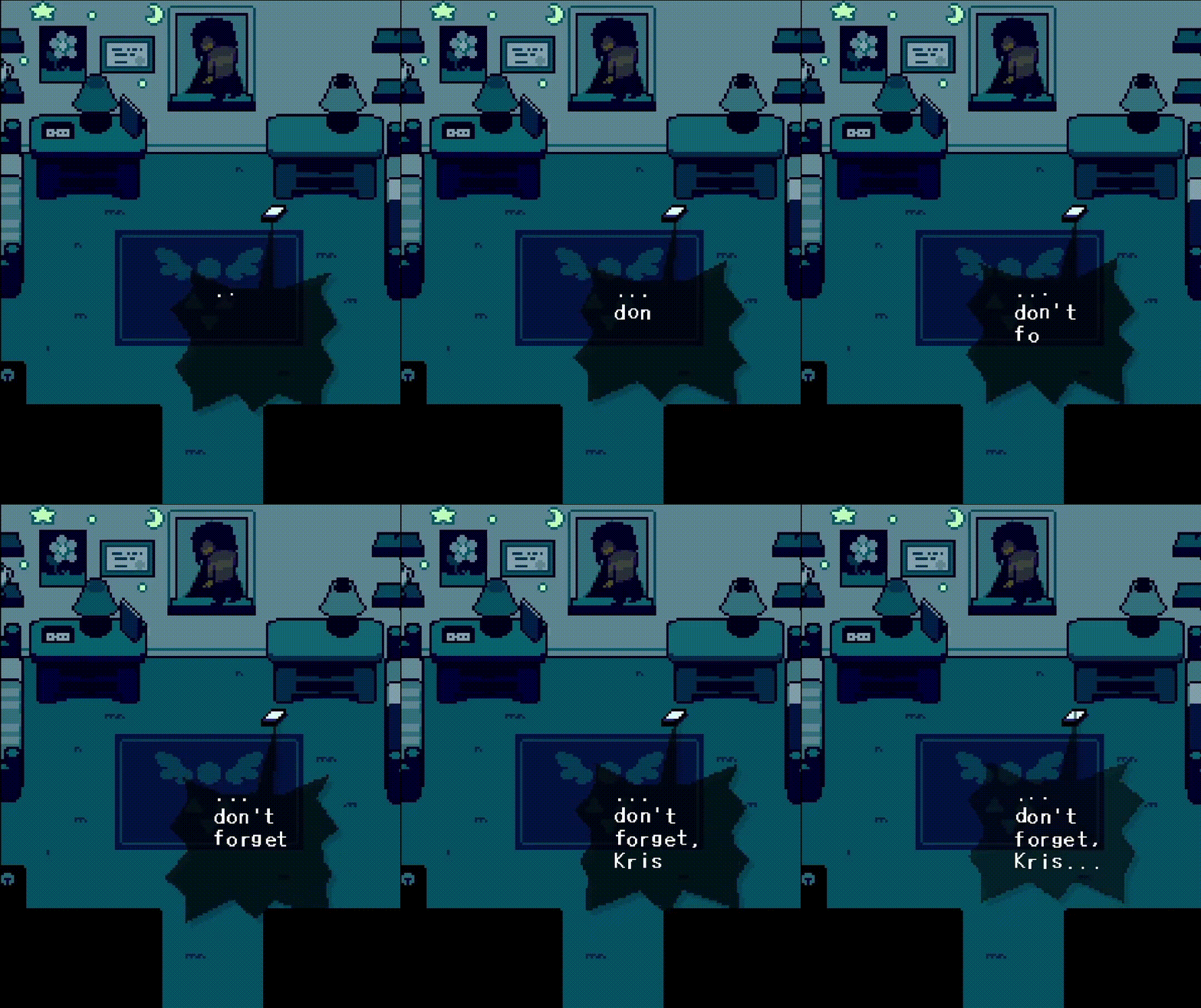
Before they could head out, however, Kris notices their phone ringing as the voice that contacted them earlier in the chapter, whom I can confidently presume is the Knight, calls to remind them to remember that they ‘promised,’ implying to Kris that seeking escapism above all else was ultimately their choice because they cared so much about making things ‘right’ in their life when they made that deal in the first place. (pictured below) By suggesting to Kris that it would be wrong of them to break their promise and deny themself of the future they ‘really’ want, the Knight is placing a sense of moral duty onto Kris, indicating that they would end up feeling guilty for abandoning the Knight and potentially doing their long lost friend Dess a disservice by missing out on a chance to see her again.

While there is a possibility that Kris may be swayed in the Knight’s favor in order to avoid the potential guilt that comes with letting go of what they’ve lost, the fact that the Knight tends to deliberately intimidate Kris and lean into their insecurities to manipulate them calls into question whether or not they would even take up their end of the deal at all. Even if the Knight were loyal to their own word, Kris’ entire world would likely end up engulfed in endless darkness as a result of their plan succeeding, thus leaving Kris with valid reasoning as to why they shouldn’t rely on the Knight to help them guide their future.
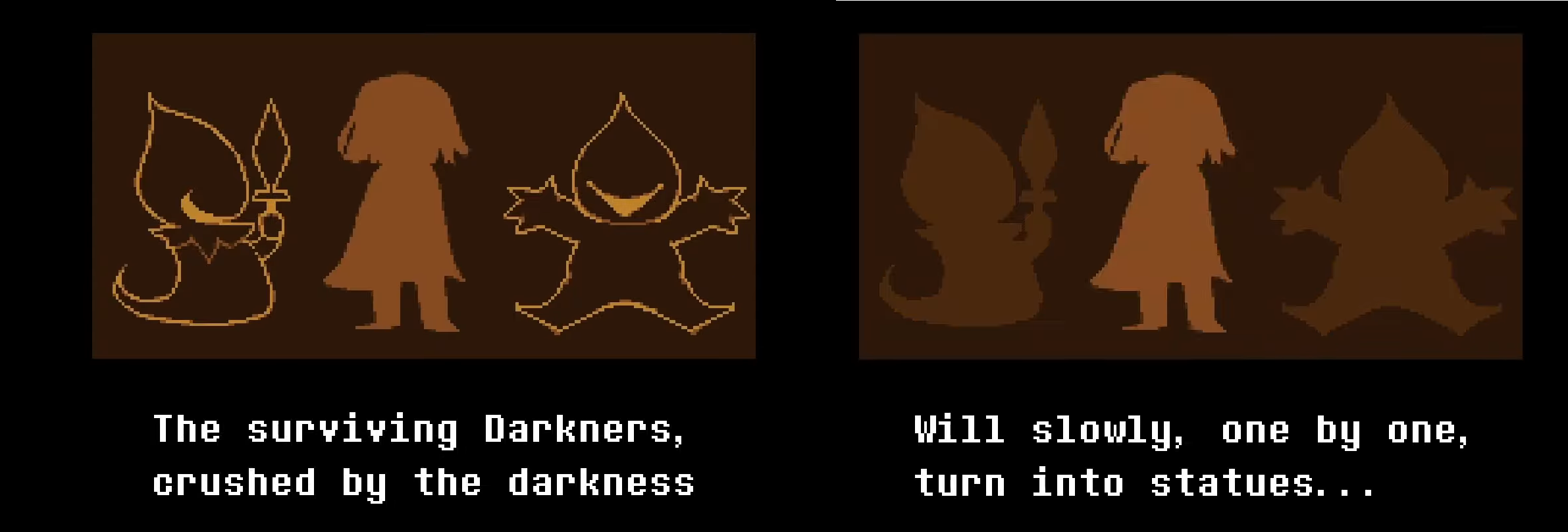
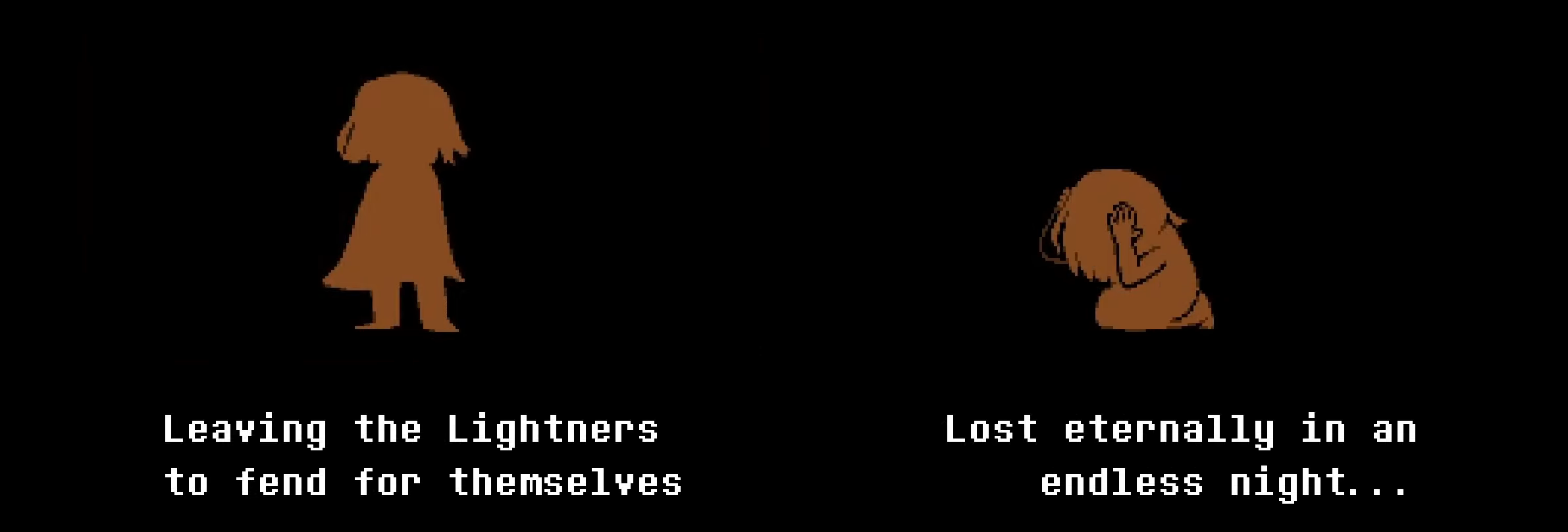
Ralsei explains the Roaring, an apocalyptic event that may occur if darkness overtakes the Light World through the formation of too many Dark Fountains.
When it comes to deciding what path Kris should take in order to feel truly fulfilled, the correct answer may seem obvious to us what with Susie embracing a more actively hopeful and empathetic path with open arms, but at the same time, the Knight is trying so hard to pull on Kris’ turbulent emotions at such a formative time in their life to the point where they feel like it’s harder for them to make that decision for themself. As I look back to my own life as a teen, I’m reminded of how much I’ve let my own view of the world be filtered through escapism and nostalgia, expressing frustration and hopelessness when confronted with harsh realities of the world that go against the otherwise utopic happy endings evoked by the fantasy media I engaged with in my youth. Eventually, my simple desire for something hopeful to hold onto in my life amidst a more uncertain social and political ecosystem turned into an obsession to fill my mind with as much enthusiasm as I could muster for my beloved fiction, even at the risk of repressing or antagonizing any critical perspective that came its way either from my own mind or from within internet fandom circles.
For the longest time, I was scared of considering the thought that my pure embrace of fandom was failing me as a support system, especially as my appreciation for the art that I enjoyed was being challenged by my implicit need to surround myself with it at all times through constant consumption of fan content. Though I initially discovered a profound joy in experiencing communities built off of a large enough shared love for art to develop in-jokes and a hyperspecific rapport around it, I slowly started becoming disenchanted by it over time as I developed an unspoken expectation for myself to forge my identity completely around the media that I enjoyed without giving myself the space to understand why I enjoyed it in the first place. While I did have an understanding of my basic likes and dislikes in regards to what art I preferred to engage with, I felt more compelled to put my own deeper preferences and nuances behind me when engaging with fandom to let my perception be guided by that of other fans over my own interpretations and interests. As a result, I felt more uncomfortable whenever I came across a perspective that challenged the positive outlook I tried to have about the art or a flaw that I noticed within the art itself that made me enjoy it less than I wanted to. This discomfort bothered me to a degree where I was more worried about whether or not I was wasting my time and energy trusting in stories that were inherently imperfect rather than recognizing what I personally took away from the art with a more nuanced outlook toward it in mind. From adopting this misguided mindset, I ended up using fiction as an unstable crutch to help bring an artificial sense of purpose into my life instead of a tool to help me understand myself and the world around me a little better, which made for a more limited worldview and a more impersonal relationship with art that did not leave me with enough room for soul searching outside of simply engaging with it.
As an adult, I’m still faced with a degree of discomfort whenever I’m faced with criticism of a piece of media that I cherish, but instead of feeling like I have to justify my whole existence by obsessively combating those views in my mind, I’m able to slow down and remind myself why I personally connect to the art that I do while admitting to its shortcomings to avoid making my life overreliant on an unconditional and toxic love of my favorite art. Just as I remind myself of the place that fantasy and escapism have in my life to avoid clouding my own senses, Kris is starting to realize that the emotional connections they make with their fellow Lightners, particularly Susie, within their Dark World escapades are what make their engagement with fictional worlds more meaningful than if they were to use them purely as a coping mechanism to separate themself from their reality.
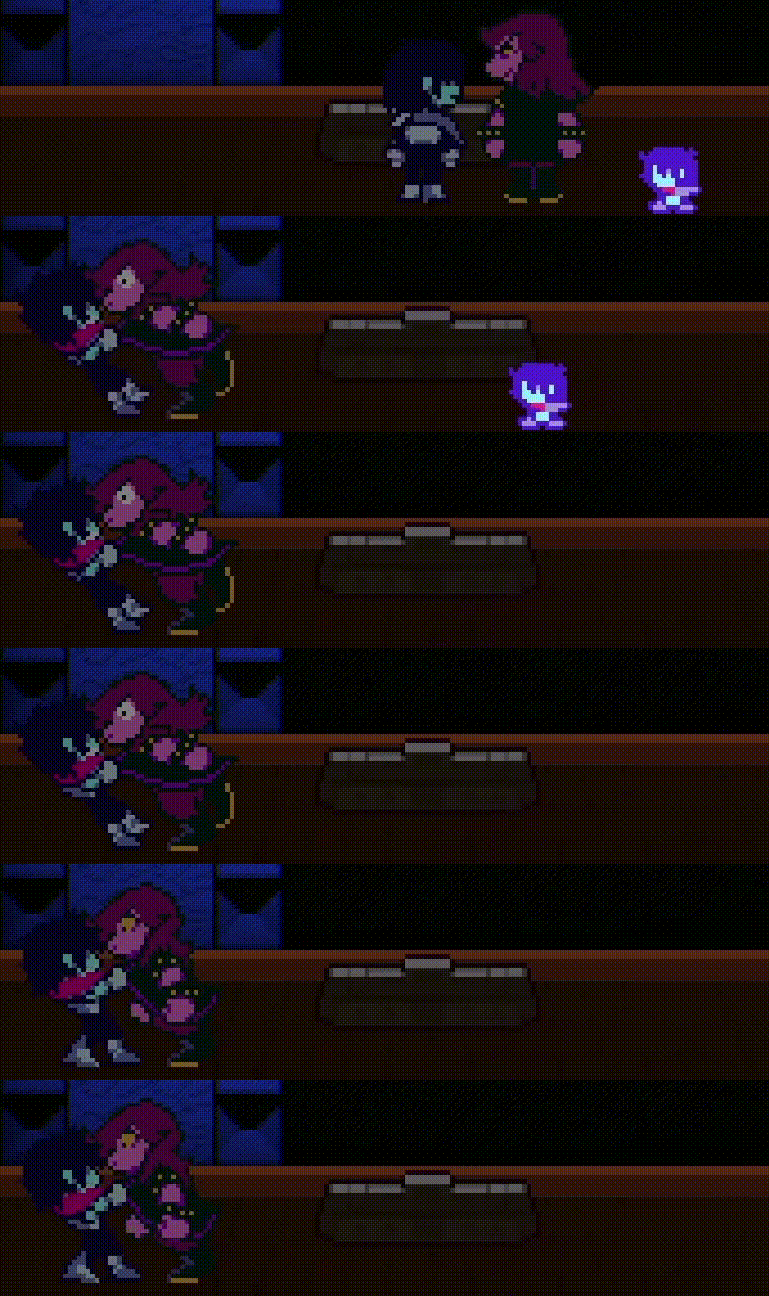
HERO_SWORD, controlled by the player, attempts to attack Susie before Kris quickly pulls her away, emphasizing how much Kris deeply cares about her as a friend.
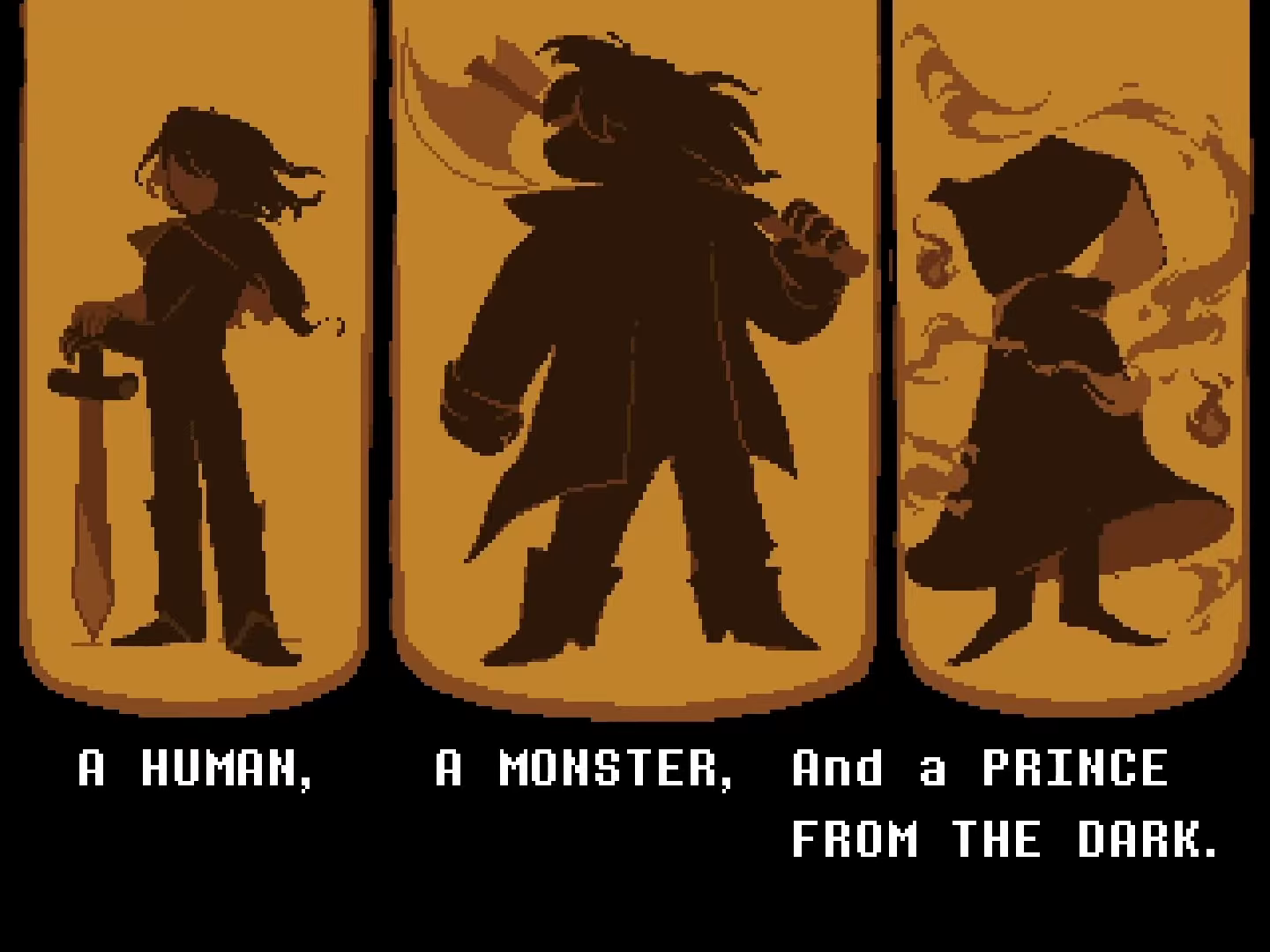
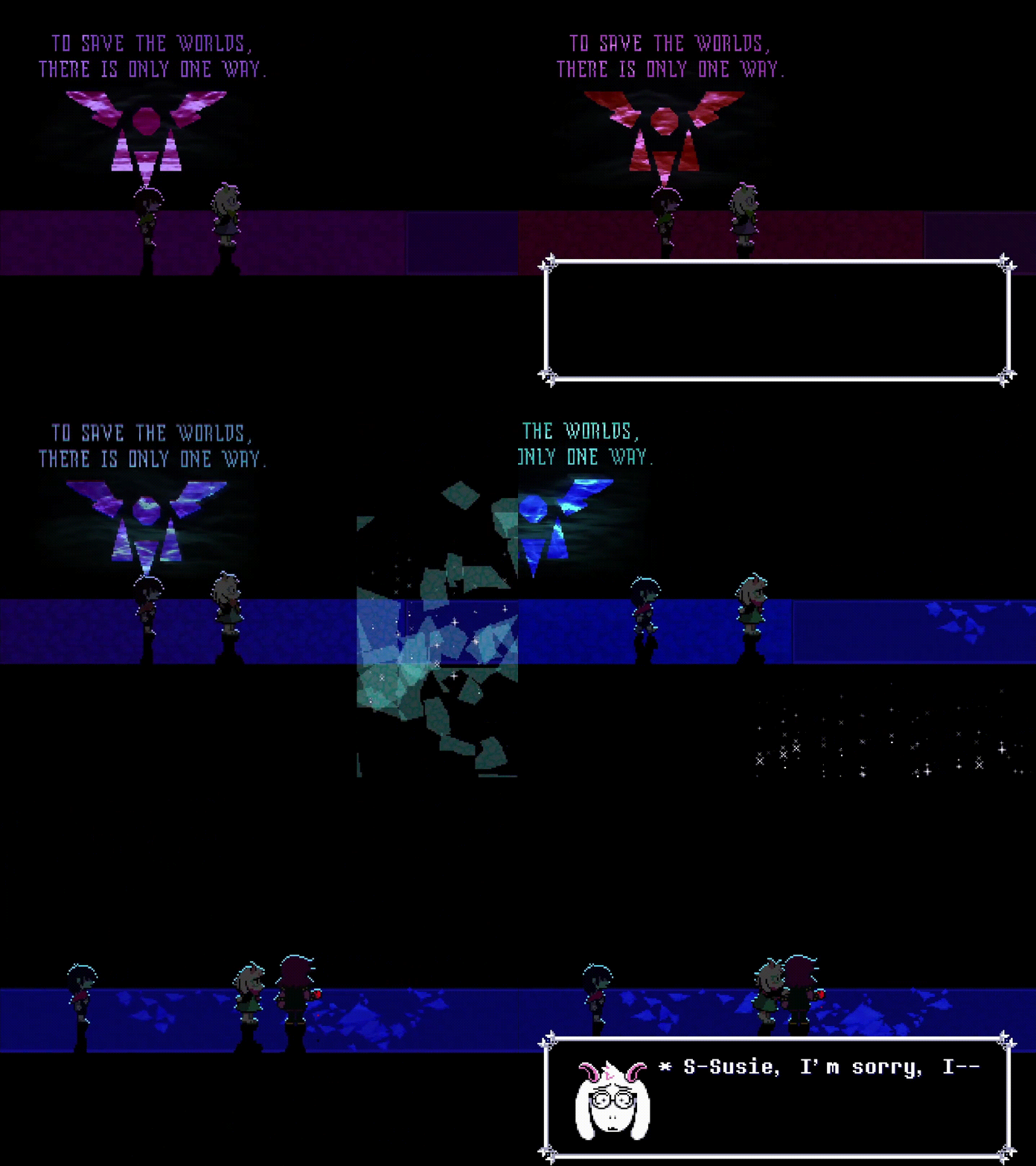
From this more responsible implementation of fiction into their life, Kris has the potential to avoid the trap of eternal indulgence that the Knight has set up for them and embrace a fulfilling new future for themself with open arms, though the prophecy that looms over the whimsical fantasy worlds that the Fun Gang traverse seems to identify Kris in a more tragic light than what they and Susie might have anticipated. While Ralsei’s version of the prophecy portrays Kris as ‘a human,’ (pictured left) the actual text as revealed in Chapter 4’s Second Sanctuary describes Kris as ‘THE CAGE, WITH HUMAN SOUL AND PARTS!’ (pictured right) while including iconography of a soul within a cage instead of a human silhouette as if to imply that their humanity isn’t important within the legend’s grand narrative.
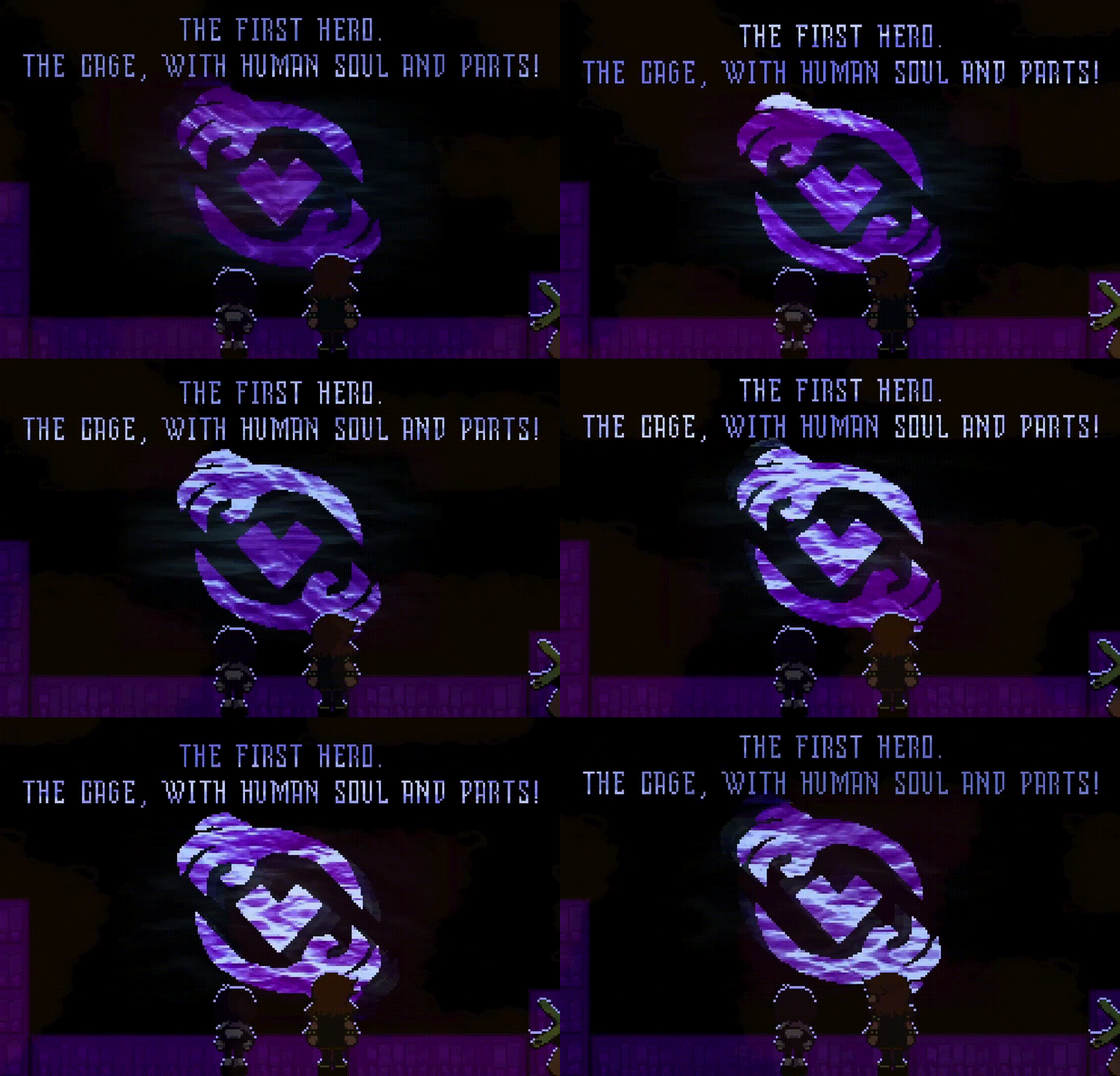
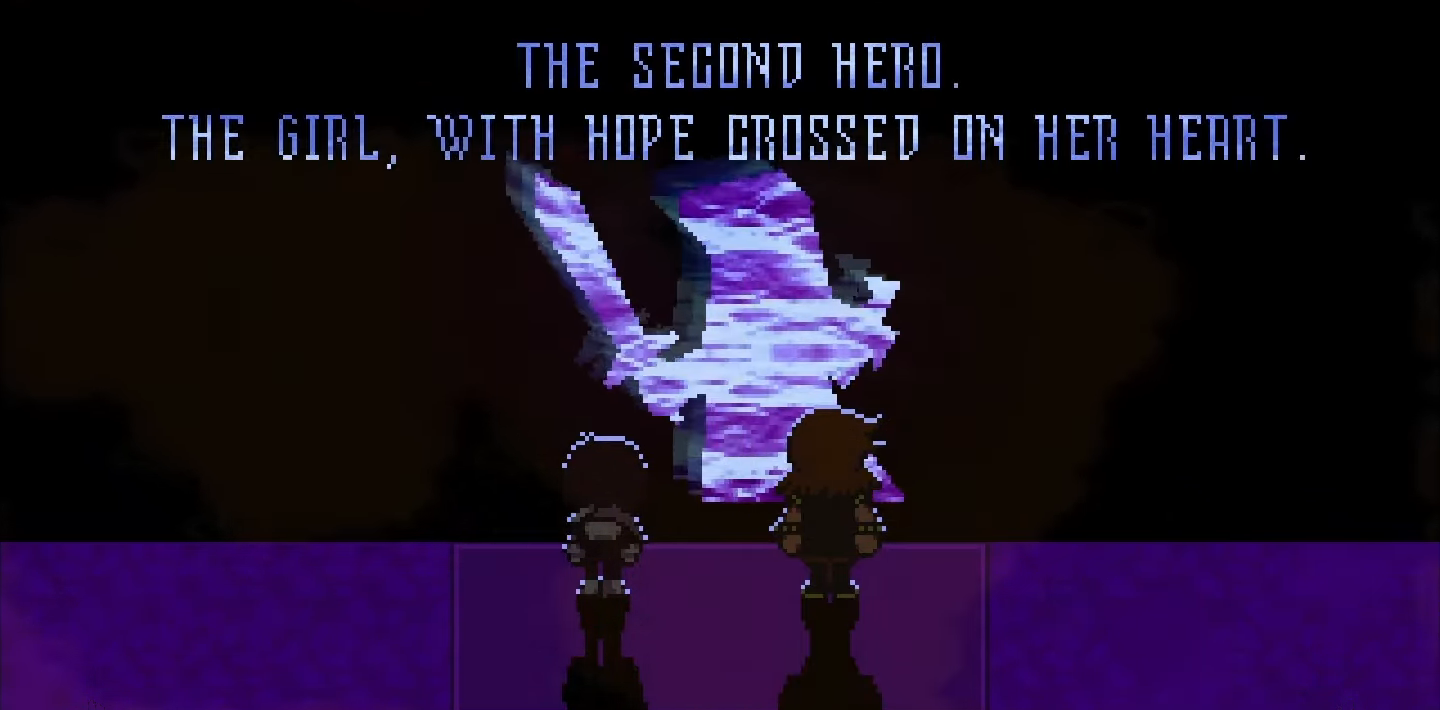
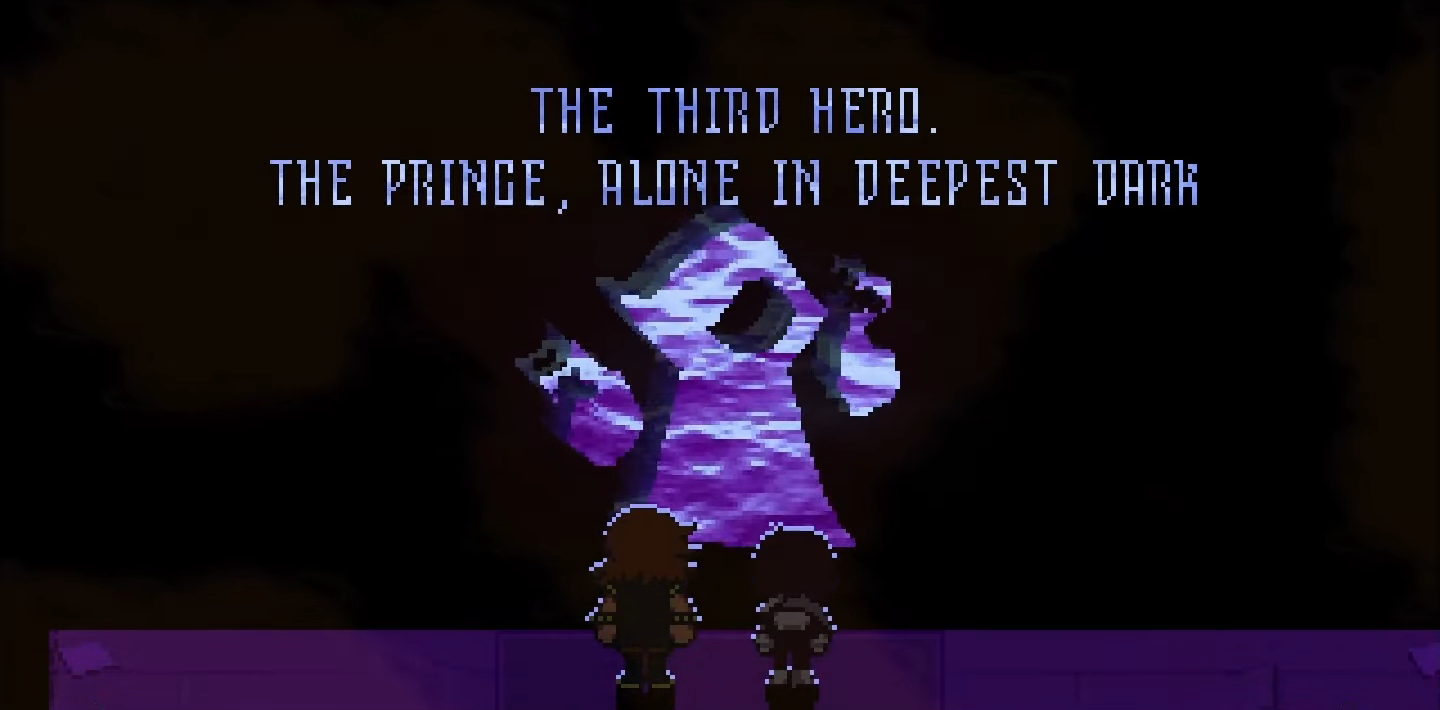
In addition, its positioning of Kris as a ‘cage’ opens up numerous potential implications regarding the role that Kris and the red soul ultimately play in the prophecy, arguably suggesting that Kris solely exists as a container for the red soul to define fate without their own will involved or that Kris is destined to never have a will of their own as they spend their life trapped by those who claim authority over them all for the good of the two Worlds. One of the more potentially morbid details to note about how the prophecy depicts Kris can be seen in its usage of an exclamation point at the end of its description, expressing unempathetic surprise or shock at the prospect of Kris’ suffering as though one is meant to be horrified by their sheer existence in a similar way to how an audience might react to a freak show at a circus. The descriptions for Susie ‘THE GIRL’ and Ralsei ‘THE PRINCE’ (pictured below) are not sensationalized in the same manner as Kris’, leaving the way that they are represented in the prophecy to come across as dehumanizing and exploitative in defining Kris solely through their suffering and characterizing them as a freakish abnormality rather than recognizing the humanity and need to belong that exists deep down inside them.

Throughout my own youth, I’ve been afraid of being perceived by those around me as being less than capable of functioning in my daily life, leaving me drifting between either pressuring myself to prove my worth as an individual or assuming that my neurodivergence has made it so I would inevitably become defined by my shortcomings for the rest of my life. Despite that self-conscious part of myself never going away, I am now at a point in my life where I can put my strengths and weaknesses into perspective to gain a fuller understanding of myself and identify environments that I could socialize in comfortably and confidently instead of letting myself fall into a trap of fatalistic self-doubt. In doing so, I am actively making an effort to put down the habit of trapping myself in a mental cage and avoid putting stock in the idea that I’m bound towards becoming a ‘failure’ at life, instead choosing to shatter that idea in favor of working for a more hopeful future just as Susie does to the ending of the prophecy. (pictured below)
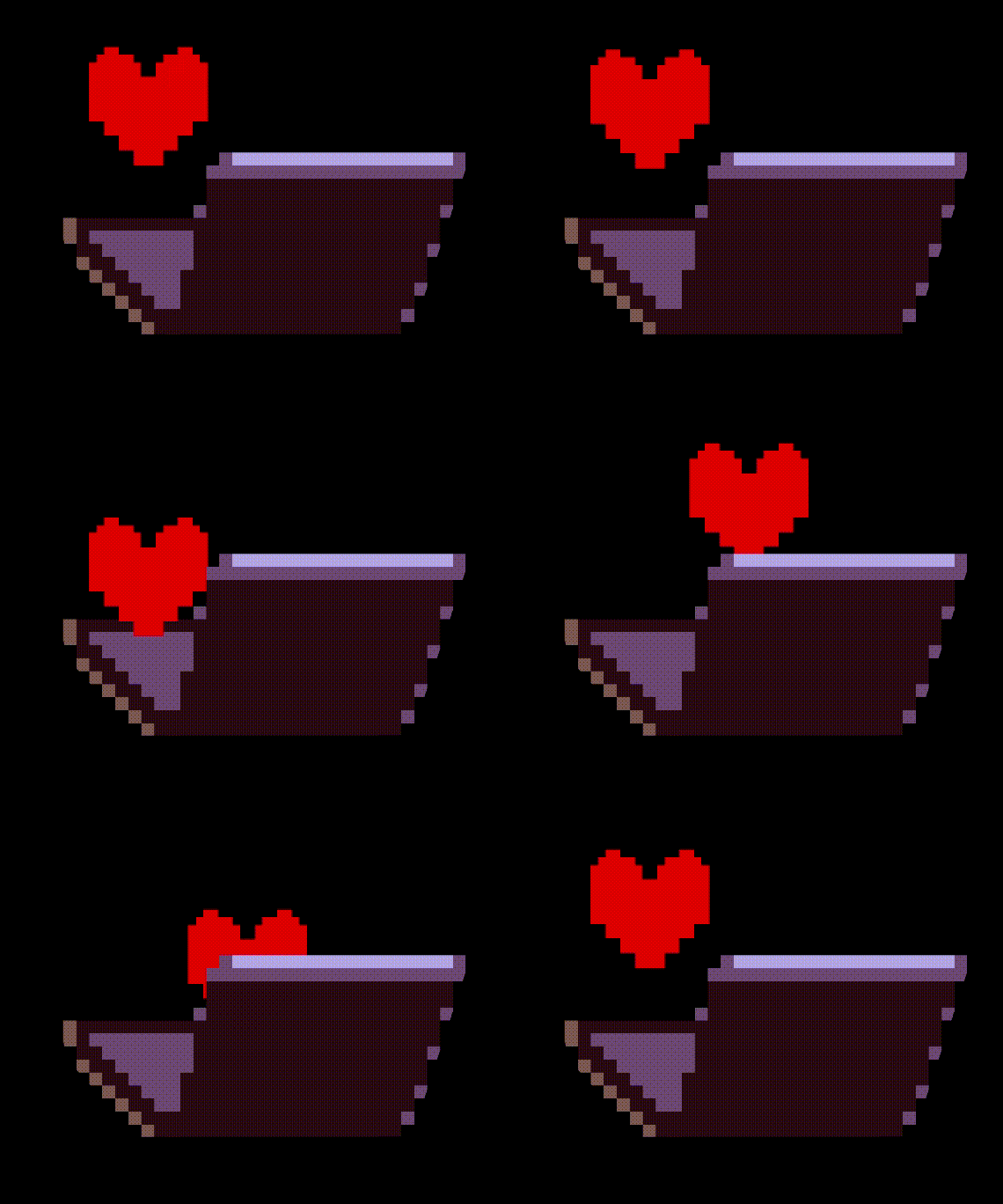
While I’m hoping that Kris can harness that same hopeful drive in order to rewrite their future, there’s always a small part of me that’s afraid that no matter what side Kris chooses to be on, their actions would be motivated by an innate selfishness that sees them caring more about their own wellbeing than that of their peers. If they follow the Knight’s plan to its devastating conclusion, there’s a chance that they wouldn’t let the notion of the end of their world faze them until it’s too late, though seeing Susie as a way out of that path may be motivated simply by a need for a source of comfort in their life to replace Asriel or Dess for the time being, leaving Kris to only be in it for themself no matter what future they end up embracing. Of course, the empathetic angle that Kris is presented through within the game makes me doubt that their character might take a selfish or unlikable turn in future chapters, though I’m always ready for my interpretations of them to be proven wrong either way. I feel confident about the way that I currently interpret Kris as a character, but I’m careful not to let my perception of Deltarune become shaped solely by my own interpretations to the point where I end up hastily projecting my own life experiences onto fictional characters instead of naturally finding aspects of myself in them. Despite relating to their feelings of adversity as a kid and their general introverted demeanor, I can still recognize that Kris has still lived a very different life than I have. Unlike Kris, I never typically pulled pranks on my family and friends and I only played piano very briefly during my childhood, but even then, these differences are still important to keep in mind if I want to remind myself of what really draws me to the character in order to avoid letting escapism cloud my own identity. I don’t want to define Kris solely by the aspects of them that I connect with just as much as I don’t want the prophecy to define them solely by their weaknesses. Heck, the game already has me in enough control of their life as is, but my emotional connection to Kris is still resonant enough for me to want to see them resist being strung along by those who seek to erode their sense of self, whether it be the Knight, the prophecy or even myself, the little heart in a cage typing this whole post one character at a time. If Kris wants to live a fulfilling life where their humanity is valued instead of denied or taken for granted, maybe it’s important for them to make that decision themself and listen to their heart rather than a heart-shaped object.
*assuming that the final boss of the Sword Route (ERAM aka Nightmare aka the Shadow Mantle Holder) is intended to be an analog for the Roaring Knight
Menu
< Part 2
Credits >
Back to SlipsWorld