PART 2:

Throughout the course of both Undertale and Deltarune, the human SOUL is characterized as being a source of massive power that the player embodies during combat and within certain key sequences of both games from opening the barrier at the end of Undertale’s Neutral paths to closing Deltarune’s many Dark Fountains. While the player is granted access to this meaningful power in guiding Frisk and Kris through their respective journeys, the power you have in the worlds of both games is still very limited to some extent. Undertale opens by giving the player the opportunity to ‘name the fallen human,’ though the player themself has no control over which fallen human they are naming despite the outcome of each playthrough being dependent on their decisions over which monsters to spare or kill. As a result of discovering this revelation at the end of the Pacifist Route, the power that the player might have thought they had over their identity within the game proves itself to be minimal as they are asked to find solace in the fact that they are freeing monsterkind to help Frisk and their new friends rather than simply playing through the game’s best ending for a sense of personal fulfillment.
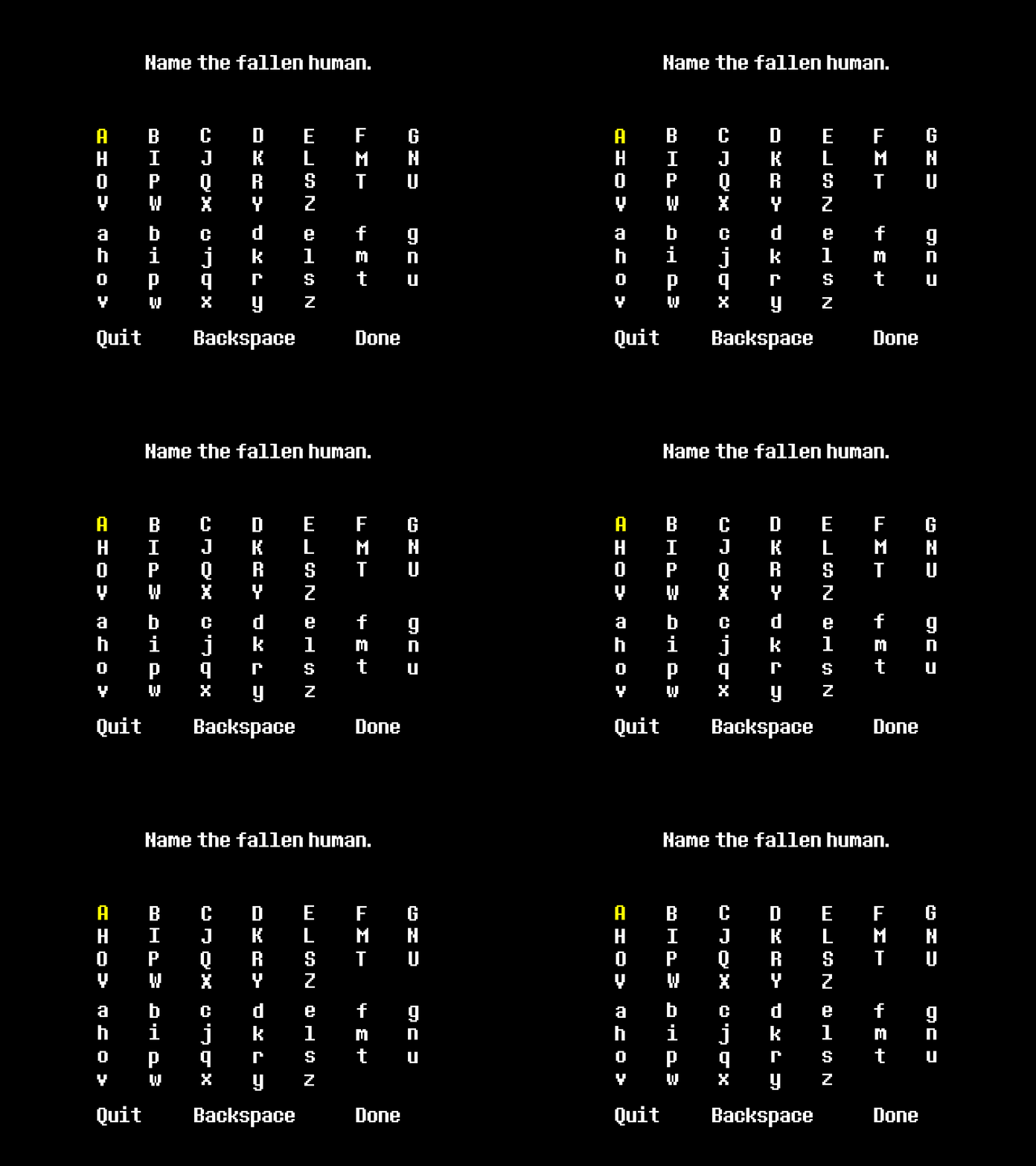
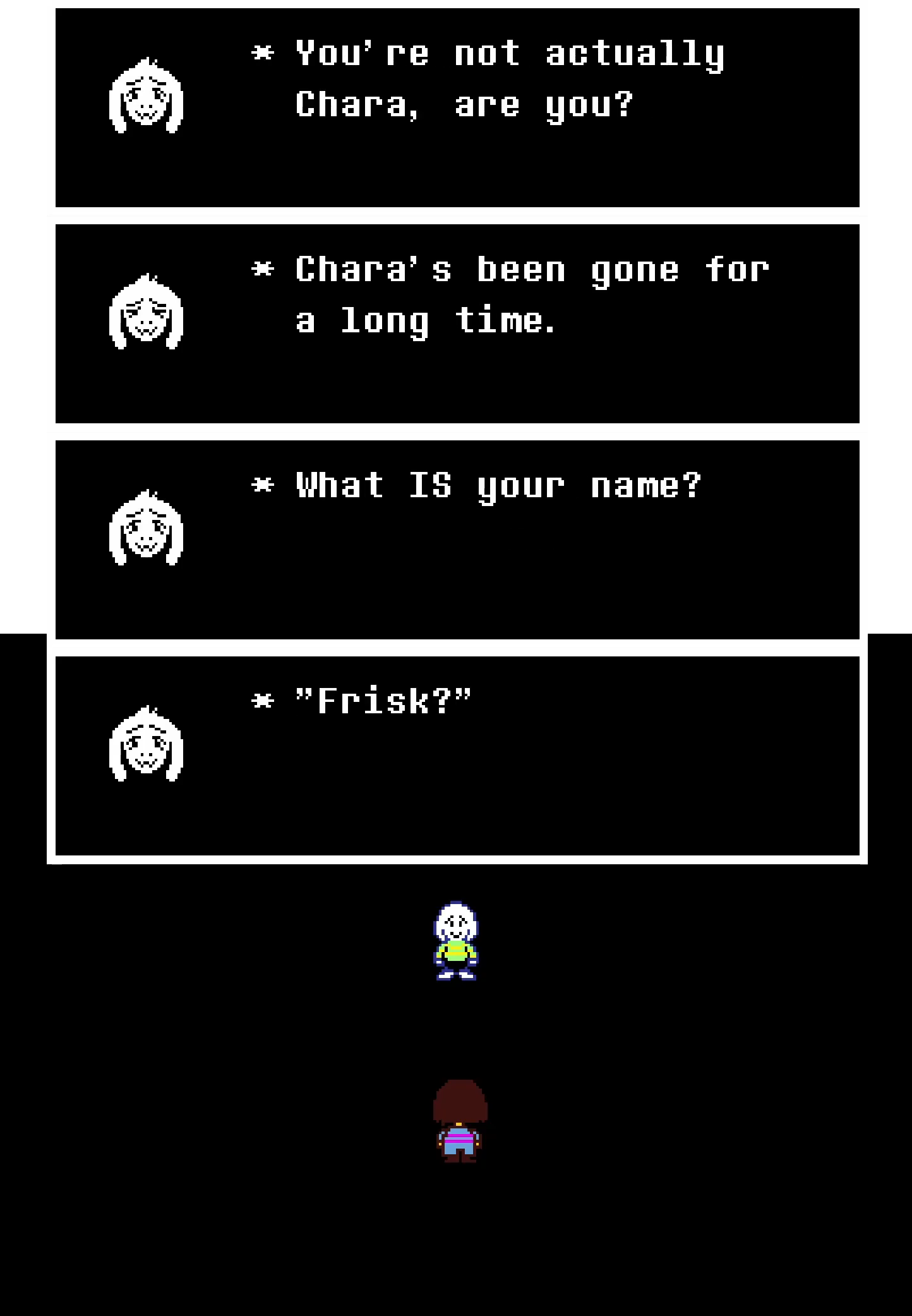
Left: the name selection screen from Undertale asks you to 'name the fallen human,' but doesn't specify which human you are naming. Right: After saving Asriel in Undertale's True Pacifist Route, the human that you named at the beginning, referred to here by their 'true' name Chara, is revealed to be the first human who fell down and lived with the Dreemurrs rather than the human that you control throughout the game, who is revealed to be named Frisk.
While Undertale is reliant on player choice, it also subtly establishes the extent to which the player is capable of making meaningful choices while sharing their existence in the game’s world with another being that is implied to have some degree of autonomy and individuality of their own despite initially appearing like a blank slate that the player could project their own identity onto. Since Kris has a more distinctive identity and backstory compared to Frisk as well as a greater sense of autonomy as demonstrated by their increasingly frequent resistance to the player’s control, Deltarune places the question of how much control the player really has front and center as one of the major themes of both its metanarrative and Kris’ character arc so far. In fact, the player’s importance as an individual within the game is only determined by the power given to them by the soul, an otherwise static object that is proven to be basically powerless without a vessel to control, leaving the player themself to be rendered as essentially nothing more than an object since the very beginning of the game. When the mysterious voice who contacts the player throughout the game* complements you on anything from the creation of your initial vessel to your persistence in fighting The Roaring Knight, he doesn’t see value in you specifically as an individual as much as he sees value in the potential power that you have under the guise of manipulating the red soul, though the actual power that the soul has ultimately depends on what reality it is present in.
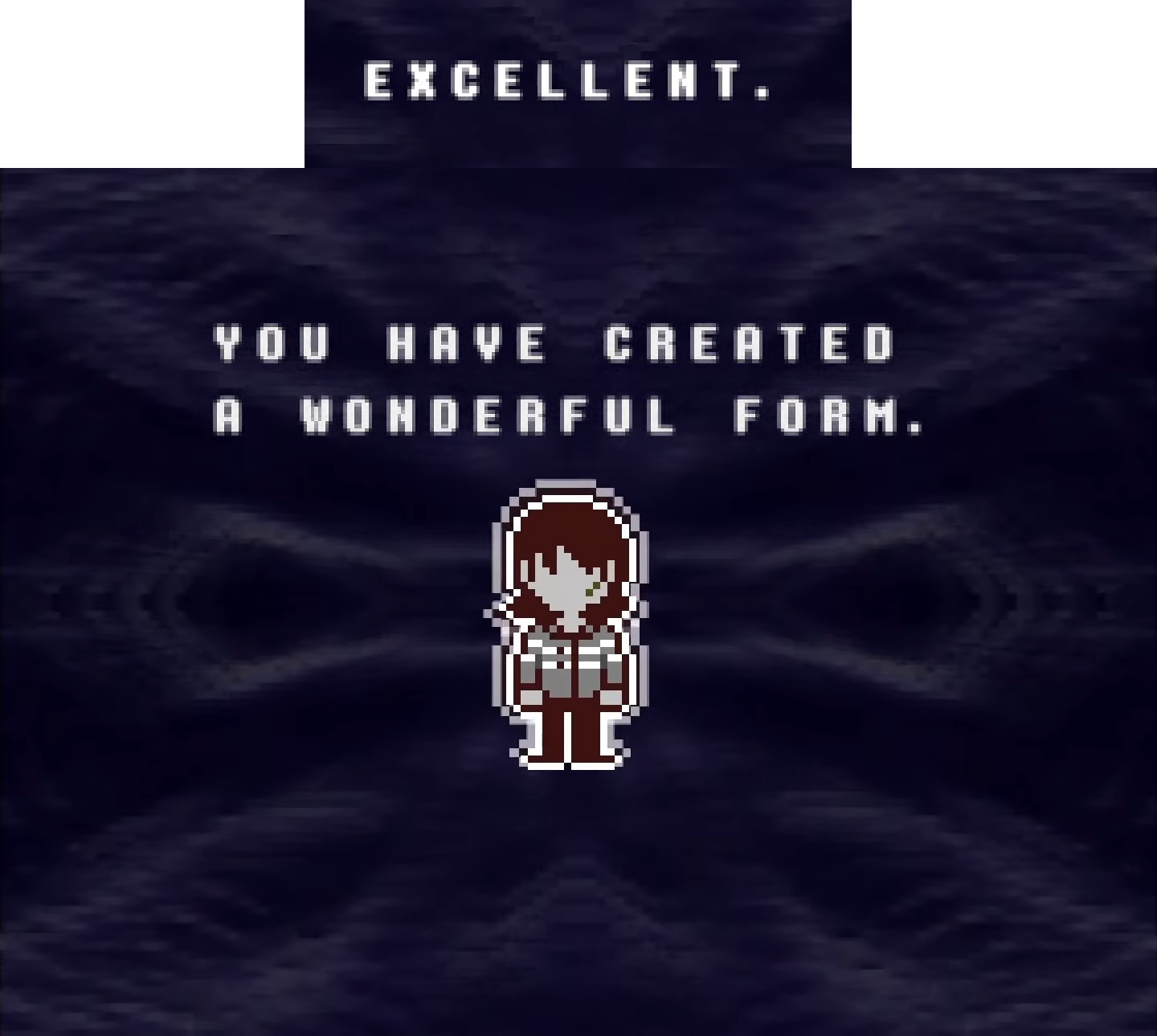
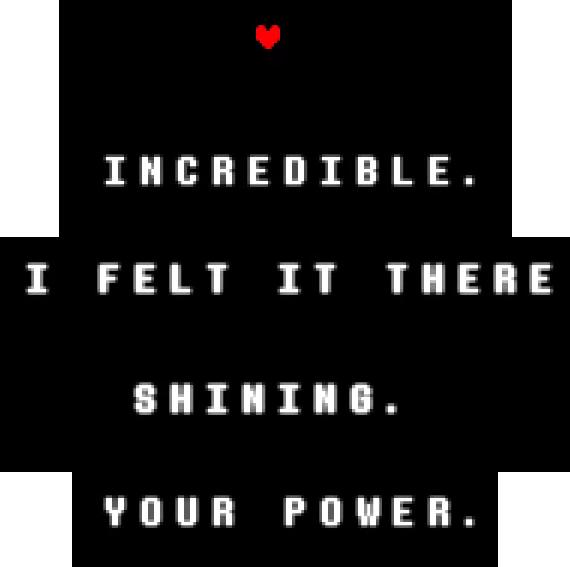
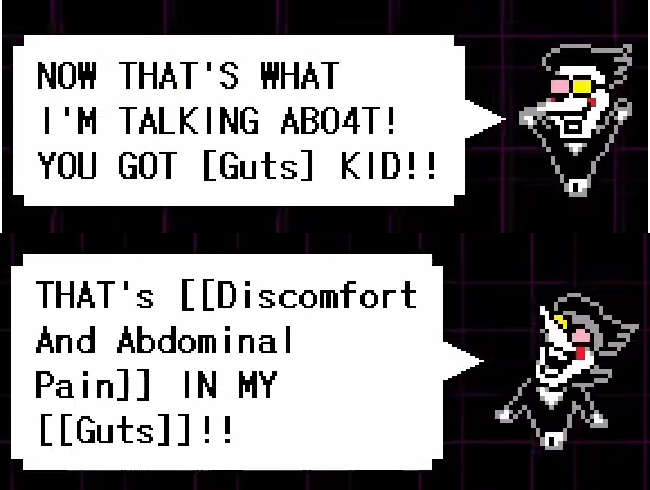
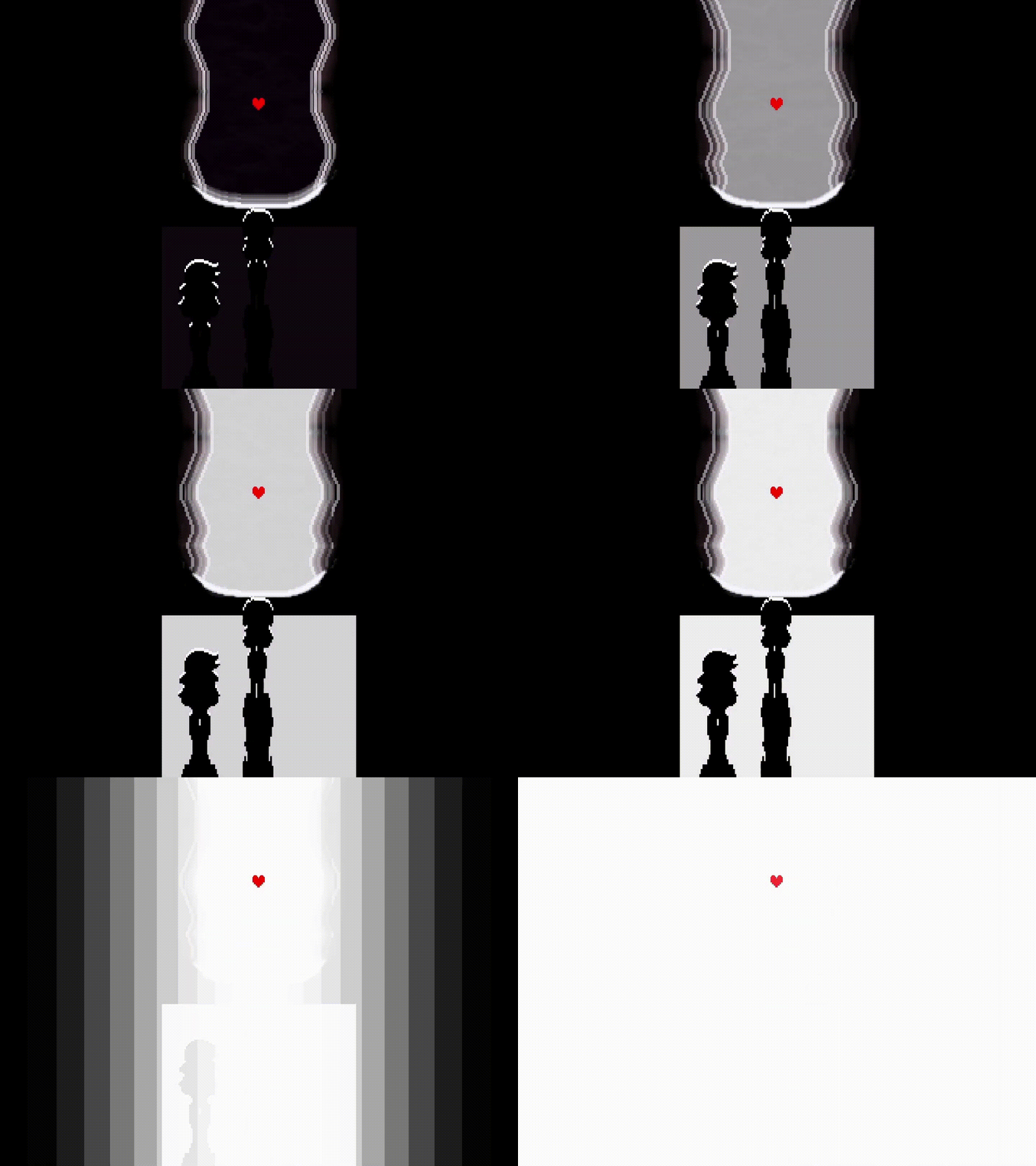
Left: the voice* compliments the initial vessel that you create before it becomes 'discarded.' Right: the voice* expresses amazement at 'your power' after reaching the final phase of the Roaring Knight's boss battle at the end of Chapter 3.
Since most of Deltarune’s combat and puzzle gameplay takes place in the Dark World portions of each chapter, it should come as no surprise that the fullest extent of the soul’s power is demonstrated exclusively in Dark Worlds, where the player proves themself to be essential in assisting Kris and their party in fighting or recruiting Darkners and sealing Dark Fountains. However, these important functions are not relevant to Kris’ life in the Light World, where the soul is largely just limited to moving Kris around and making decisions for them, which are still actions that the soul can perform in Dark Worlds anyway.
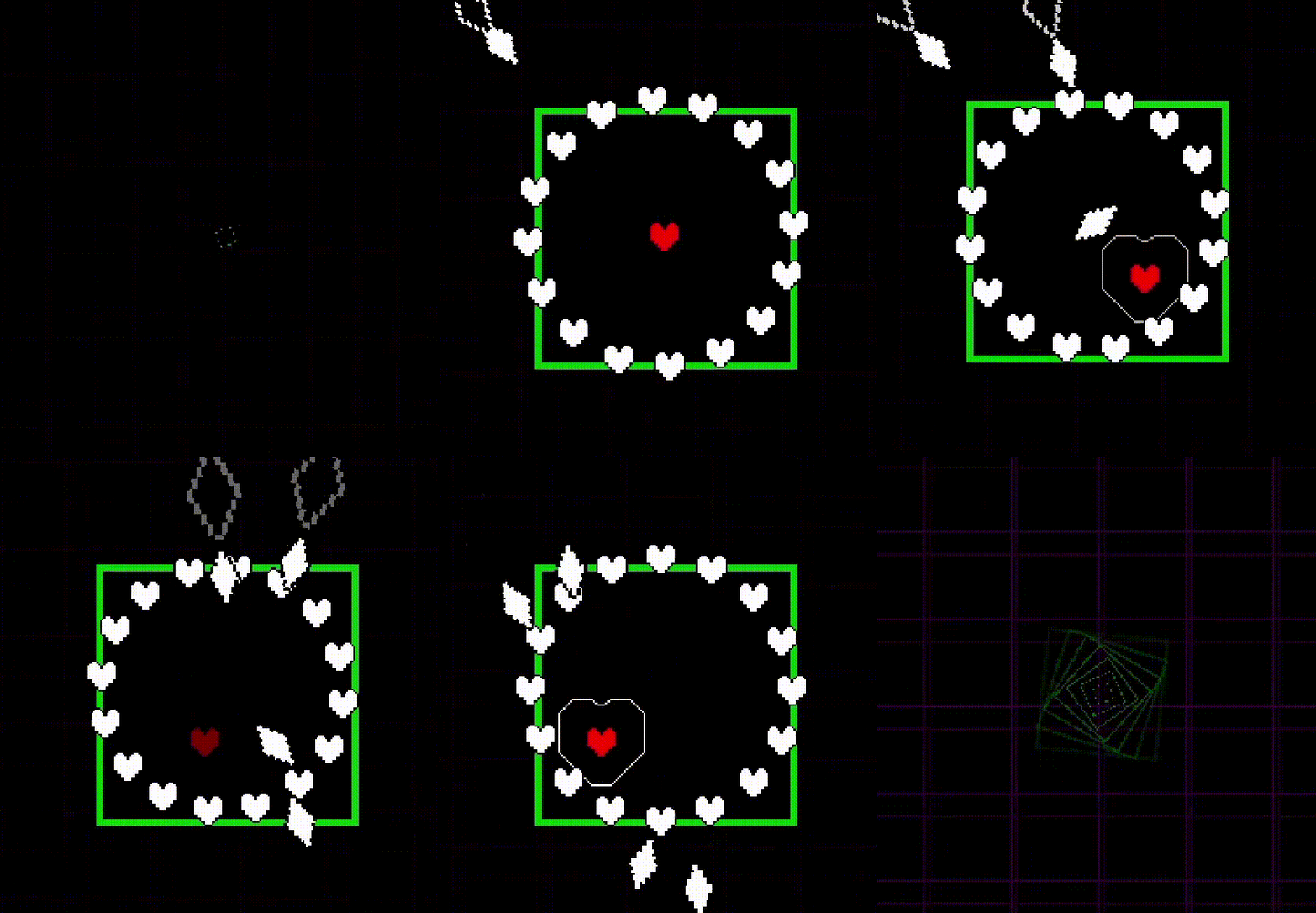
Left: the red soul dodges and grazes Rudinn and Hathy's attacks in Chapter 1. Right: Kris uses the red soul's power to seal a Dark Fountain.
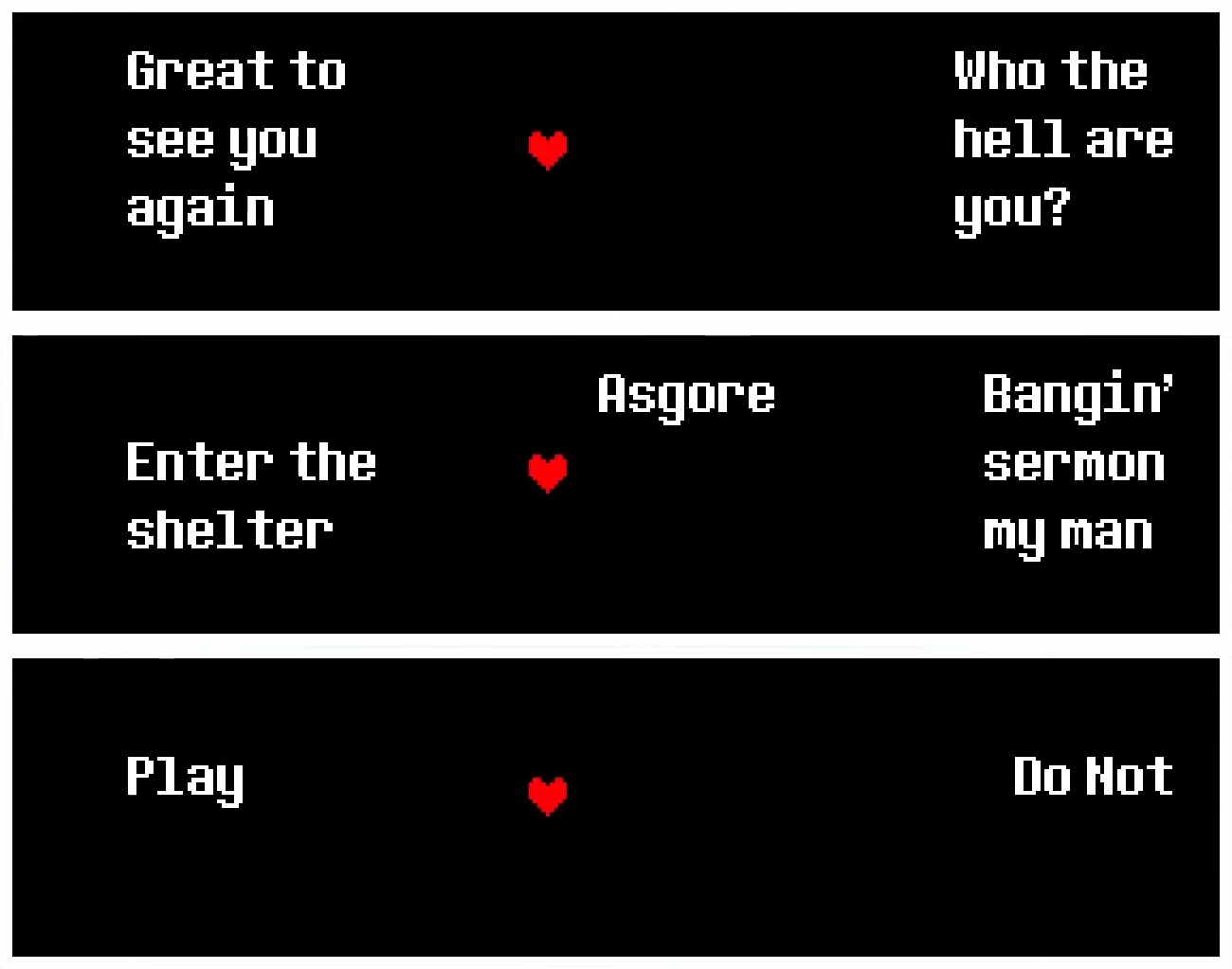
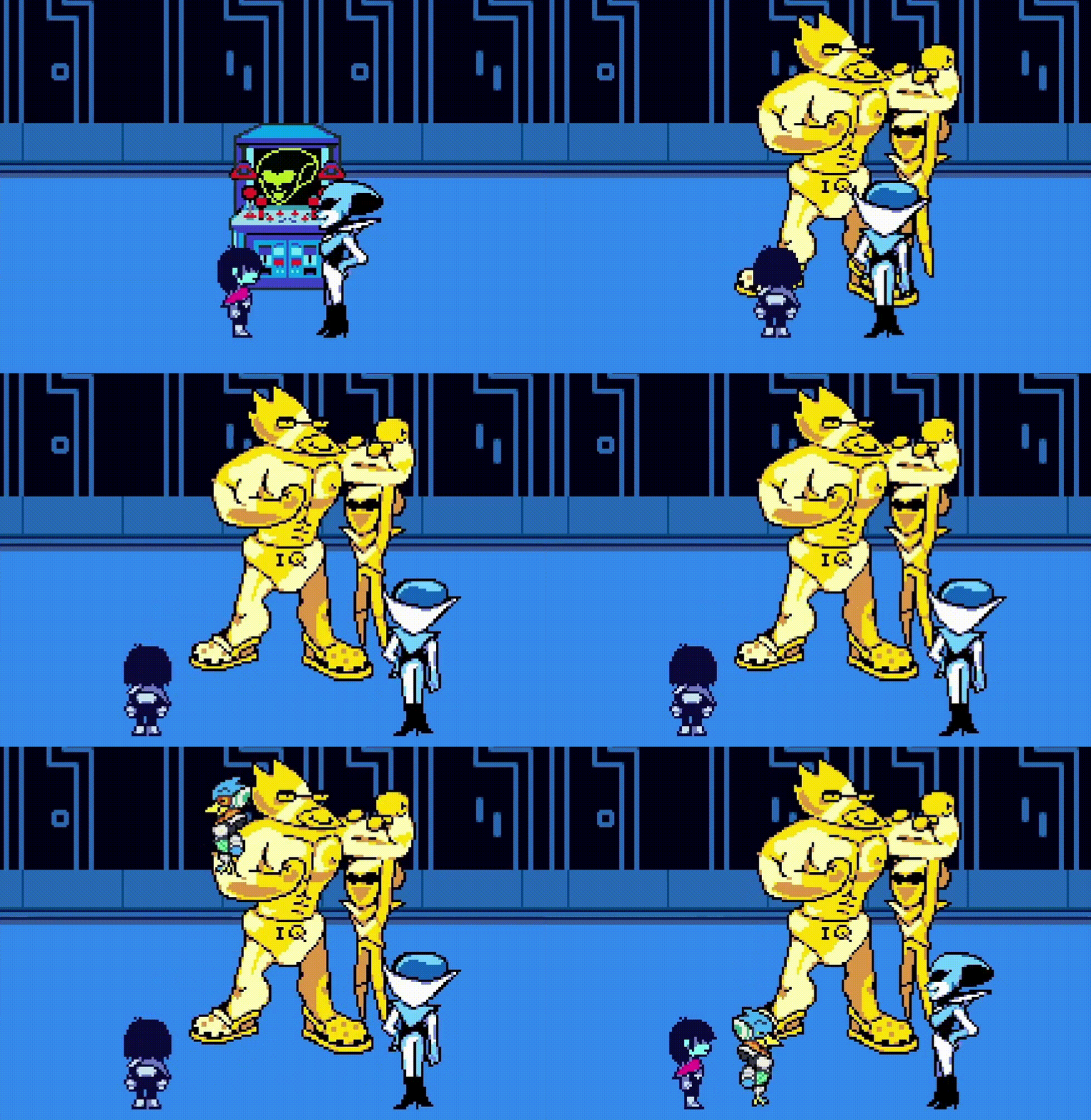
Top: when meeting Sans for the first time in Chapter 1, the player is given the option to have Kris greet him like an old friend or impatiently ask him who he is. Most first-time players are more likely to pick the first option due to their familiarity with Sans from Undertale despite Kris never having met him beforehand. Middle: the player is given three different dialogue options when interacting with Father Alvin after the church service in Chapter 4, inquiring about Asgore and the underground shelter at the end of town and complimenting his 'bangin' sermon.' Bottom: when interacting with the small piano in the hospital or the large grand piano in Noelle's house, the player is given the option to have Kris play it or not. Choosing for them to play causes them to quickly press the keys with an unceremonious 'plink,' which is what the game's soundtrack calls a 'Concert for you.'
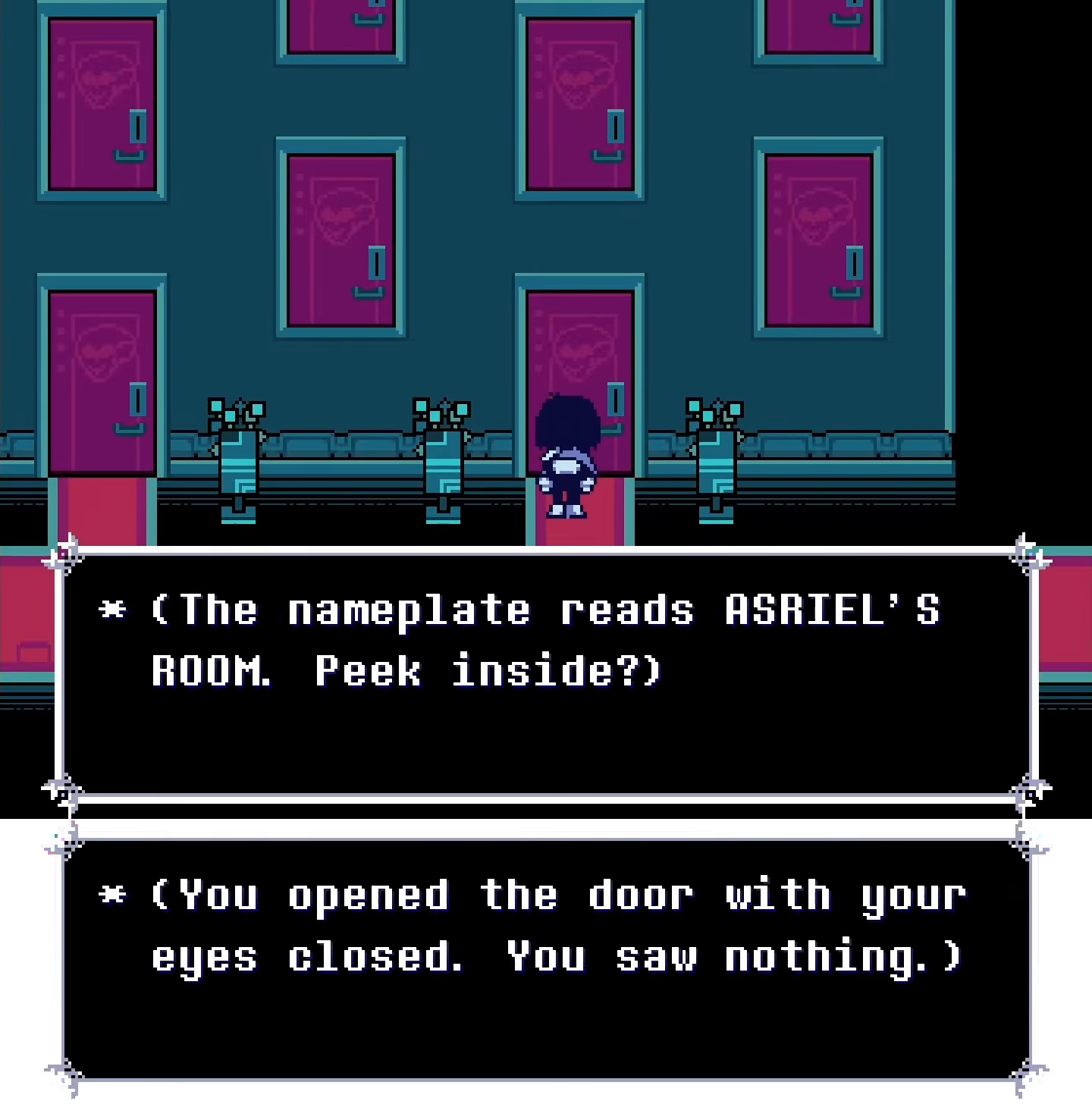
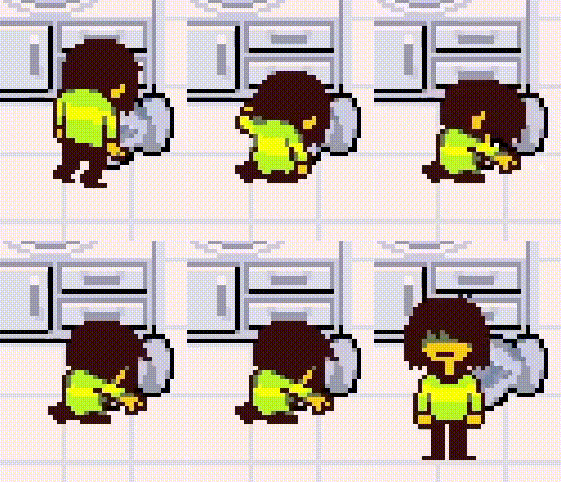
This level of control in itself is still a significant amount of power to have over an individual though what makes the power that the player has over Kris’ actions arguably weaker than the power that they wield in Dark Worlds lies in the moments where Kris demonstrates more resistance to the soul’s will. Throughout the game, their subversion of the player’s control usually comes in the form of comedic bait-and-switch interactions where Kris performs the action that the soul chooses for them but does so in a way so that the player could not benefit from it in any way. Kris often does this presumably for reasons related to keeping their personal life private, such as when they close their eyes when the player has them open up Asriel’s room in Queen’s mansion so we couldn’t know what’s inside (pictured left) or when they quickly shut a library book for monsters on how to care for human children upon opening it up (pictured right).
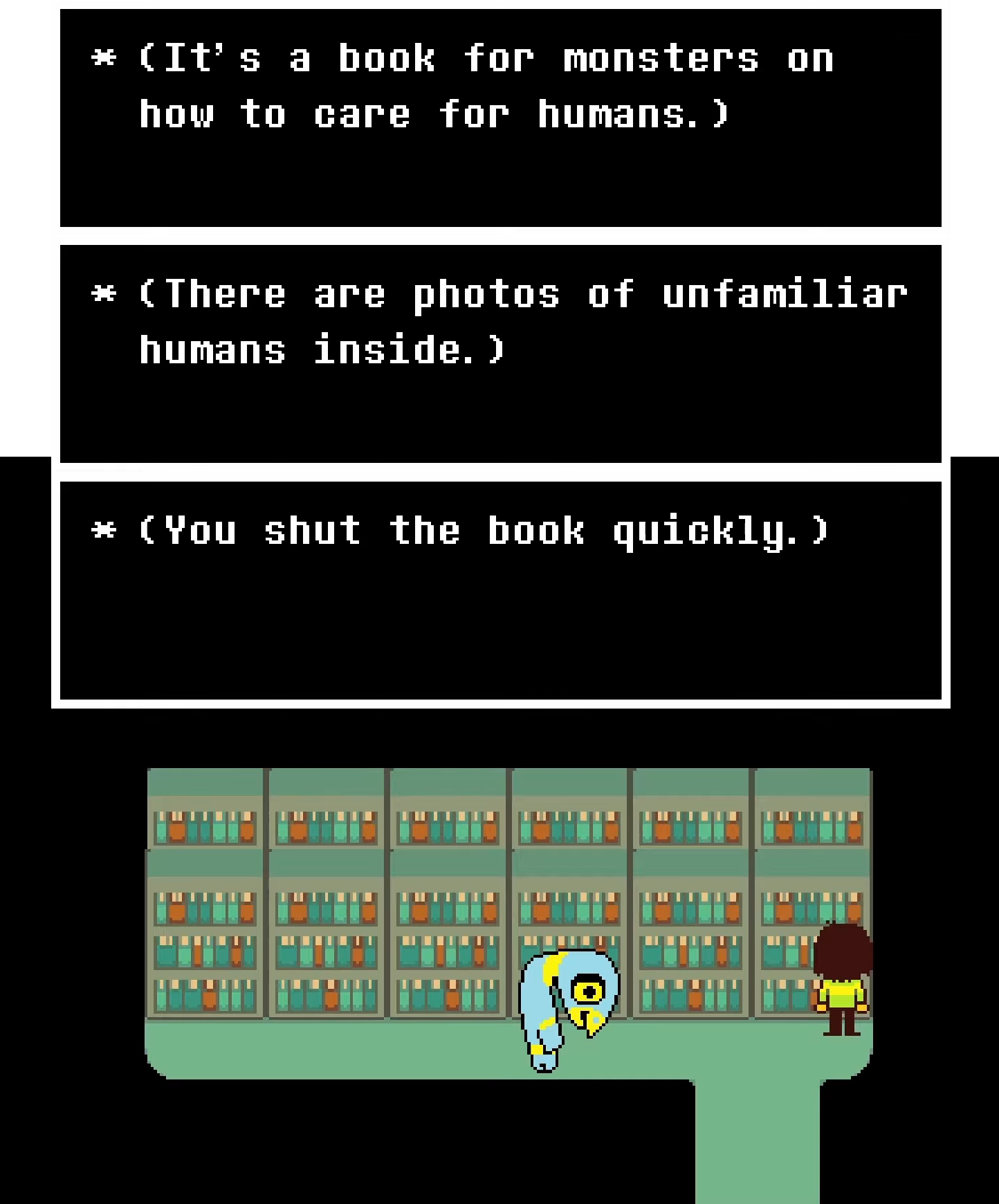
However, they have, as recently as Chapter 4, started to make sure that the player doesn’t intrude on deeper secrets that may jeopardize their friendship with Susie and their good standing as a hero of the prophecy, preventing the player from knowing the Roaring Knight’s true identity when prompted to think about them by thinking about their classmate Jockington at the last minute instead.
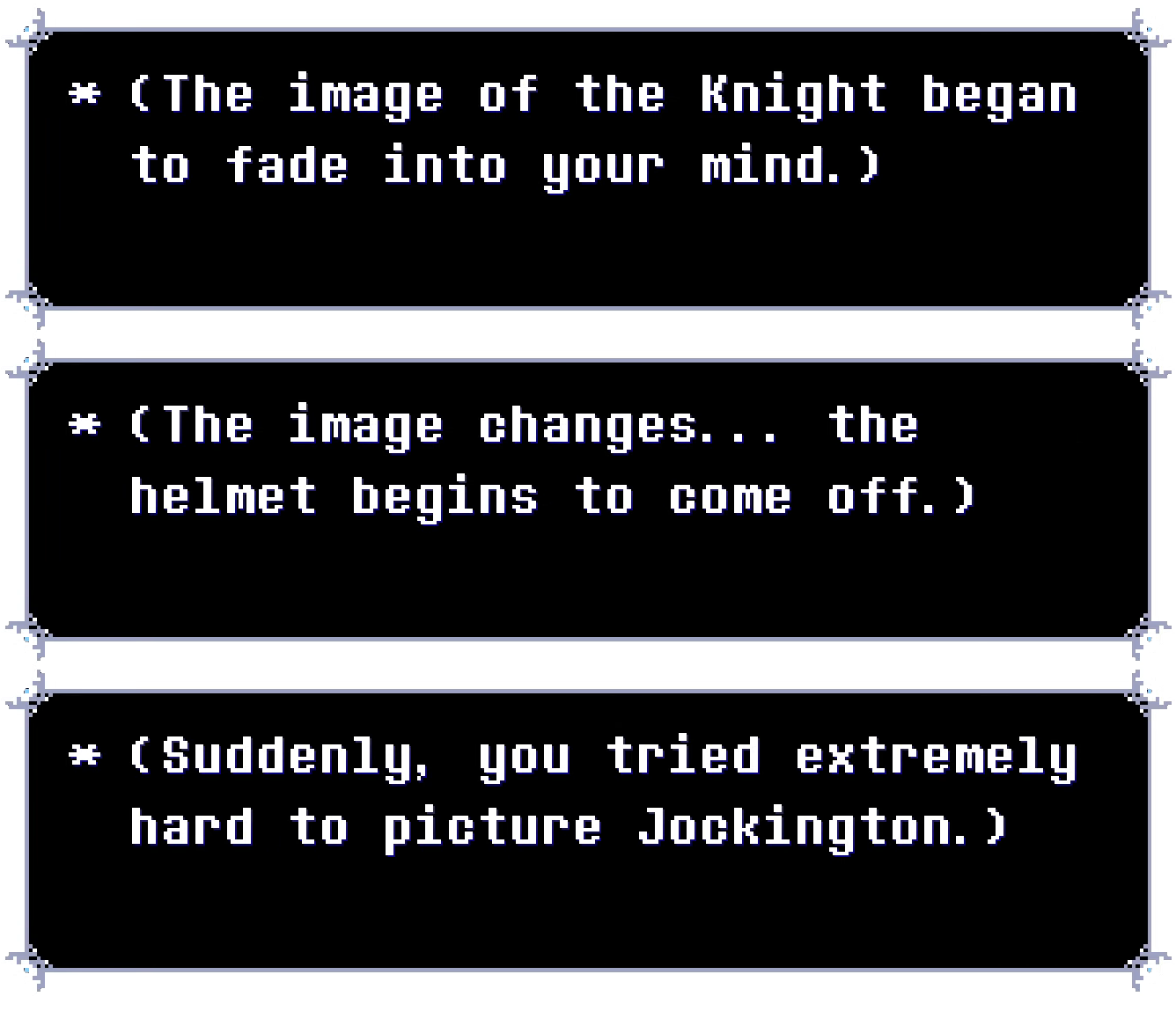
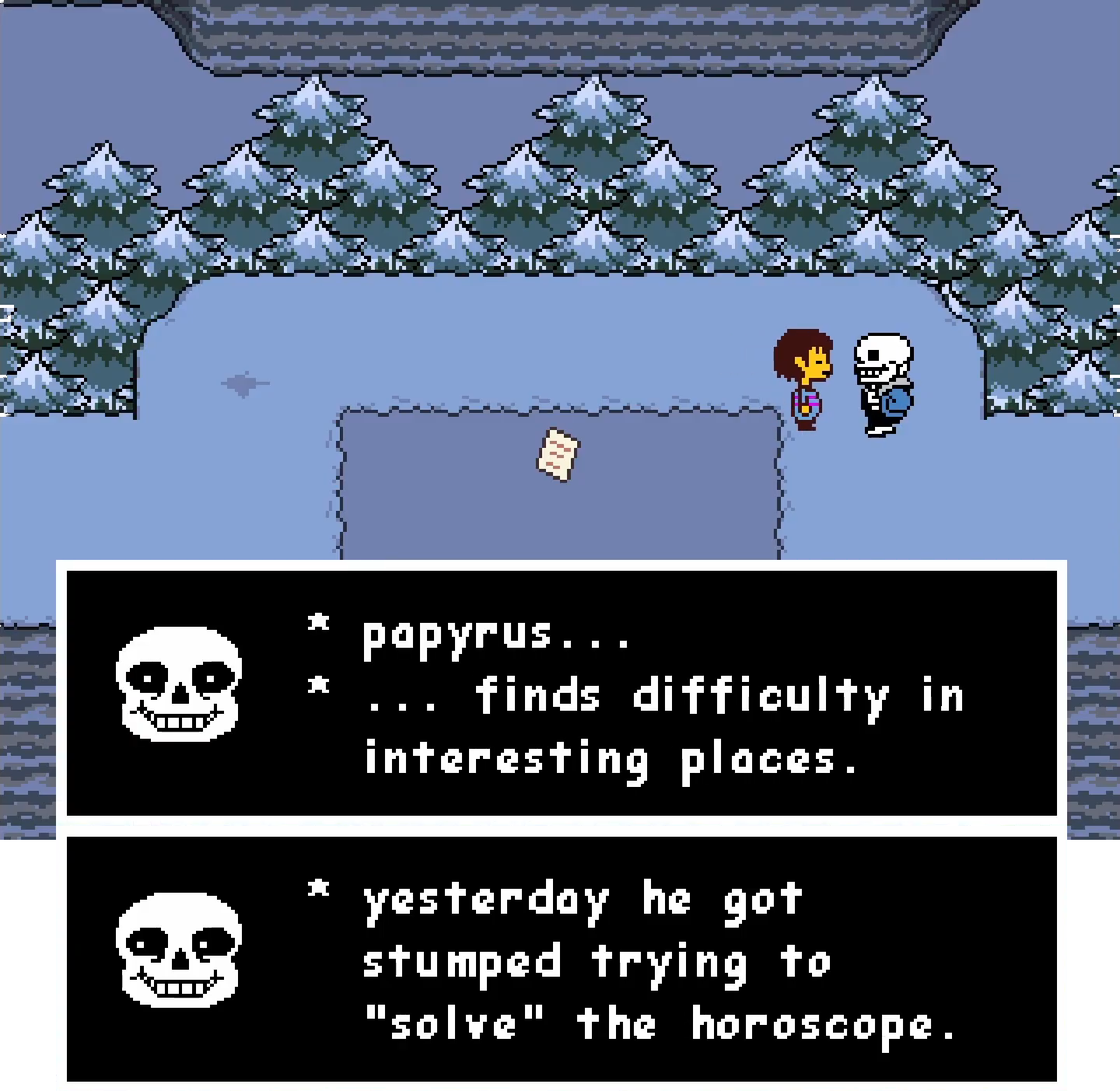
This flavor text is also notable in its implication that the Knight has a secret identity in the first place that Kris can't let us know about...
Since Kris cleverly finds loopholes in getting around doing what the player expects of them for the sake of keeping certain information to themself, it seems fair to assume that they know that the soul is being controlled by someone with very specific motives in mind or that the soul at the very least has a mind of its own that acts against their own will whenever it wants to. Either way, Kris’ apparent awareness of the soul’s sentience and the fact that they are capable of removing the soul from their body whenever they want serve to demonstrate the limits of power that the soul has over them and no other scene in Deltarune so far captures these limits better than the sequence of events that play out at Noelle’s house in Chapter 4.
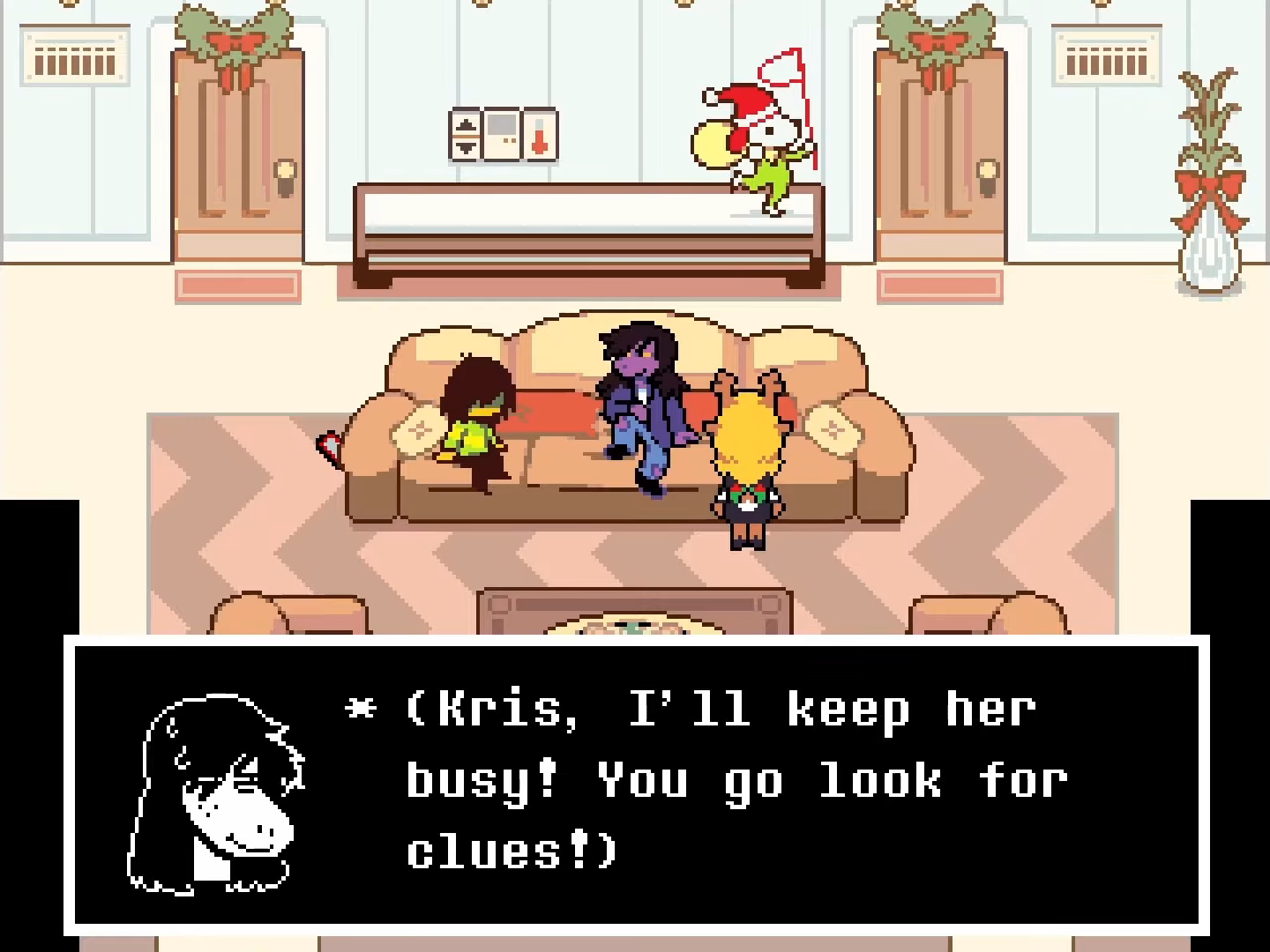
Susie tasks her trusty dog Kris with sniffing out clues while she has a fun date with distracts Noelle.
While being sent by Susie to look for clues on how to open the underground shelter that the Knight resides in, the player eventually sends Kris into the room formerly belonging to Noelle’s missing older sister Dess where a slip of paper containing a code to the shelter can be found inside her old guitar. Upon having Kris take a closer look at the code, they quickly remove the soul from their body and throw it in a storage closet, leaving the player to maneuver the soul without Kris for an extended period of time and setting the stage to establish what little power it has over the Light World on its own.
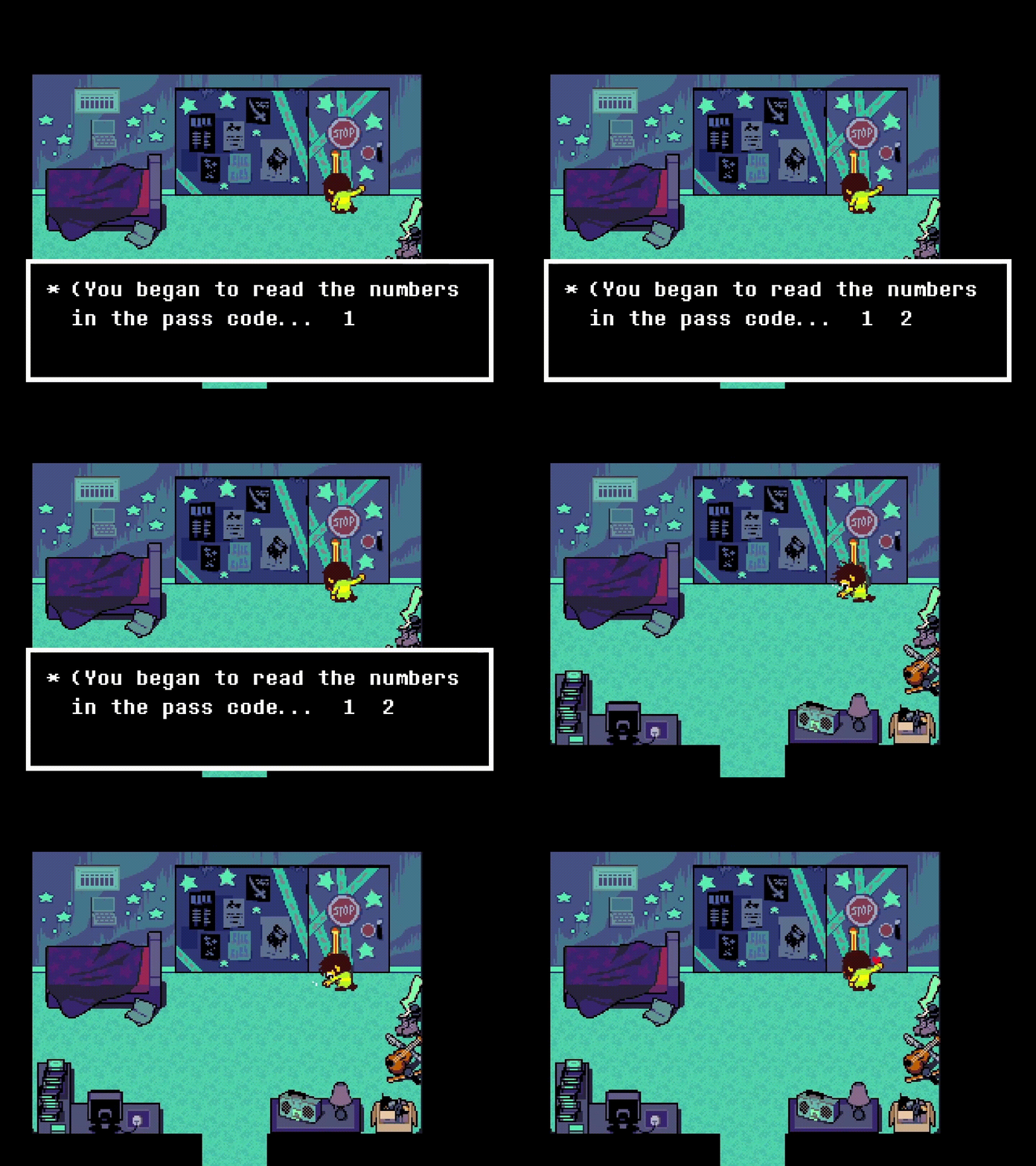
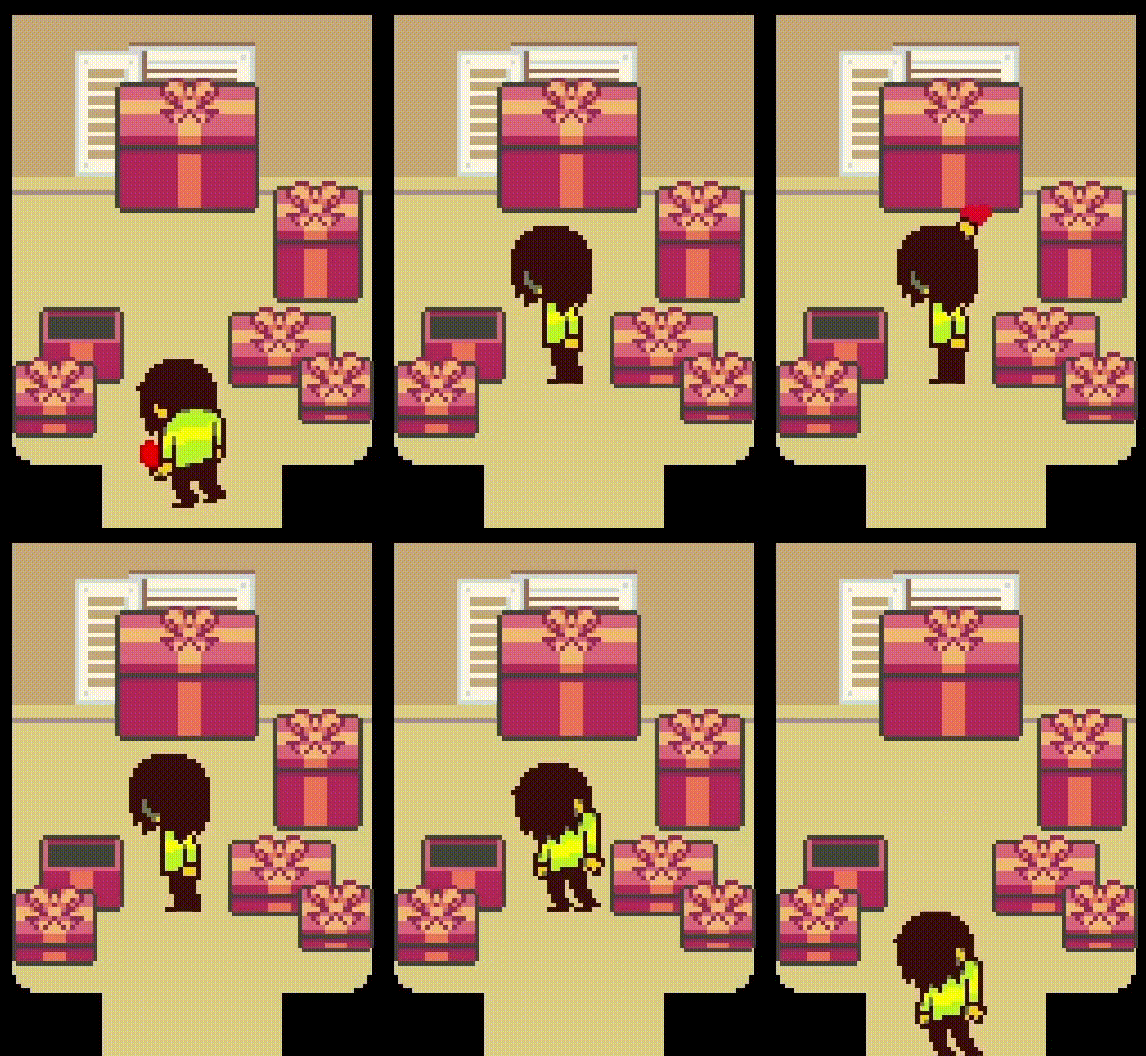
Left: Kris removes the red soul just before the last digit of the code can be revealed to the player, though those who have been paying attention may be able to decipher it for themselves... Right: Kris throws the soul into a decorative gift box, making a strong case for floating hearts as perfect gifts this holiday season.
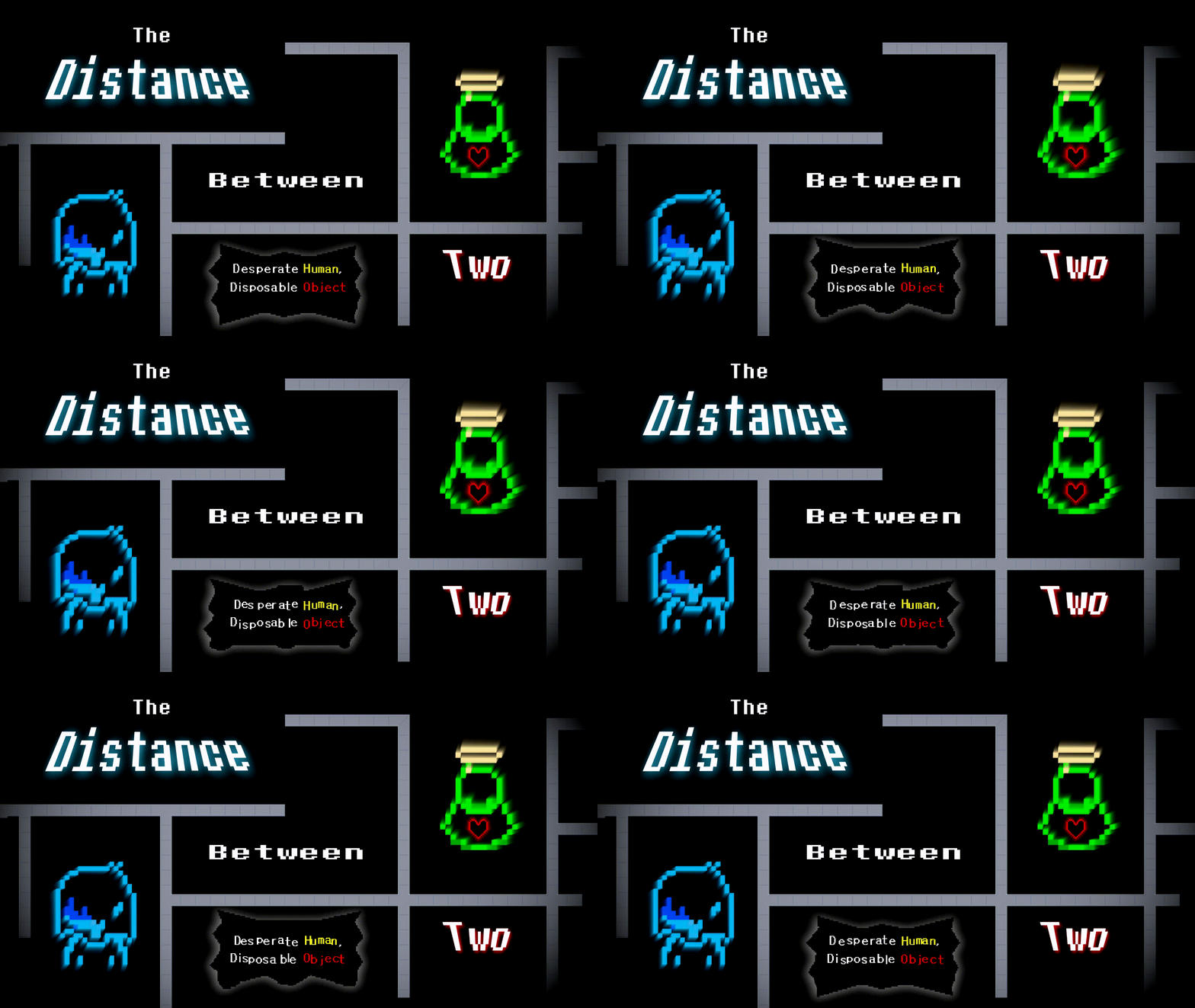
When the soul is left without a vessel, it is rendered incapable of speech and interacting with objects beyond simply moving them, adopting a state of vulnerability not too dissimilar from the one it embodies when evading projectiles in battle with the only major difference being the lack of a vessel to return to in order to make more meaningful decisions that may further progress the story. As a result of the player embodying this less powerful form after Kris blocks the soul from meeting its stated objective by denying it control over them in that moment, the player is forced to contend with the fact that they are a separate entity from Kris who lacks the relatable and expressive qualities that otherwise make them human. While the player maneuvers the soul through the Holiday’s ventilation system in order to get back to Kris and the guitar, their trek is scored by the eerie track “The distance between two,” which creates an empty and distant atmosphere that compounds on the alien yet fragile nature of the soul as both an anomaly and a disposable object rather than a natural part of the game’s world, reminding the player that they are truly nothing without a human vessel to control.
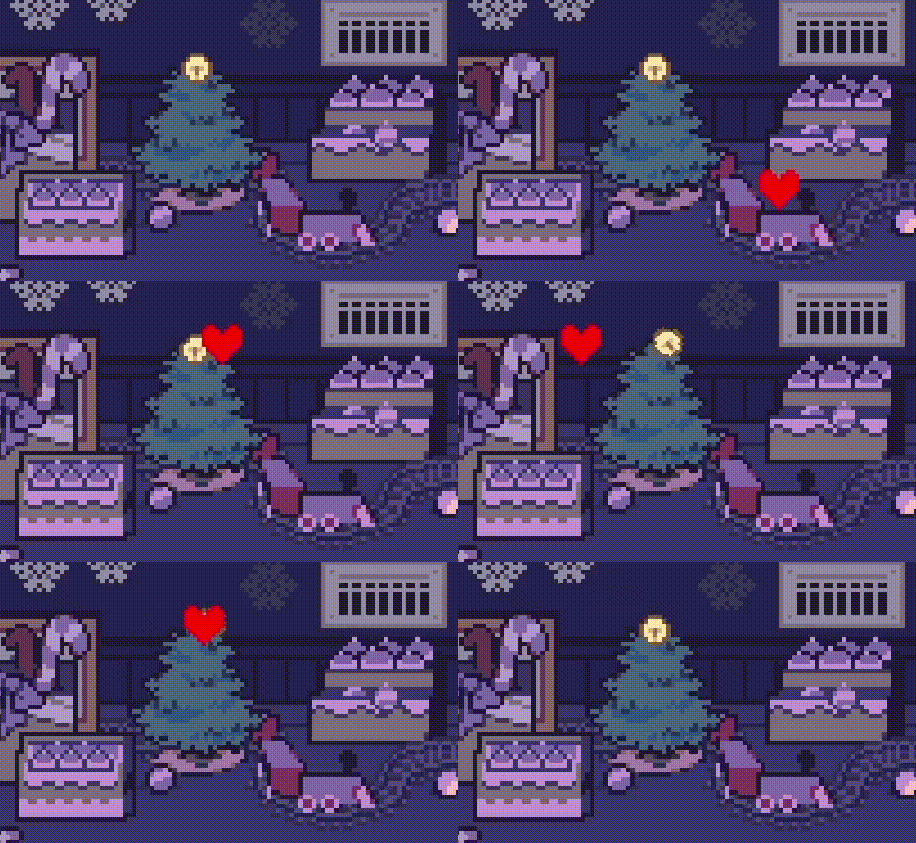

Left: in the Holiday's basement, the soul interacts with a bell at the top of a small Christmas tree. Right: the soul traverses the Holiday house's dark and ominous vents with a single spotlight follows the soul to guide the player's way.
Guiding the soul into the Holiday’s kitchen reveals Kris to be in correspondence with a mysterious voice instructing them on the phone to prevent Susie from getting hold of the guitar, among other cryptic details, while they are downing a glass of chocolate milk from the fridge.
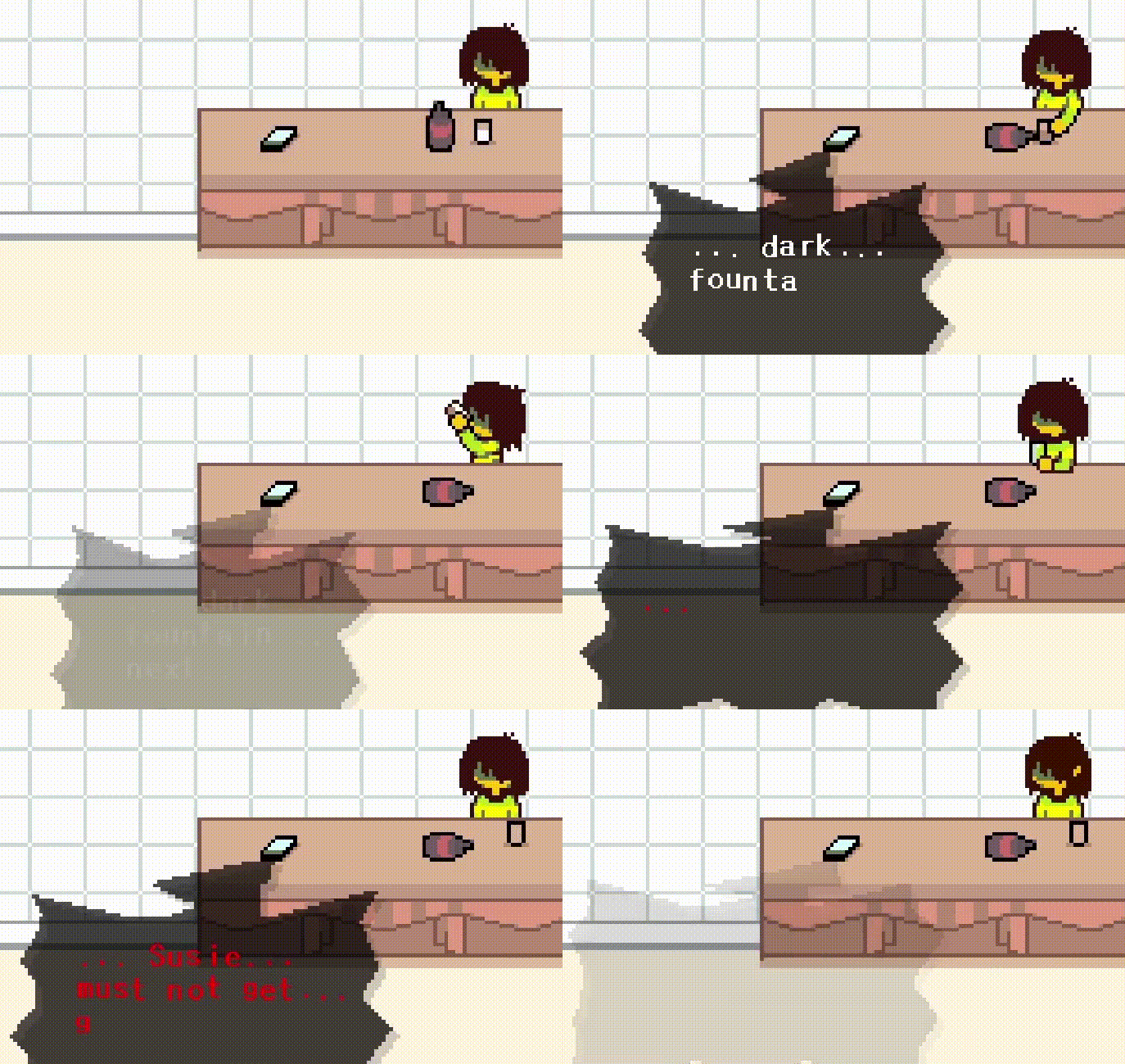
Moving around so that Kris notices the soul during this exchange would cause them to pin it to the ground and take it back to the storage room (pictured left), but if the player sits and waits instead, Kris will get visibly tired and eventually pass out on the kitchen counter (pictured right).
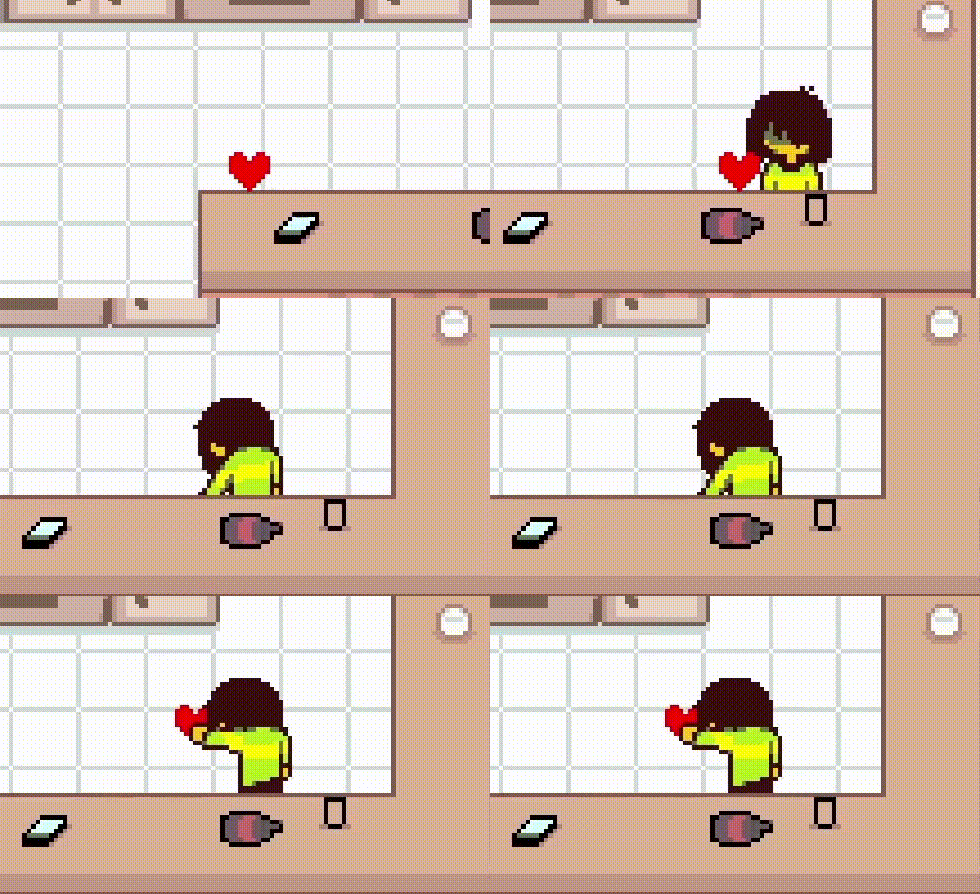
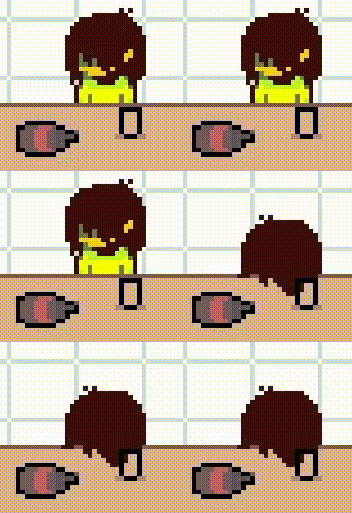
Since the soul takes on the physical form of a heart, the player may be convinced that the soul is an essential organ that humans may need at all times in order to survive and that Kris may be dead or unconscious after having the soul out of their body for so long. However, those assumptions are very quickly disproven once Kris gets back up and either catches the soul or hits it with the chocolate sauce bottle anyway, proving that not only is Kris able to live without the soul for an extended period of time, but they are also quicker and more agile without it as well.
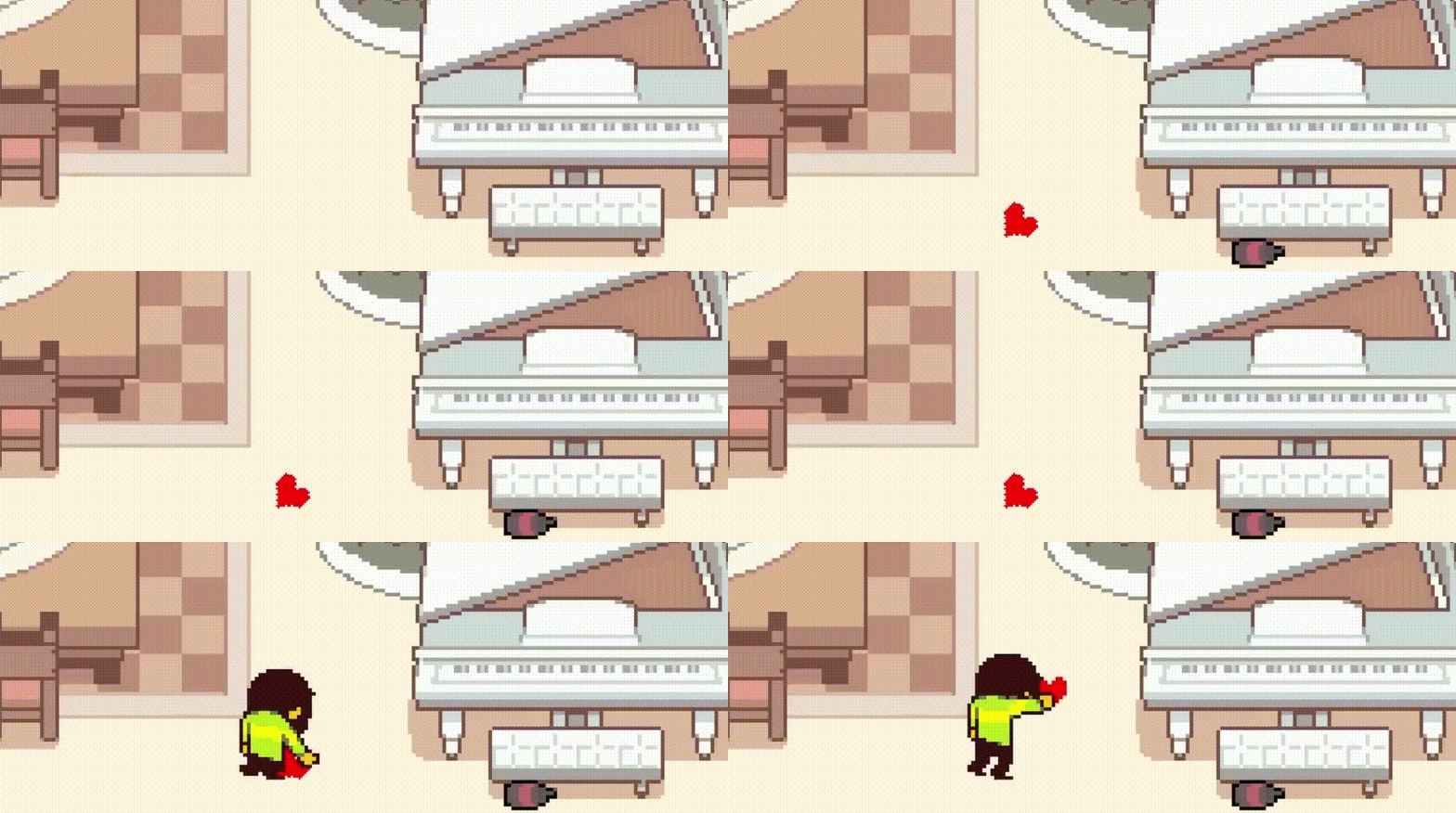
Notably, Kris would always end up successfully catching or hitting the soul no matter how far it travels in the room, a testament to their agility and 'gamer reaction speed.'
Upon returning to the kitchen, Kris can be seen walking upright, similarly to how they do when they have the soul in, before proceeding to play several complex pieces on the Holiday’s grand piano, further lending credence to how the player’s control does not improve their day-to-day functioning in the Light World and planting the idea in the player’s mind that Kris could live a much more fulfilling life without them. This massive shift in presumed significance for the soul, coupled with Kris being revealed as keeping several secrets in relation to Dess and the Knight’s plans, leaves the player feeling significantly humbled in the midst of questioning both the impact that their presence has on Kris’ life and their own trust in Kris as a reliable vessel.
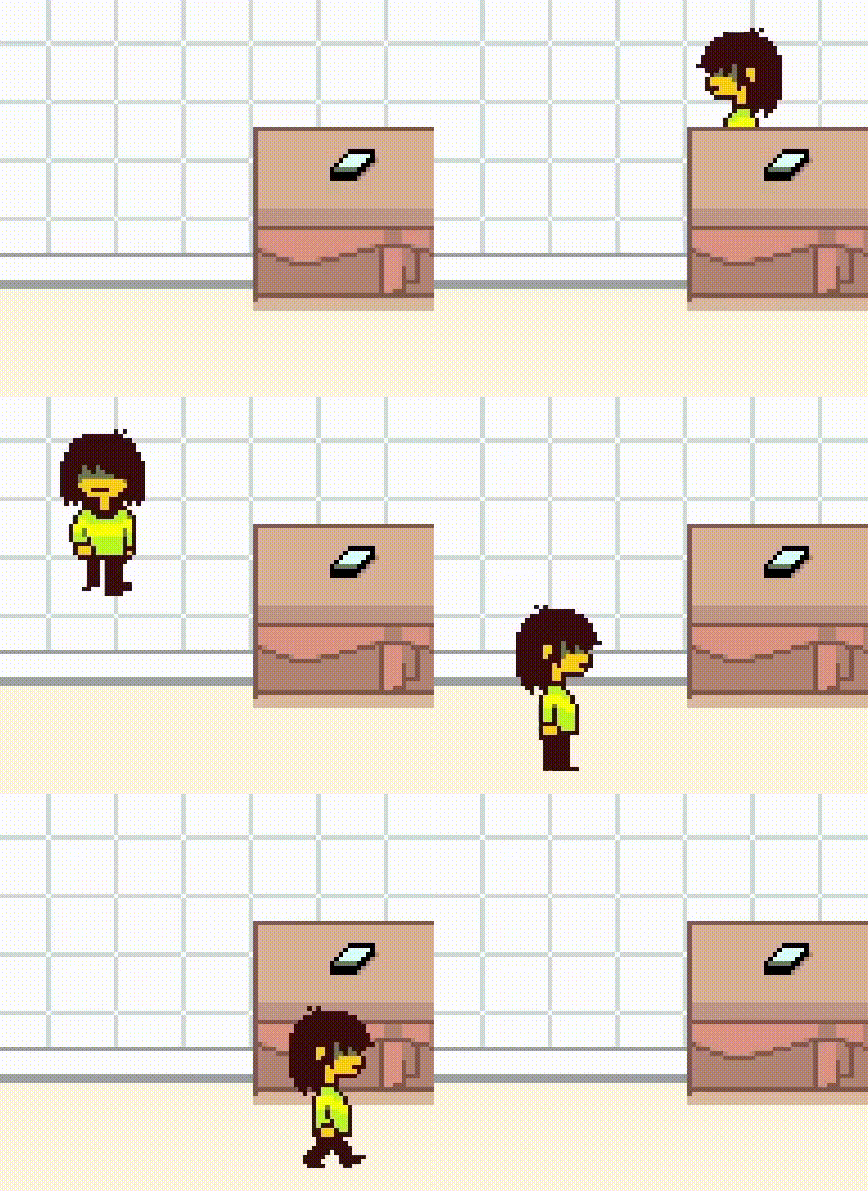
After getting a refreshing beverage, Kris casually walks over to the piano like everything's normal while the soul patiently listens from the vents.
With the vent in the kitchen locked tightly, the player is left to explore the Holiday house by continuing to guide their small floating heart through claustrophobic vents as eerie music still reverberates in the background, eventually finding themself locked in the house’s cluttered basement. After interacting with the circuit breaker and shutting off the house’s power, Susie and Noelle will rush downstairs to investigate your disruption, causing a Christmas tree to fall over as an angel ornament lands on top of the soul and pins it onto the ground.
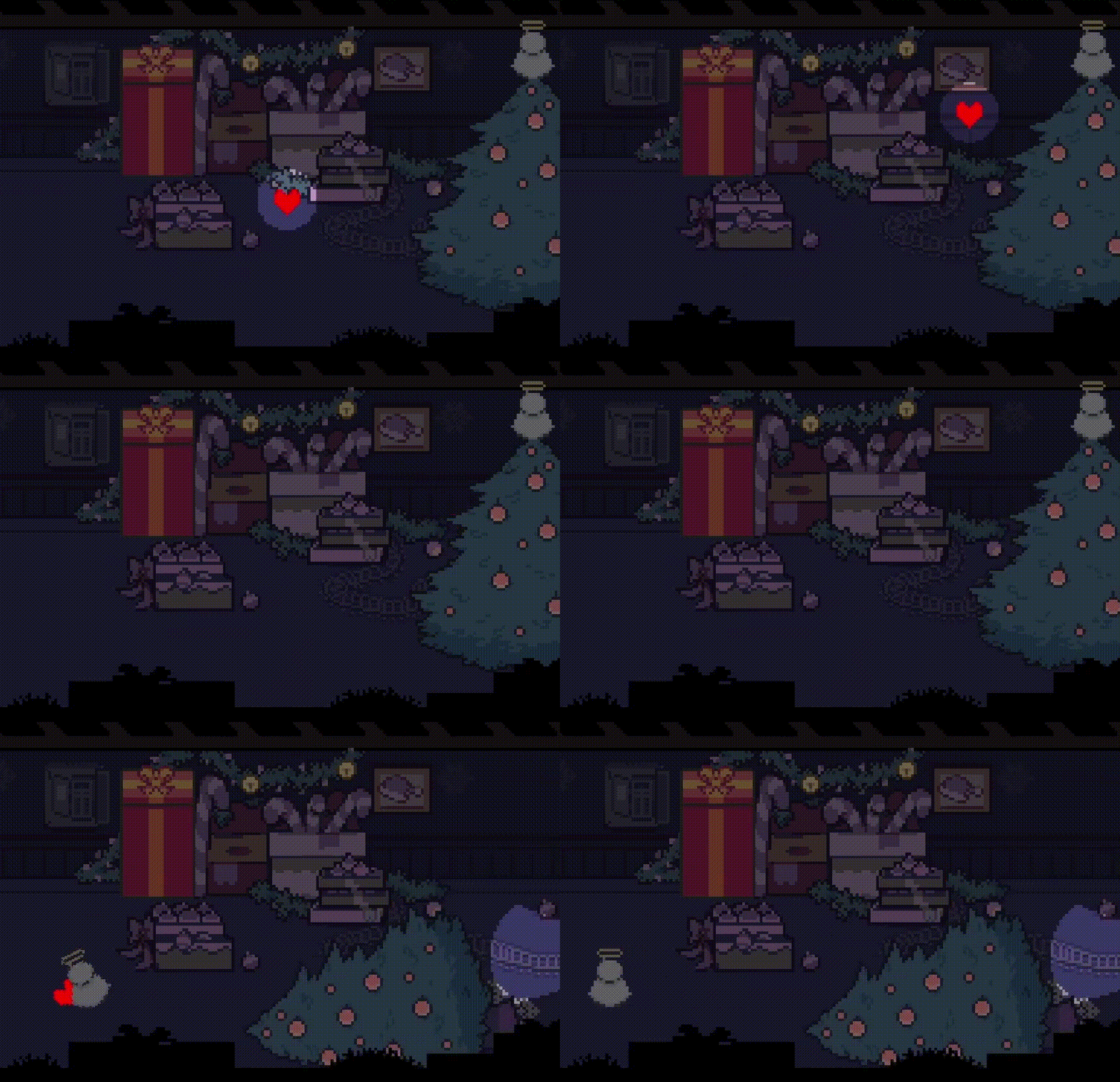
Susie bumping into that tree inadvertently caused one of the most important instances of symbolism in Deltarune to take shape.
Ever since the release of Chapter 4, many theorists have dissected the association between the soul and the angel ornament as suggesting that the player is or at least plays a similar role to the angel of the prophecy, being essential to either reinforcing or changing fate, depending on one’s interpretation, as it plays out within the game’s story. With this understanding of the soul in mind, it becomes ironic that the being who is responsible for propelling the story forward is reduced to crawling on the floor to get Susie and Noelle’s attention only to have them mistake you for a critter and nearly attempt to swat you to death.
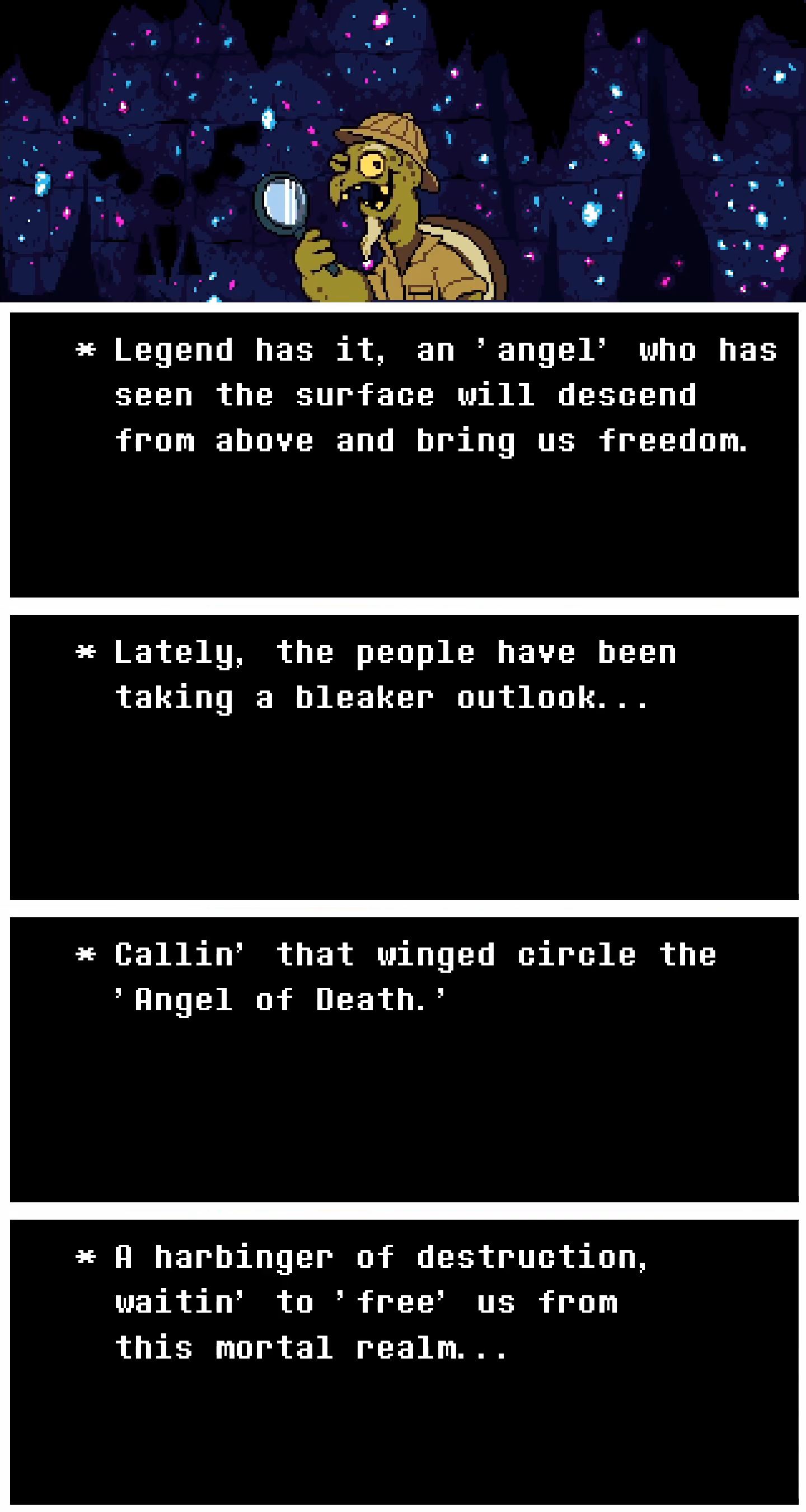
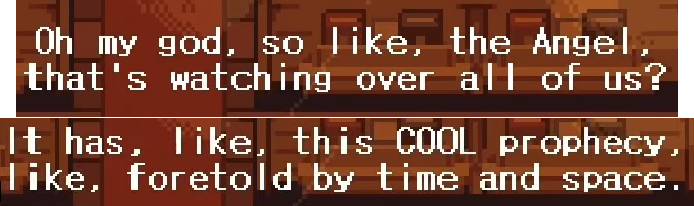
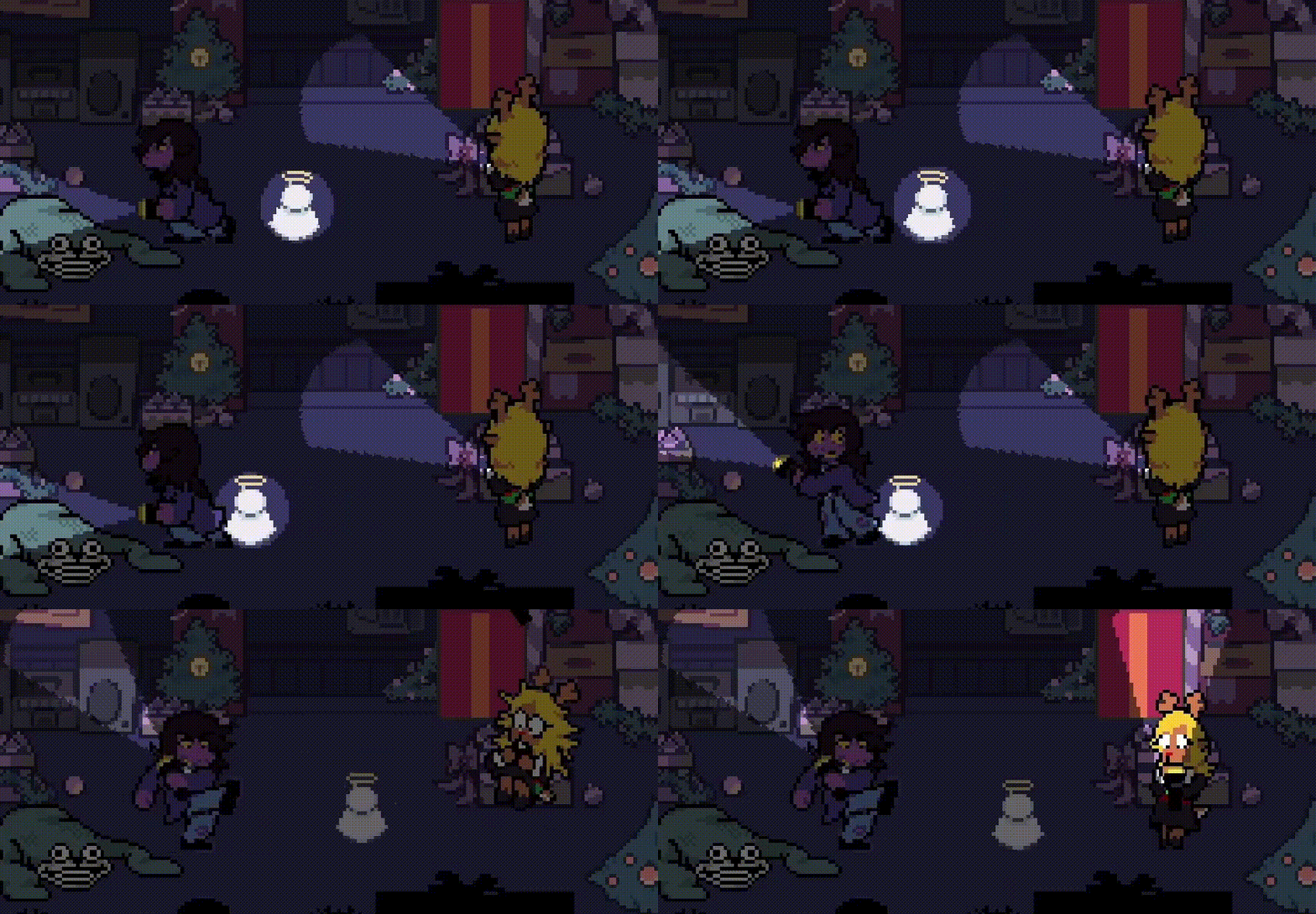
Left: in Undertale, Gerson Boom tells of a prophecy that refers to an 'angel' that will bring about either liberation or destruction to all monsters similar to how the player is given the choice to fight or spare in each encounter. Up Right: in Deltarune, Catty gives a 'reading' in church that implies that the angel is an omnipresent figure at the center of the prophecy who is responsible for enacting it in some way. Down Right: the soul, hidden behind an ornament depicting the ultimate decider of the fate of the world, is kicked by Susie when attempting to get her attention. 'Angel of Death,' indeed.
Fortunately, Noelle decides to gently carry the angel ornament upstairs so they can decide how to dispose of the cosmically horrific vermin inside of it without worrying about it running away (pictured left). Once the duo arrive back in the living room, they hold the ornament in place as they discuss what could be behind it, leaving the soul to do nothing but nudge the static angel back and forth in a desperate struggle to break free and get back to their stated objective (pictured right).
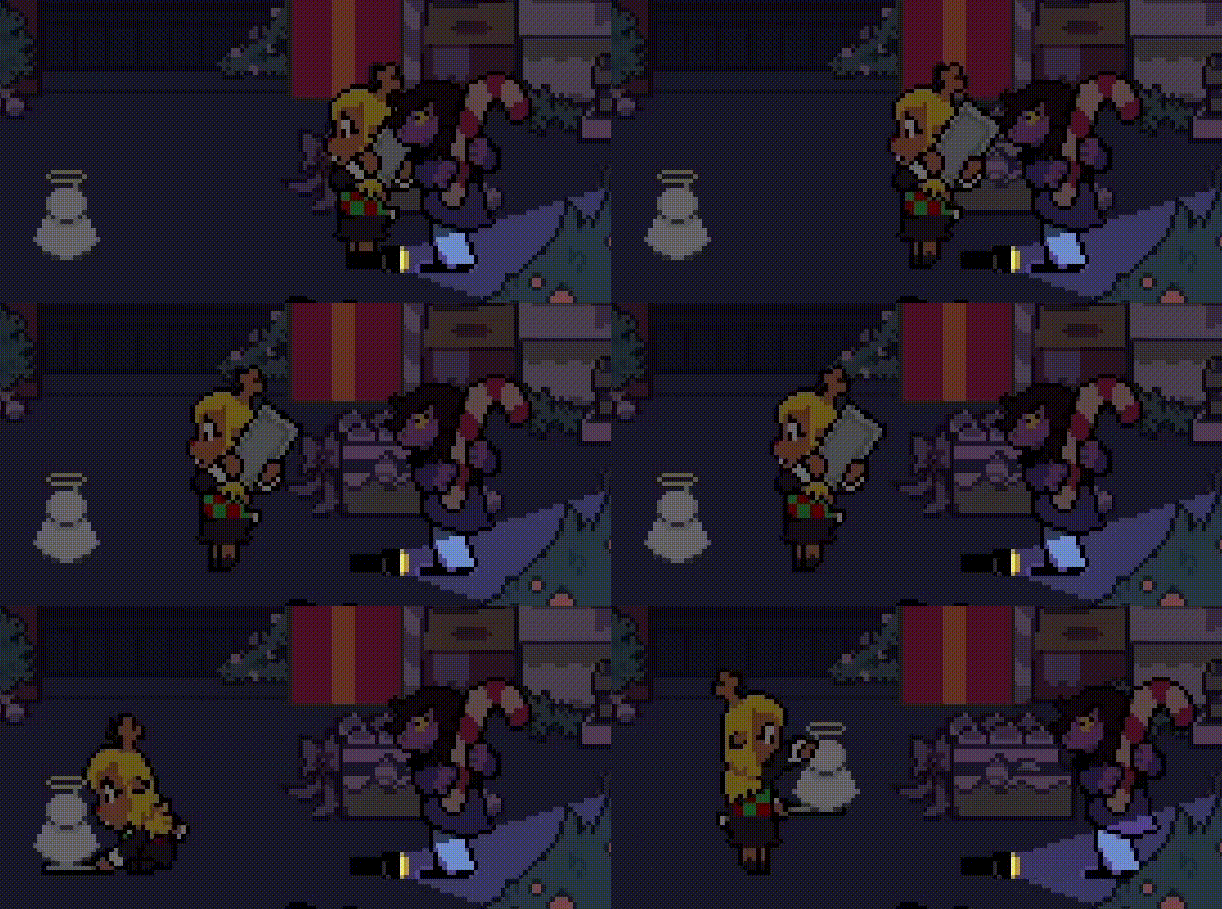
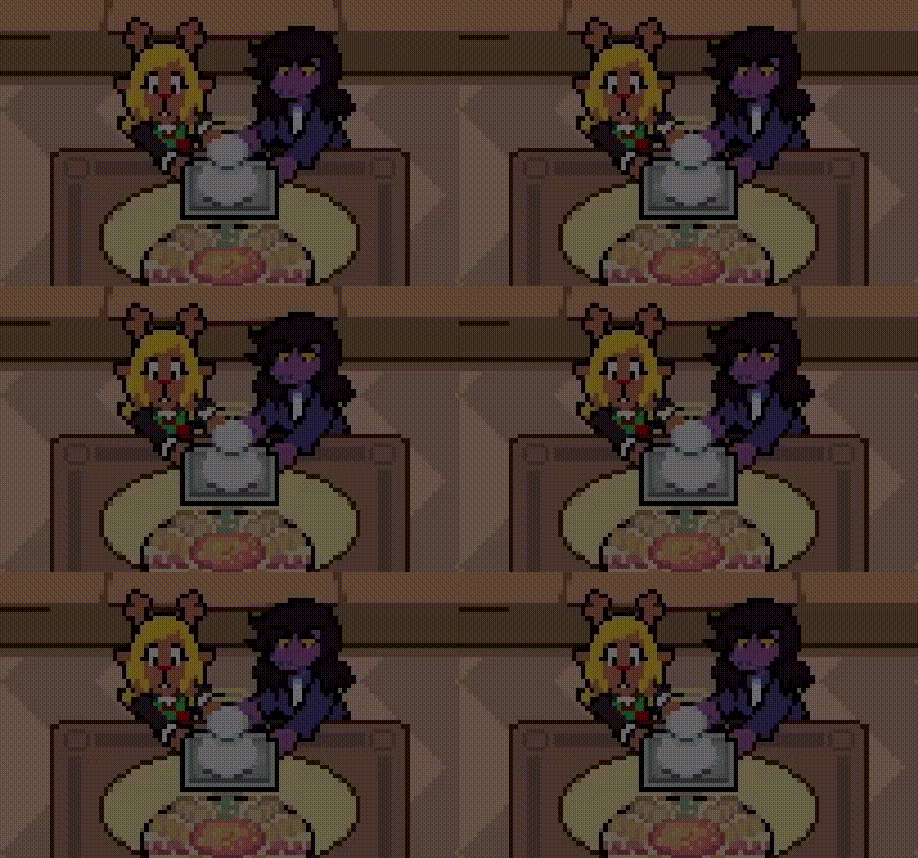
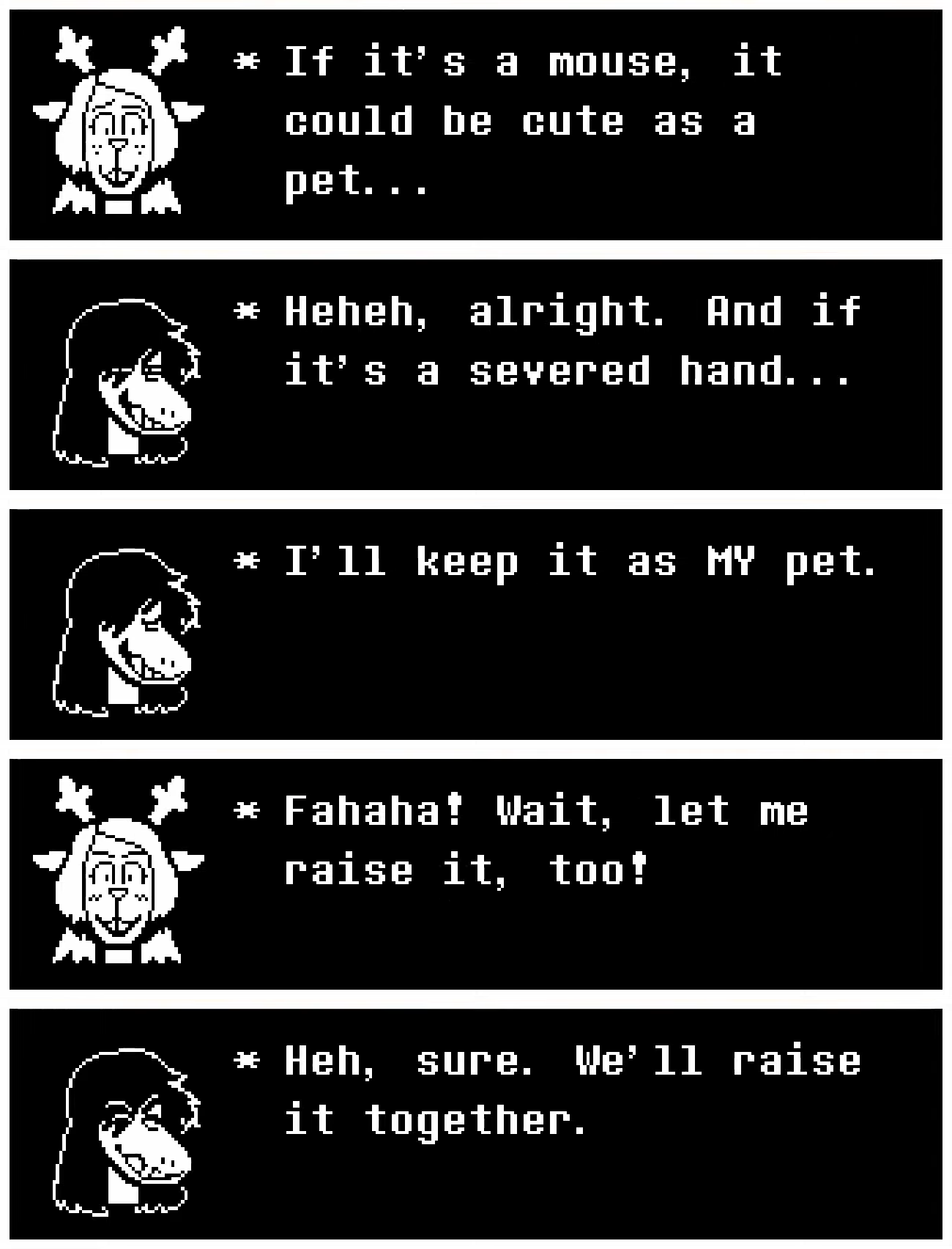
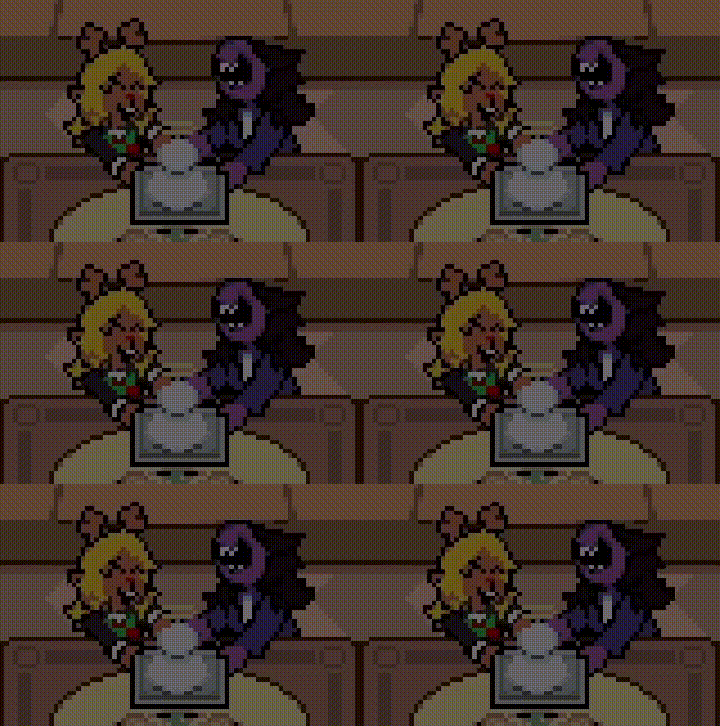
As the player struggles in place, Noelle and Susie playfully joke about the possibility of a mouse or a severed hand being inside the angel ornament and consider keeping it as a pet while “The distance between two” begins ringing out in the background again as if to remind the player of their original mission to find the shelter code with Kris. In fact, the combination of the soundtrack and the banter of Susie and Noelle almost comes across as mocking the player and pointing toward their weakness in this current moment, being reduced to just an unwanted anomaly and a household pest rather than a destiny-defining deity. In that respect, this entire sequence becomes extremely funny when looking back on it in a way that is more subtle than what Toby Fox’s approach to humor usually allows. While Undertale and Deltarune’s humor regularly derives from absurdism as expressed through either verbal character quirks and non sequiturs or cartoonish visual gags, the inherent absurdity of the player’s power being subverted by the limited form they take in the Light World is what quietly acts as a source of humor at the player’s expense without outwardly antagonizing or alienating them from the dramatic tension present in the narrative at large.
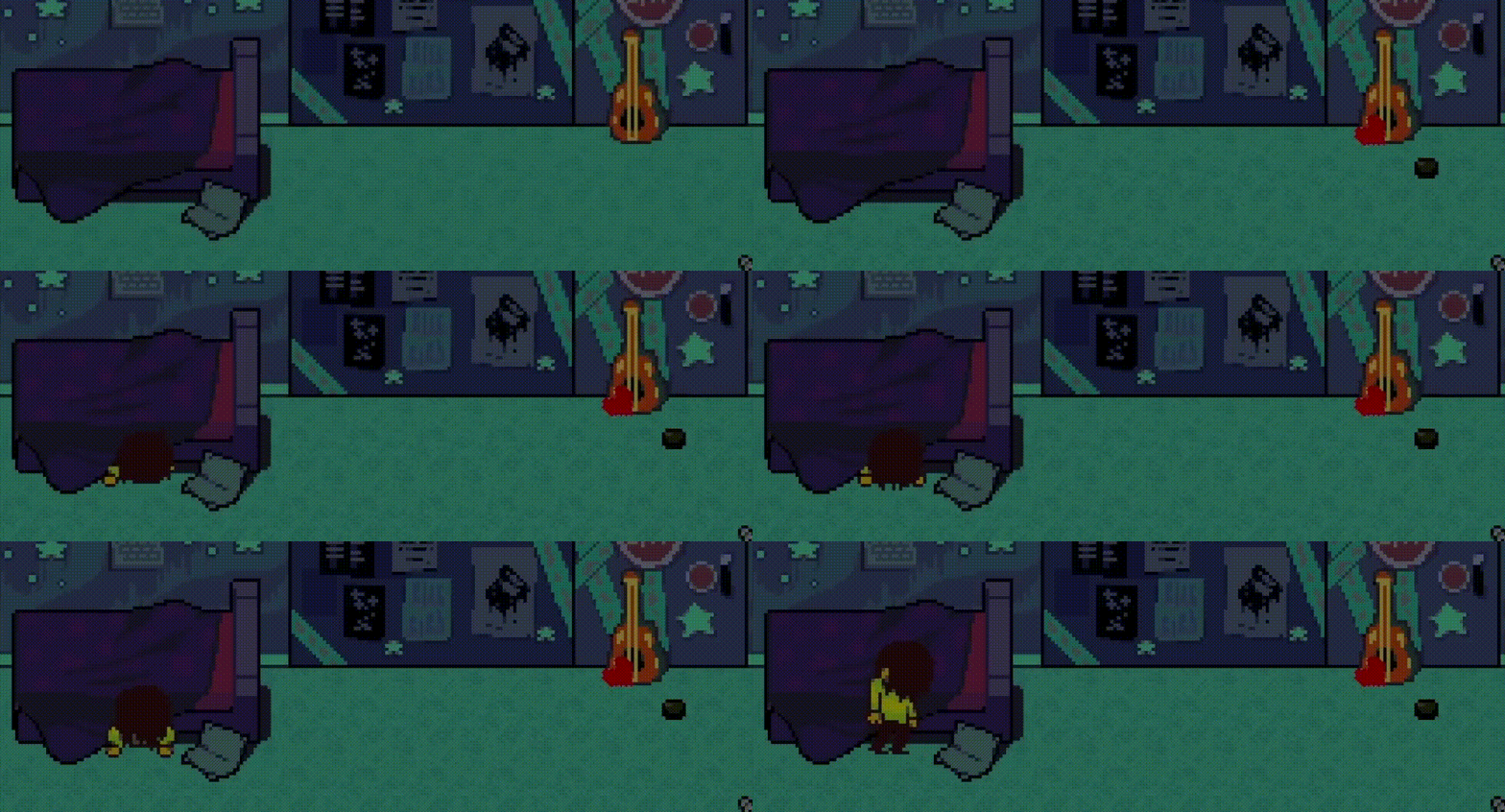
The continual push and pull of power that the player has over the situation persists after Susie and Noelle leave the room, allowing the soul to sneak back into Dess’ room seemingly undetected only for Kris to attack you with a hockey puck from under the bed if you attempt to go near the guitar.
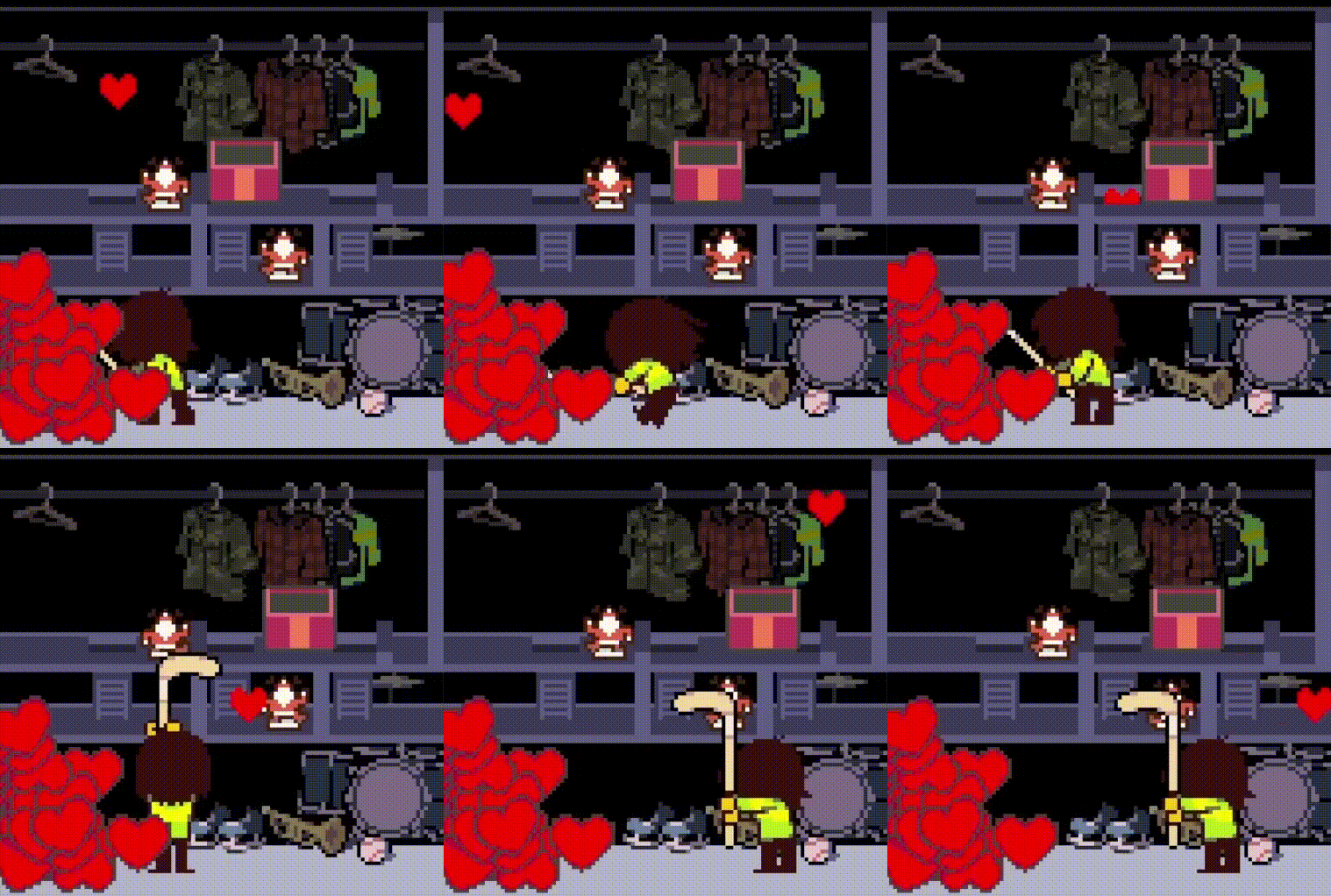
Once Susie and Noelle notice the angel on the floor, Kris rushes into Dess’ closet with the soul as the duo decides to head into the room to check if the ‘mouse’ had scurried its way inside, opting to wait outside the closet so as not to disturb it unless it makes noise. Despite the narrative implying a new objective for the player in continuing to get the attention of Susie and Noelle, the soul is still depicted as being at a severe disadvantage without a vessel as demonstrated when you are tasked with getting to Dess’ guitar on the other end of the closet while avoiding Kris’ attempts to swat at you with a hockey stick. In the midst of this power struggle, the soul has the opportunity to push Kris to the limits of their current physical abilities as the electronic Santa dolls that litter the closet would make noise if they are touched, distracting Kris into turning them off as the player moves ever closer to the guitar.

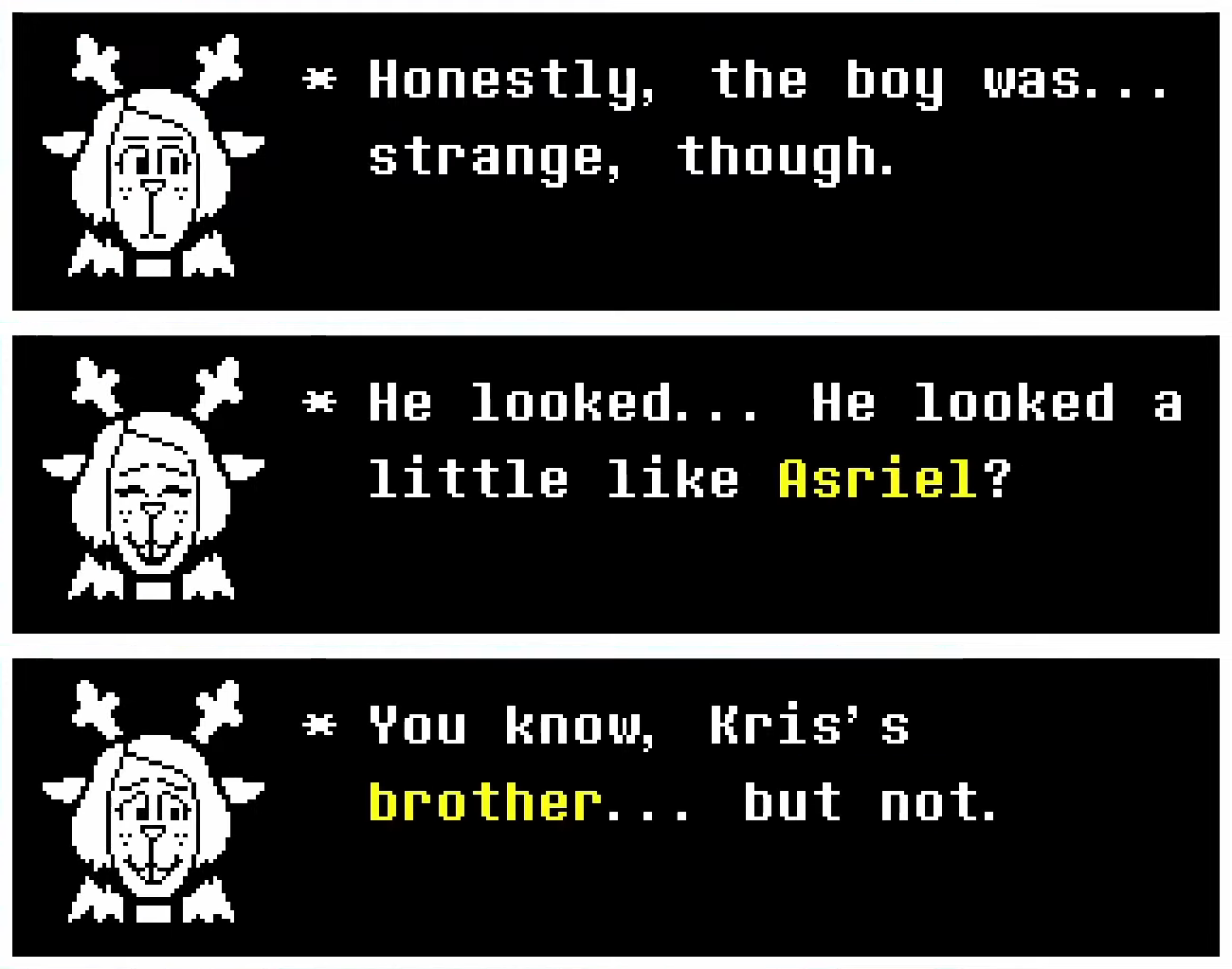
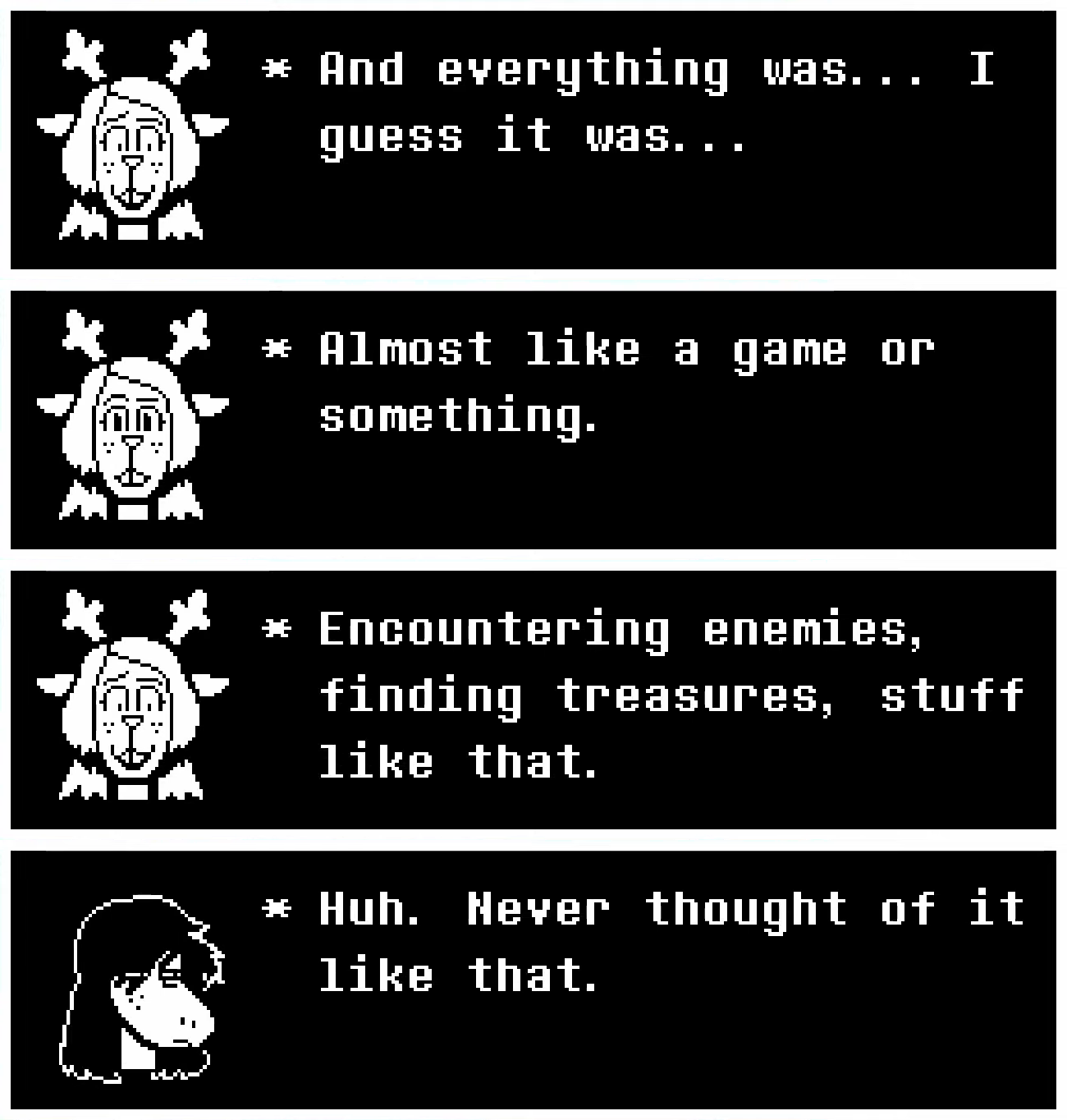
As the comedic conflict between Kris’ desperation and the soul’s fragility plays out in the closet, Noelle patiently recounts the events of her ‘dream,’ or her experiences in Chapter 2’s Cyber World that she’s only convinced were a dream, to Susie, discussing details that Susie hadn’t considered like Ralsei’s resemblance to Asriel (pictured left) and the game-like encounters present throughout the Dark World (pictured right).
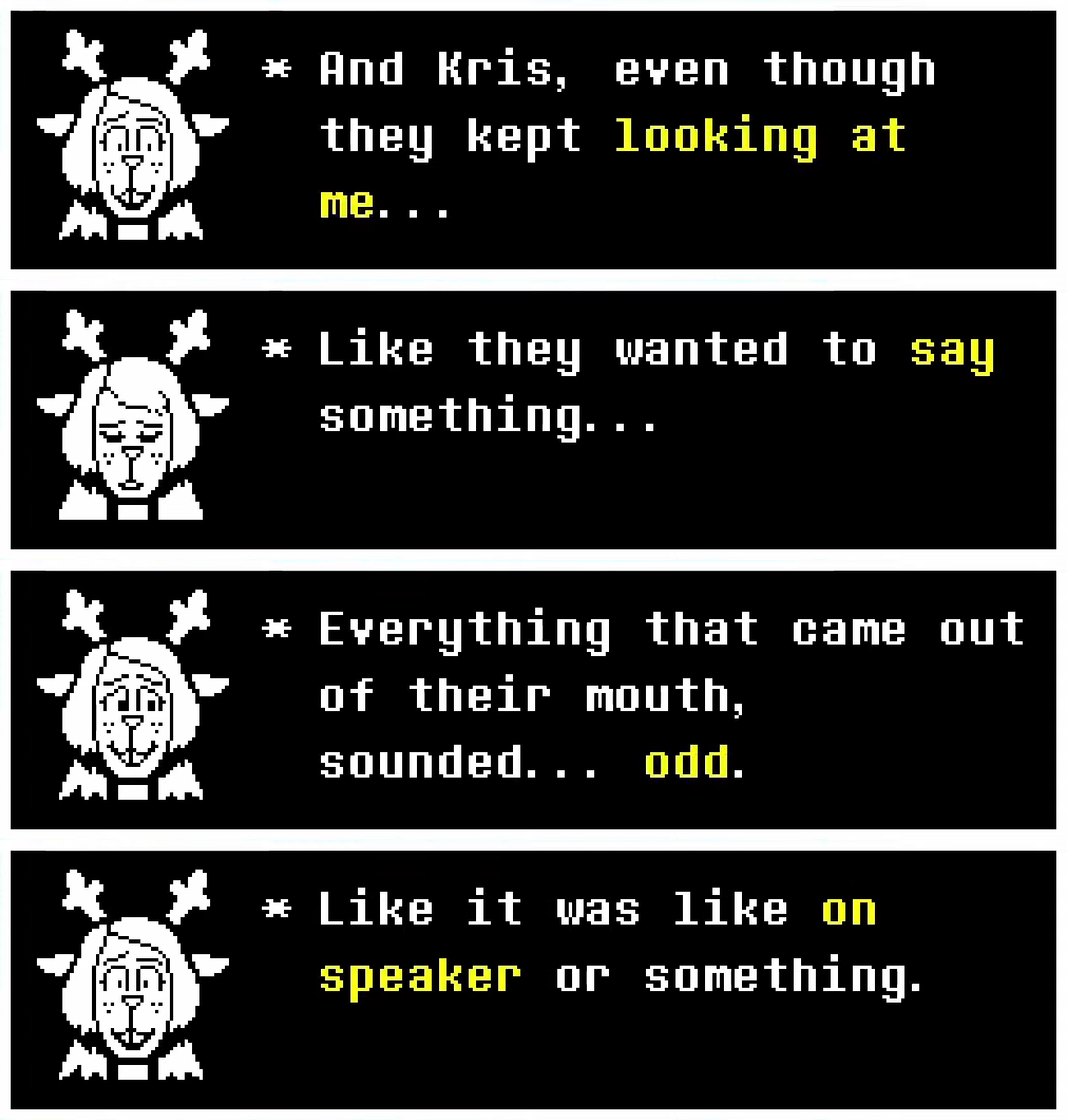
If the player waits around in the closet for a while instead of attempting to reach Dess’ guitar, they would be treated to their full conversation where Noelle reveals how her relationship with Kris has changed over the years and how she suspects that Kris has been acting differently in recent memory. One of Noelle’s more interesting observations comes about when she mentions how Kris’ voice sounded strange in her ‘dream,’ remarking that it sounded as if they were ‘on speaker’ whenever they were talking. This surreal description of Kris’ mannerisms while under the influence of the soul as seen from Noelle’s perspective serves to further illustrate the player’s presence as an anomaly whose actions can impact an outsider’s perception of Kris just as much as you impact their behavior.
Of course, the inherently horrific implications of where Kris’ free will ends and the player’s will begins are still juxtaposed by the comically vulnerable form that the soul takes on its own as Kris threatens to whack it with a stick, but even then, one can sense that they might feel a certain way about their life as their visible reactions to Susie and Noelle’s conversation add a level of pathos to their dynamic with the player. When Noelle brings up her relationship with Kris, they briefly flinch as if to suggest surprise or interest in what she is saying about their recent behavior and her childhood memories of them pulling pranks on her. Whether or not their reactions signify their deeper self-consciousness or simply a desire to add to the conversation, these subtle movements seem to imply how Kris preoccupying themself with keeping secrets for the sake of their presumed alliance with the Knight is preventing them from having a closer relationship with their friends. Having Kris’ weaknesses suggested in this way adds an extra degree of imperfection and conflictedness to their character as the extent to which they are willing to live life on their own terms is called into question.
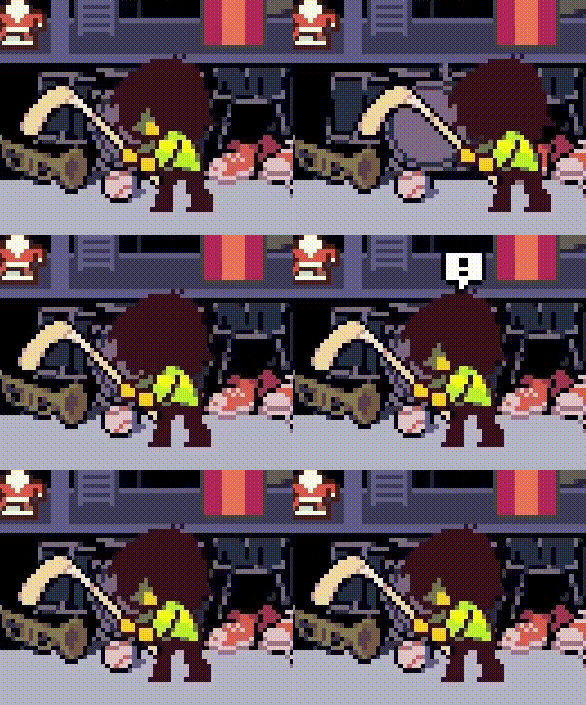
Whenever Kris flinches, certain words in Noelle and Susie's conversation would be colored yellow, implying the parts of their talk that Kris may be paying the most attention to.
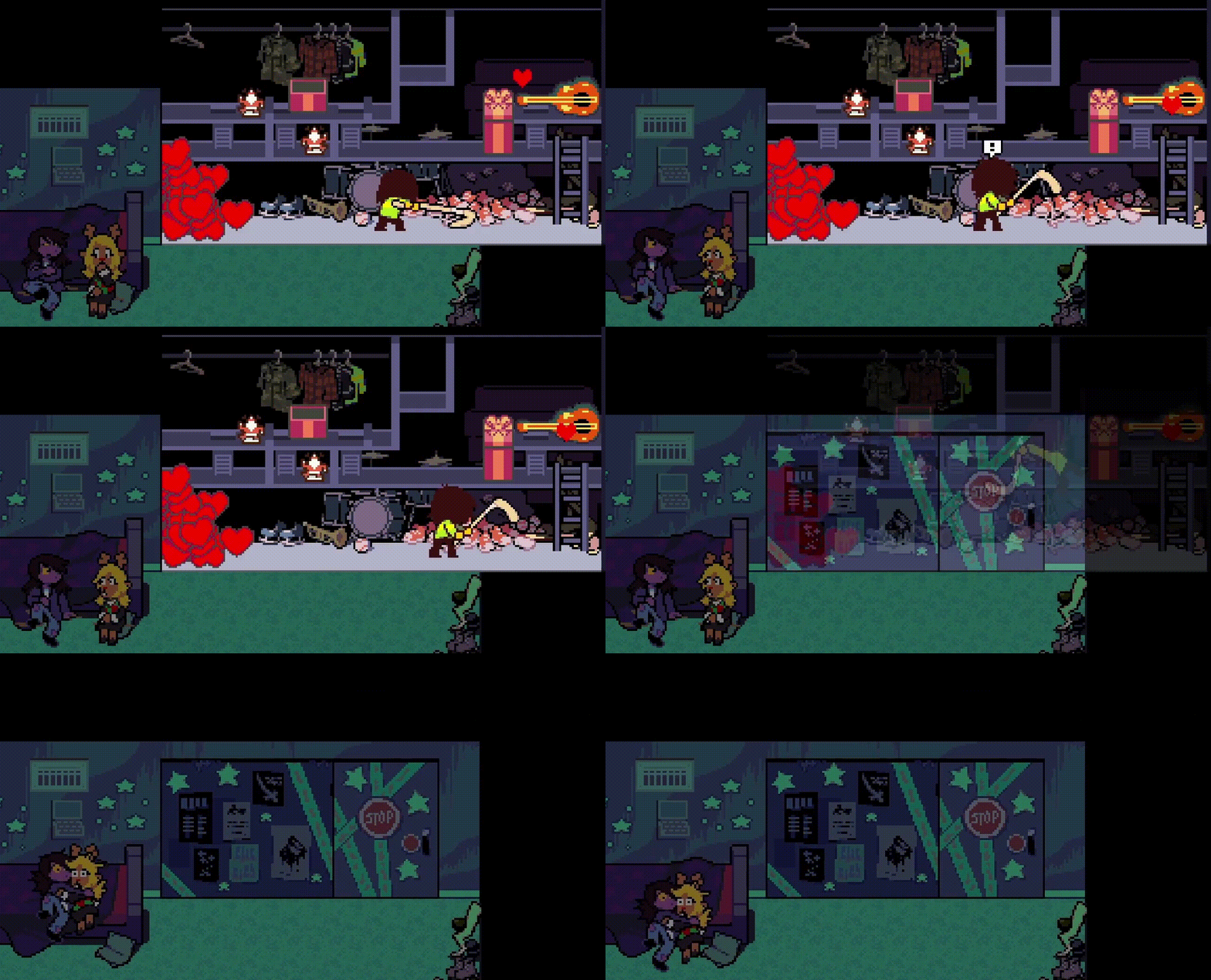
After the player finally motivates Susie and Noelle to check the closet by strumming the guitar and subsequently sustaining more injuries from Kris (pictured left), Susie opens the closet and takes the guitar, assuming that Kris just got distracted trying to scare them, though once they both leave, Kris calls the mysterious voice again to alert that Susie now has Dess’ guitar (pictured right). As this brief phone call reminds us of Kris’ ulterior motives, it becomes clear that a more dominant force is at play in their life that encourages them to perform actions and keep secrets that are counterintuitive to what their friends expect from them.
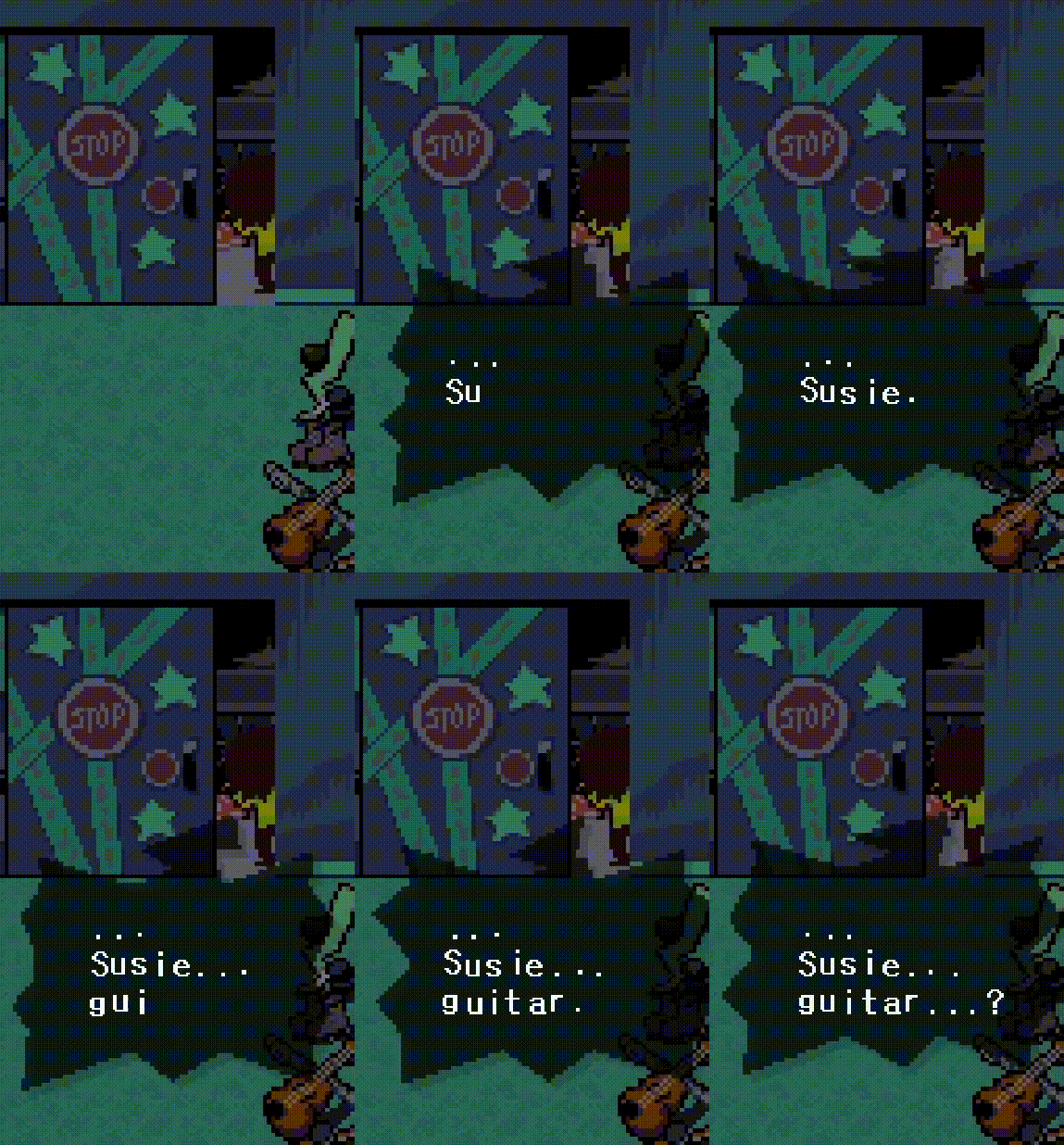
It is also very telling that despite their earlier distrust of the red soul for the sake of keeping their alleged plans with the Knight secret and our control of Kris enabling a level of distance from their peers, they place the soul back in their body anyway as if to further deny themself of what little autonomy they have left for the sake of keeping up appearances. While the player’s brief time away from Kris as the red soul suggests them to be ultimately useless to Kris’ survival in the Light World, it really begs the question of why Kris feels the need to let it control them in the first place when they are fully capable of living their regular life without it.
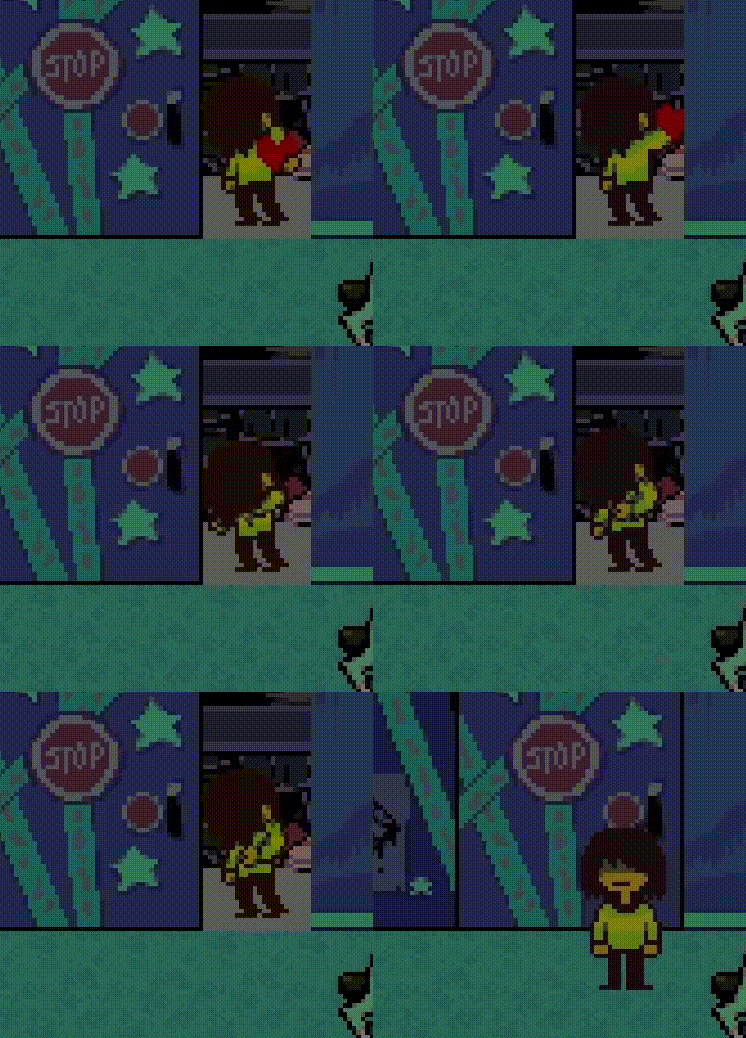
One general consensus I see amongst fans of Deltarune is that the red soul is being forced onto Kris’ life by either the mysterious voice or the Knight and that they completely resent it because of that. In my eyes, however, interpreting Kris’ relationship with the soul as one of pure hatred doesn’t take into account the numerous instances throughout the game where Kris doesn’t object to a choice that the player makes for them and how they always actively choose to place the soul back in their body when they could easily find a way to permanently dispose of it once and for all otherwise. This isn’t to say that they particularly like the soul, but rather I’d claim that they tend to tolerate it out of a perceived necessity that they have more recently begun to question thanks to their newfound friendship with Susie allowing them to feel more comfortable embracing their own autonomy.
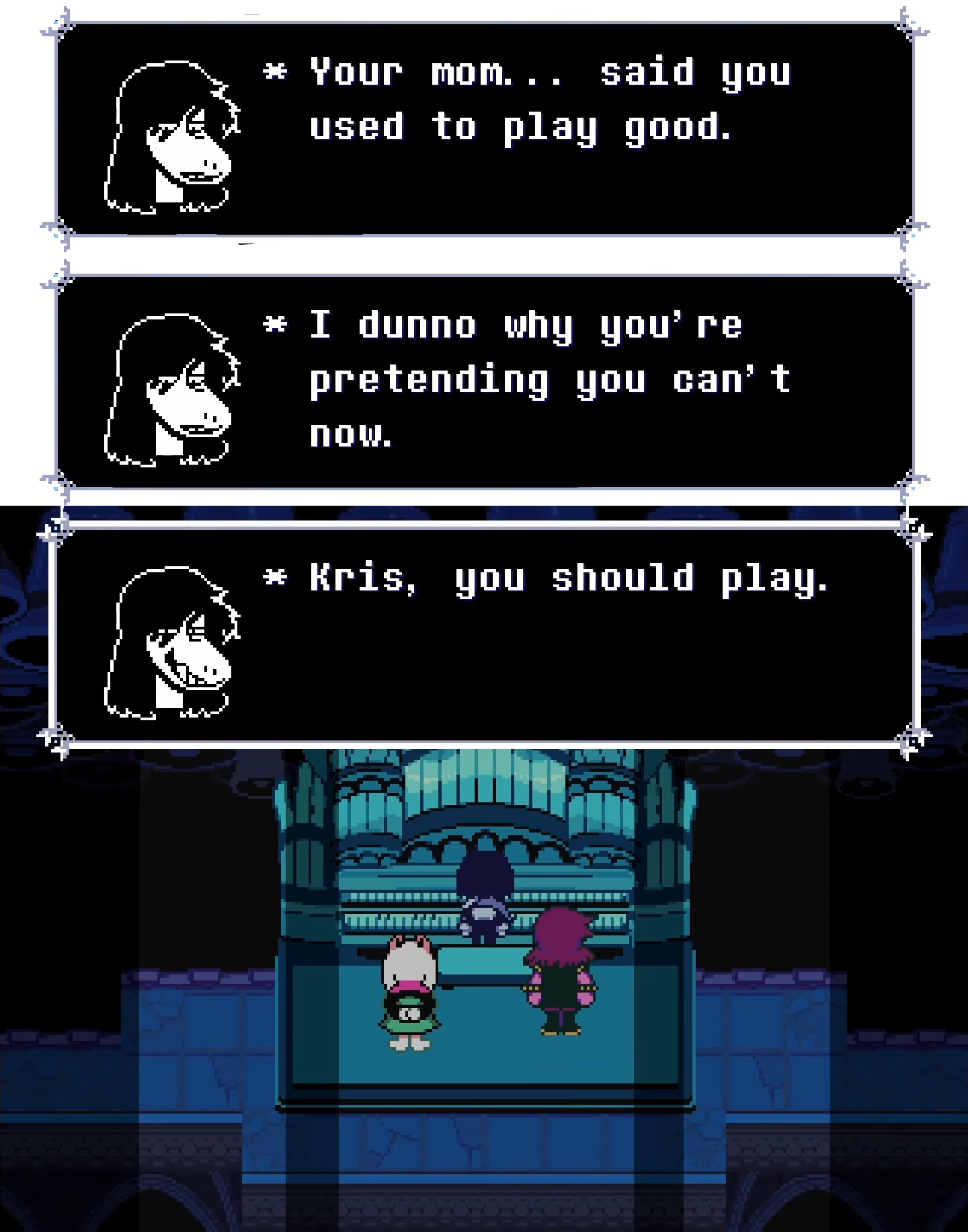
At the Dark Sanctuary's organ piano, Susie encourages Kris to play the complicated piece necessary for unlocking the door to the fountain, which the red soul struggles to do by itself. Susie's supportive words are enough for Kris to gather the courage to effortlessly and passionately play the piece themself without the assistance of the soul.
While Kris is clearly not opposed to forcefully throwing or whacking the soul around whenever the situation calls for it, they seem to do so from the understanding that it is more of an object that they are meant to use rather than a sentient being. Consequently, if how the narrative characterized the soul throughout this sequence is anything to go by, then the soul can more accurately be interpreted as being the former more than the latter, leaving the player themself to be denoted as embodying a cold unnatural presence within an emotionless and fragile object whenever they are separated from Kris. As such, Kris’ complicated and ever-developing feelings on sacrificing their autonomy do not read to me as an active hatred of the soul itself unless you were to somehow force them to traumatize their childhood friends into becoming more emotionally distant and subservient to them in the name of ‘getting stronger.’ They’ll probably be pissed if you ever make that happen, but even then, they’ll still keep you around to control them no matter how much they end up reasonably hating you.
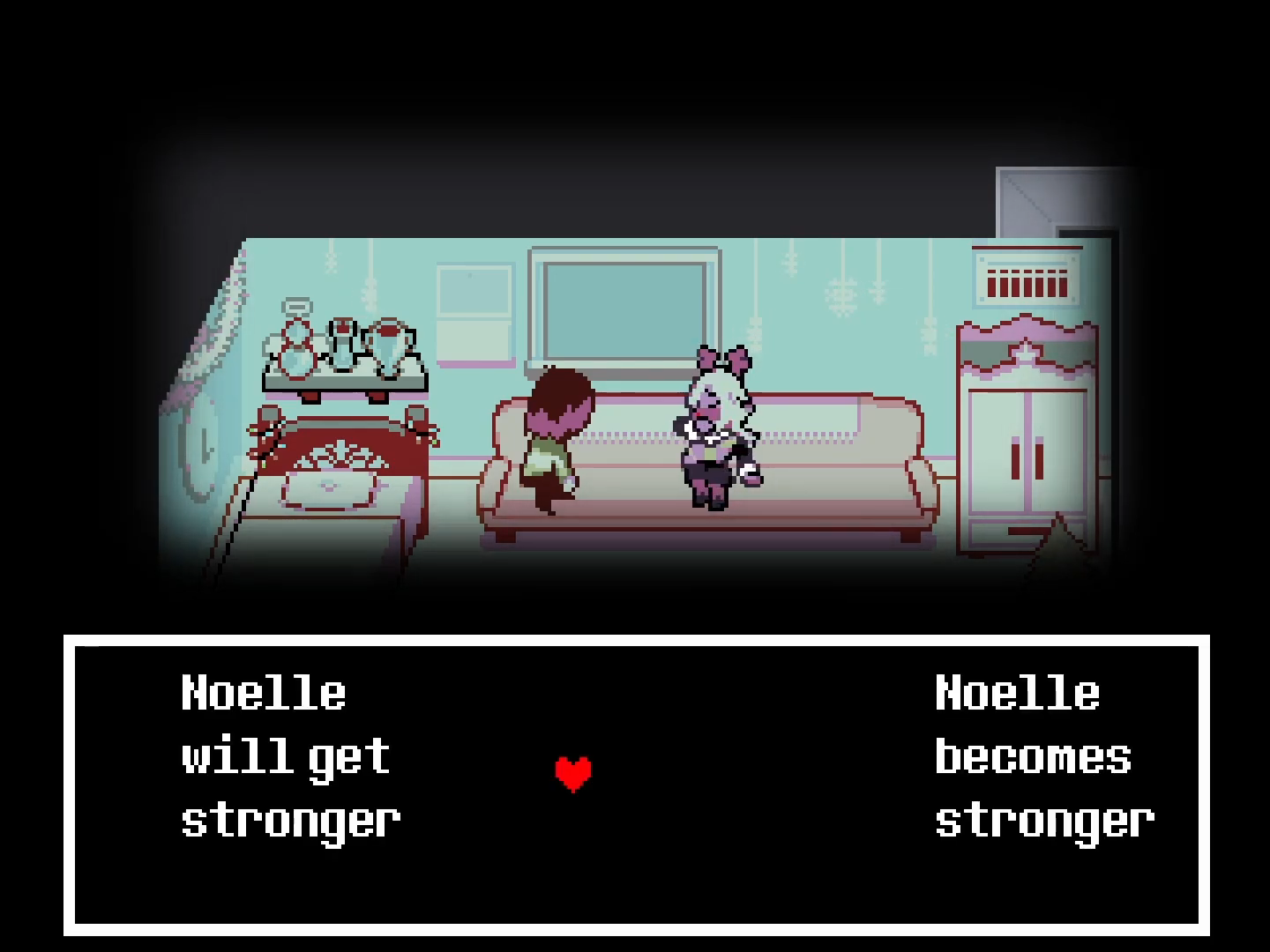
Left: Kris, while under the influence of the soul, is given no choice but to insist that Noelle 'becomes stronger' before forcing her to wear the ThornRing against her will. Right: despite the traumatic actions the player made them perform and even after they took their digust and anger out on the soul, Kris places it back in their body after overhearing Asgore saying that they need to leave.
Despite your presence in the Light World being framed as disposable and insignificant, it speaks volumes about Kris that even when you actively seek to ruin their life as the soul, they still feel as if they need you to take the wheel for them to some extent. Whenever I think about why Kris might need the soul in the first place, I always envision what the narrative established about Kris throughout its first chapter, an introverted teenager stuck living in their big brother’s shadow and silently longing for any remnant of childhood joy they may have lost over the years to resurface. Their increasing despondence and disappointment towards the current state of their life is only exacerbated by the trauma involved in their adopted parents’ messy divorce and the everpresent absence of one of their childhood friends looming over it.
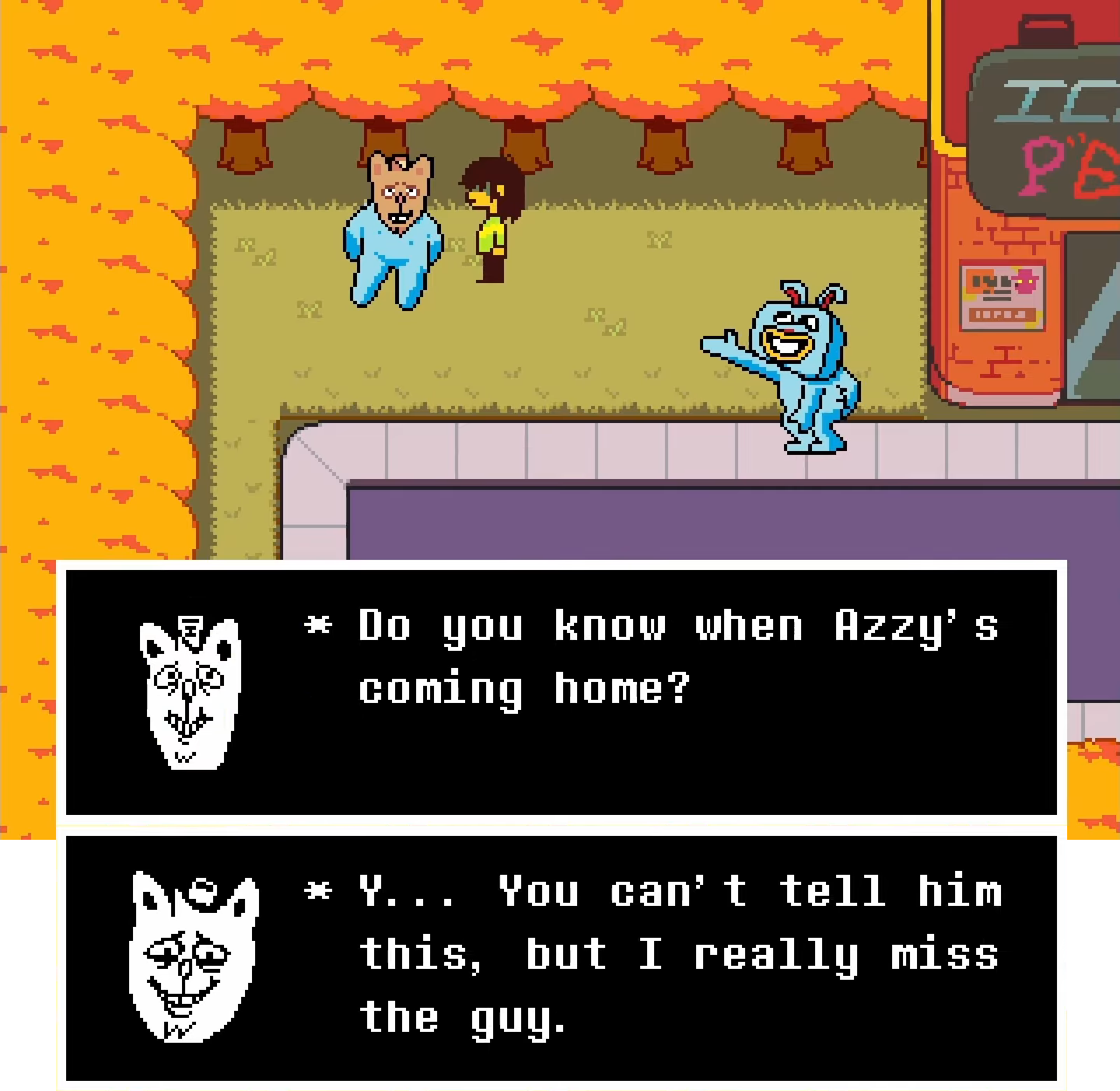
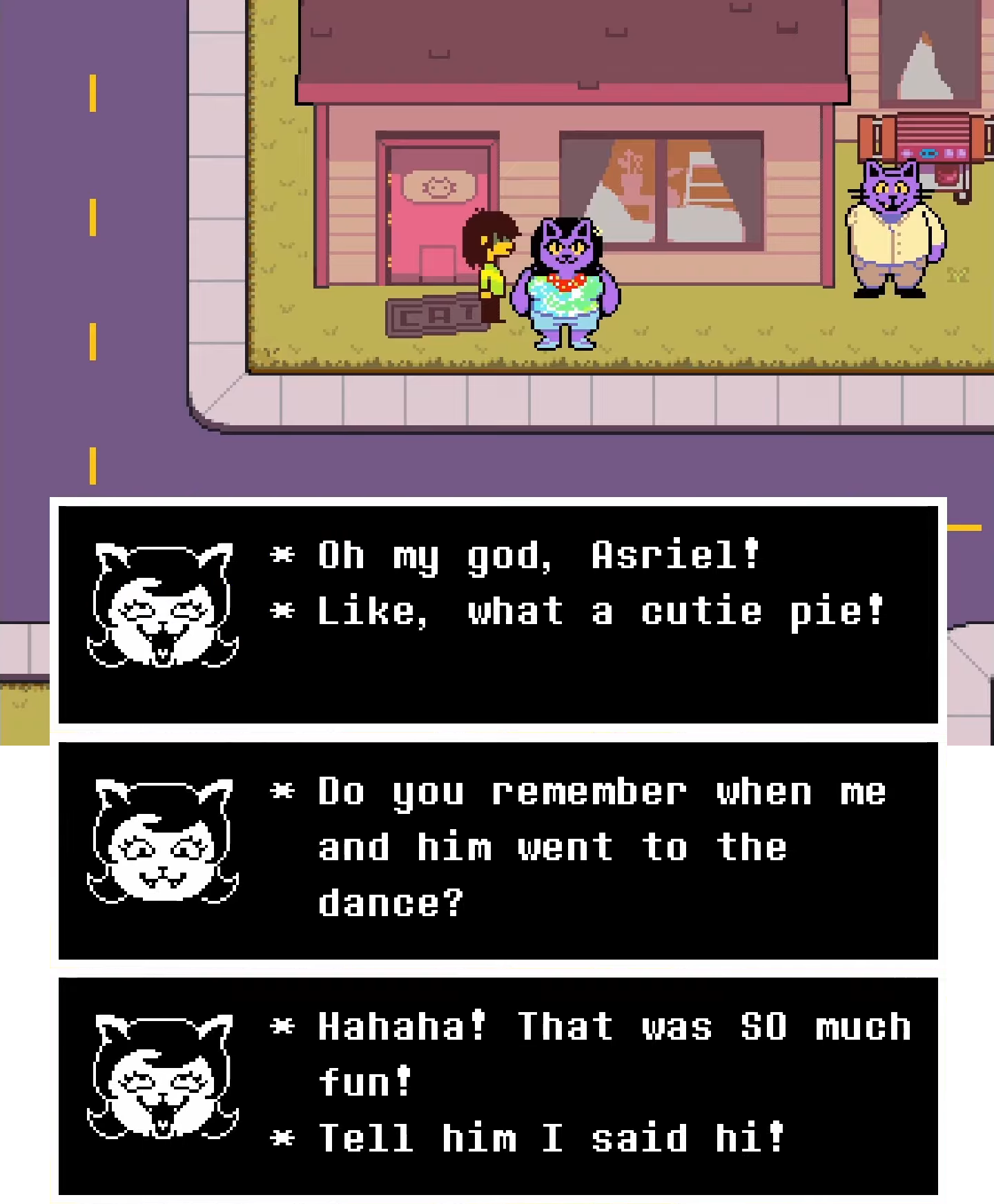
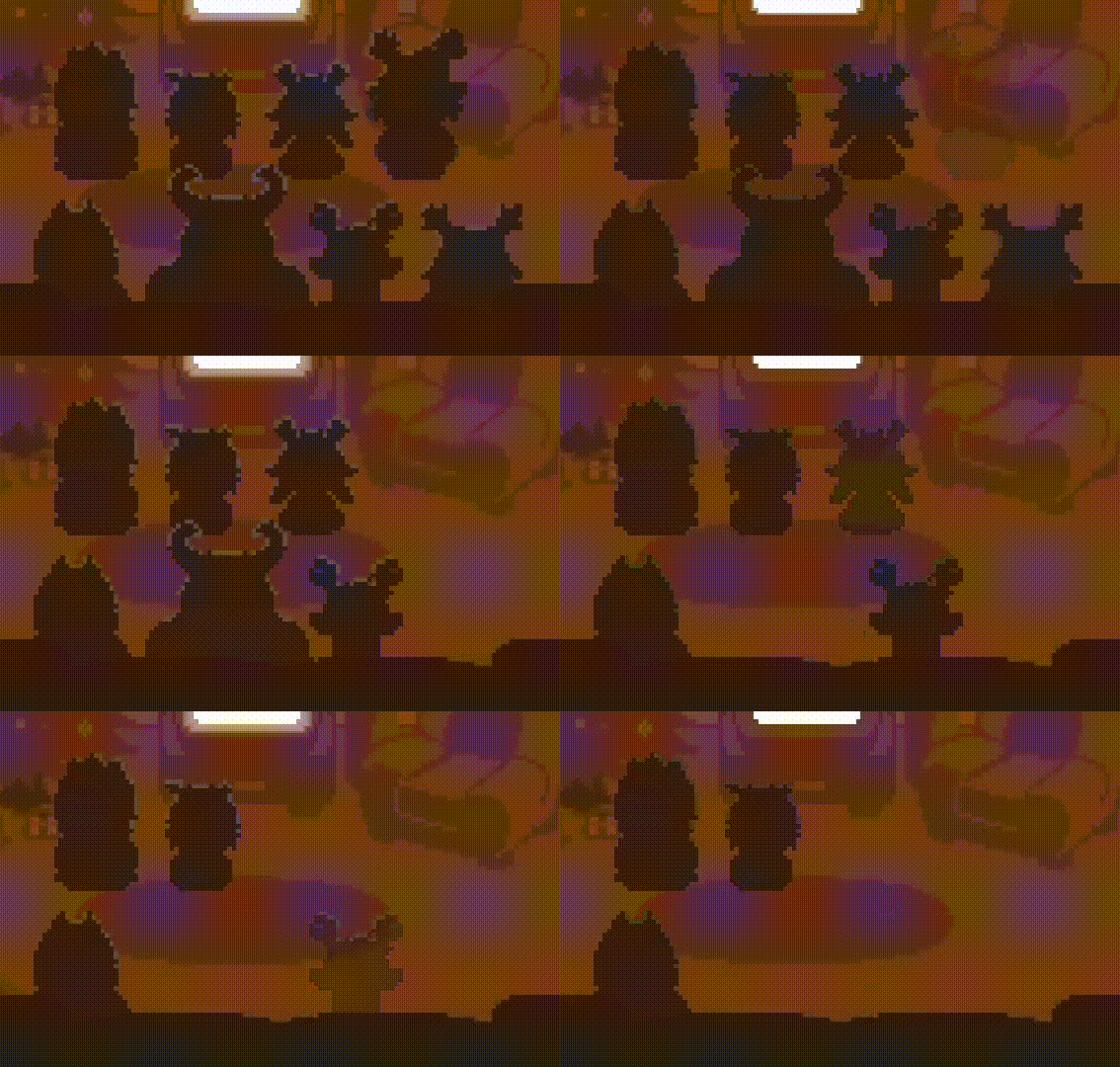
Top: Pizzapants and Catty both enthusiastically express their nostalgic memories of spending time with Asriel to Kris, indicating their brother's popularity within Hometown. Bottom: Tenna recalls how the Dreemurrs stopped having the Holiday family over for the holidays to have fun watching him, eventually becoming distant from and amongst each other. Interestingly, the older deer furthest to the right sitting close to the TV, assumed to be Dess, is the first to disappear followed by Carol, Asgore, Noelle and Rudy.
While I was never a child of divorce myself, I still find myself connecting to the general portrait that Toby Fox paints of suburban teenage life in the late 2000s and early 2010s so much that I can’t help but read Kris’ specific eccentricities and anxieties as a product of or at least resembling neurodivergence. Understanding Kris through this lens feels fascinating in how it gives the game’s story a more personal angle, capturing many of the conflicting emotions that I have felt toward autonomy and self-esteem in my own teen years…
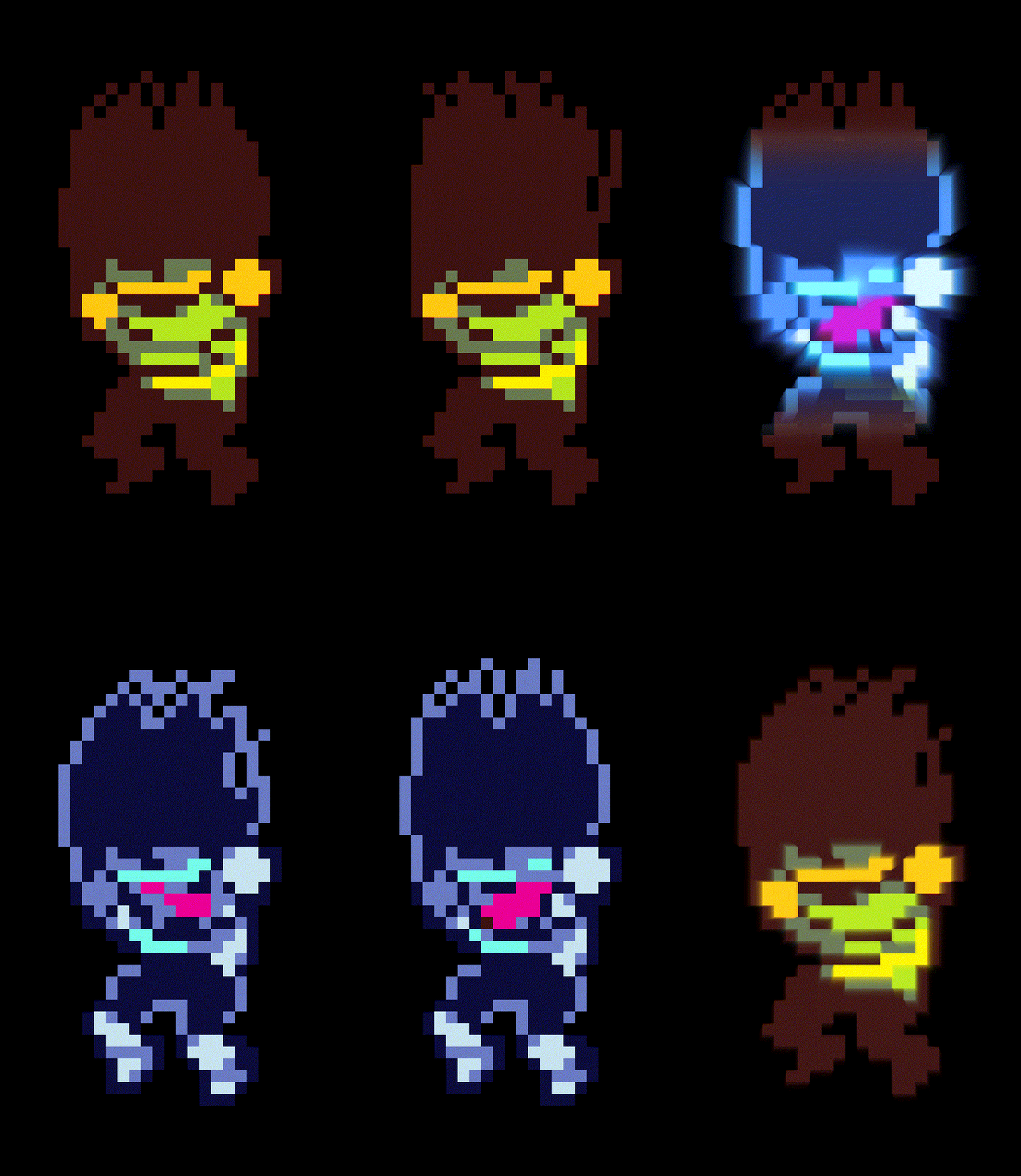
*whom most of the fandom, including myself, pretty much agrees is W. D. Gaster, a cryptic character originally alluded to in Undertale who has spawned an overwhelming theory rabbit hole of his own
Menu
< Part 1
Part 3 >
Back to SlipsWorld